Und dann auf "Zum Home-Bildschirm [+]".

Stöbern
genialokal zum Startbildschirm hinzufügen
Installieren Sie die genialokal App auf Ihrem Startbildschirm für einen schnellen Zugriff und eine komfortable Nutzung.
Installieren Sie die genialokal App auf Ihrem Startbildschirm für einen schnellen Zugriff und eine komfortable Nutzung.
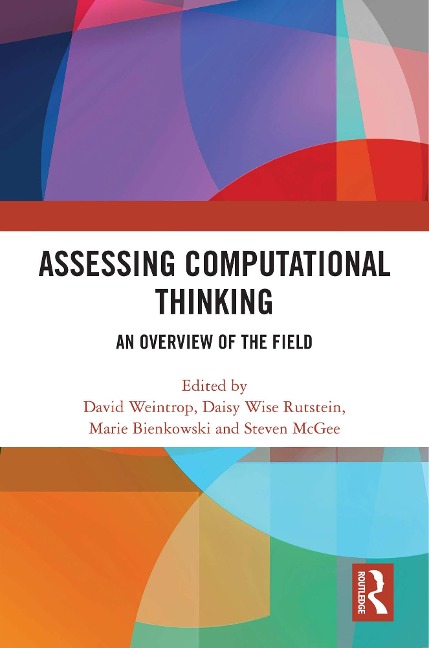
This book presents different approaches for answering the question: How do we assess computational thinking? The result is a snapshot of the current state of the field for assessing computational thinking. The last decade has seen rapid growth in the presence of computational thinking (CT) in educational contexts. Those working to advance CT argue that the concepts and skills associated with CT are essential to succeed in an increasingly computational world. As a result of these efforts, there has been tremendous growth in curricula, learning environments, and innovations around CT education in K-12 classrooms and beyond. As CT grows in prominence, so too does the need to be able to effectively and equitably assess learners CT abilities. This volume is a collection of chapters pursuing different approaches for answering the question: How do we assess computational thinking? The answers provided span age ranges, formal and informal contexts, conceptual aspects of CT, and varying methodological and evaluative strategies. Collectively, the volume captures the current state of the field for assessing computational thinking and lays the groundwork for future CT assessment innovation. Assessing Computational Thinking will be a key resource for academics, researchers, and advanced students of Education, Educational Assessment, Educational Research, Psychology and Research Methods. The chapters included in this book were originally published as a special issue of Computer Science Education.
David Weintrop is Assistant Professor at the University of Maryland. Daisy Rutstein is Principal Education Researcher at SRI International. Marie Bienkowski is Director of STEM Curriculum at the Academies of Math and Science. Steven McGee is President of The Learning Partnership.
Introduction-Assessing computational thinking: an overview of the field 1. Developing a kindergarten computational thinking assessment using evidence-centered design: the case of algorithmic thinking 2. Design and validation of learning trajectory-based assessments for computational thinking in upper elementary grades 3. A principled approach to designing computational thinking concepts and practices assessments for upper elementary grades 4. Assessing computational thinking through the lenses of functionality and computational Fluency 5. Communicating about computational thinking: understanding affordances of portfolios for assessing high school students' computational thinking and participation practices 6. How do students develop computational thinking? Assessing early programmers in a maze-based online game 7. Assessing computational thinking in libraries
Dieses eBook wird im PDF-Format geliefert und ist mit einem Adobe Kopierschutz (DRM) versehen. Sie können dieses eBook mit allen Geräten lesen, die das PDF-Format und den Adobe Kopierschutz (DRM) unterstützen.
Zum Beispiel mit den folgenden Geräten:
• tolino Reader
Laden Sie das eBook direkt über den Reader-Shop auf dem tolino herunter oder übertragen Sie das eBook auf Ihren tolino mit einer kostenlosen Software wie beispielsweise Adobe Digital Editions.
• Sony Reader & andere eBook Reader
Laden Sie das eBook direkt über den Reader-Shop herunter oder übertragen Sie das eBook mit der kostenlosen Software Sony READER FOR PC/Mac oder Adobe Digital Editions auf ein Standard-Lesegeräte mit epub- und Adobe DRM-Unterstützung.
• Tablets & Smartphones
Möchten Sie dieses eBook auf Ihrem Smartphone oder Tablet lesen, finden Sie hier unsere kostenlose Lese-App für iPhone/iPad und Android Smartphone/Tablets.
• PC & Mac
Lesen Sie das eBook direkt nach dem Herunterladen mit einer kostenlosen Lesesoftware, beispielsweise Adobe Digital Editions, Sony READER FOR PC/Mac oder direkt über Ihre eBook-Bibliothek in Ihrem Konto unter „Meine eBooks“ - „online lesen“.
Schalten Sie das eBook mit Ihrer persönlichen Adobe ID auf bis zu sechs Geräten gleichzeitig frei.
Bitte beachten Sie, dass die Kindle-Geräte das Format nicht unterstützen und dieses eBook somit nicht auf Kindle-Geräten lesbar ist.