Und dann auf "Zum Home-Bildschirm [+]".

Stöbern
genialokal zum Startbildschirm hinzufügen
Installieren Sie die genialokal App auf Ihrem Startbildschirm für einen schnellen Zugriff und eine komfortable Nutzung.
Installieren Sie die genialokal App auf Ihrem Startbildschirm für einen schnellen Zugriff und eine komfortable Nutzung.
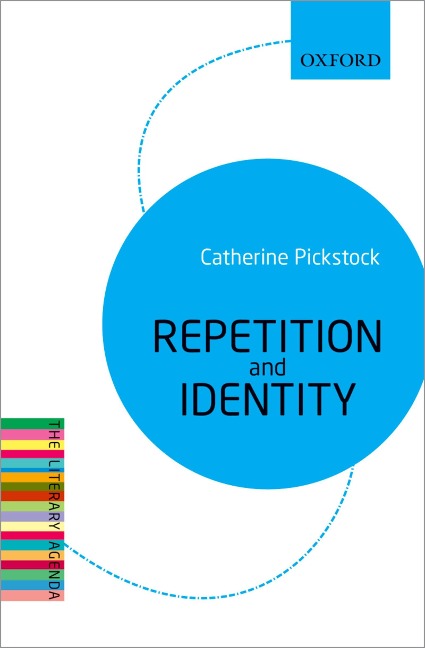
The Literary Agenda is a series of short polemical monographs about the importance of literature and of reading in the wider world and about the state of literary education inside schools and universities. The category of 'the literary' has always been contentious. What is clear, however, is how increasingly it is dismissed or is unrecognised as a way of thinking or an arena for thought. It is sceptically challenged from within, for example, by the sometimes rival claims of cultural history, contextualized explanation, or media studies. It is shaken from without by even greater pressures: by economic exigency and the severe social attitudes that can follow from it; by technological change that may leave the traditional forms of serious human communication looking merely antiquated. For just these reasons this is the right time for renewal, to start reinvigorated work into the meaning and value of literary reading. Repetition and Identity offers a theory of the existing thing as such. A thing only has identity and consistency when it has already been repeated, but repetition summons difference and the shadow invocation of a connecting sign. In contrast to the perspectives of Post-structuralism, Catherine Pickstock proposes that signs are part of reality, and that they truthfully express the real. She also proposes that non-identical repetition involves analogy, rather than the Post-structuralist combination of univocity and equivocity, or of rationalism with scepticism. This proposal, which is happy for reality to make sense, involves, however, a subjective decision which is to be poetically performed. A wager is laid upon the possibility of a consistency which sustains the subject, in continuity with the elusive consistency of nature. This wager is played out in terms of a performative argument concerning the existential stances open to human beings. It is concluded that the individual sustains this quest within the context of an inter-subjective search for an historical consistency of culture. But can ethical consistency, and the harmonisation of this with an aesthetic surplus of an 'elsewhere', invoked by the sign, be achieved without a religious gesture? And can this gesture avoid a tragic tension between ethical commitment and religious renunciation? Pickstock suggests a Kierkegaardian re-reading of the Patristic categories of 'recapitulation' and 'reconstitution' can reconcile this tension. The quest for the identity and consistency of the thing leads us from the subject through fiction and history and to sacred history, to shape an ontology which is also a literary theory and a literary artefaction.
Catherine Pickstock is the author of After Writing: on the liturgical consummation of philosophy, and several other books and articles in philosophical theology. She is a University Reader in Philosophy and Theology at the University of Cambridge, and is a Fellow of Emmanuel College, Cambridge.
- Preface - 1: Identifying Things - 2: The Scale of Things - 3: The Repeated Thing - 4: The Repeated Sign - 5: The Repeated Self - 6: The Compelled Repetition - 7: Eternal Repetition - 8: Repetition and Rhetoric - 9: Rupture and Return - 10: The Repeated God - Bibliographical Note
Dieses eBook wird im PDF-Format geliefert und ist mit einem Adobe Kopierschutz (DRM) versehen. Sie können dieses eBook mit allen Geräten lesen, die das PDF-Format und den Adobe Kopierschutz (DRM) unterstützen.
Zum Beispiel mit den folgenden Geräten:
• tolino Reader
Laden Sie das eBook direkt über den Reader-Shop auf dem tolino herunter oder übertragen Sie das eBook auf Ihren tolino mit einer kostenlosen Software wie beispielsweise Adobe Digital Editions.
• Sony Reader & andere eBook Reader
Laden Sie das eBook direkt über den Reader-Shop herunter oder übertragen Sie das eBook mit der kostenlosen Software Sony READER FOR PC/Mac oder Adobe Digital Editions auf ein Standard-Lesegeräte mit epub- und Adobe DRM-Unterstützung.
• Tablets & Smartphones
Möchten Sie dieses eBook auf Ihrem Smartphone oder Tablet lesen, finden Sie hier unsere kostenlose Lese-App für iPhone/iPad und Android Smartphone/Tablets.
• PC & Mac
Lesen Sie das eBook direkt nach dem Herunterladen mit einer kostenlosen Lesesoftware, beispielsweise Adobe Digital Editions, Sony READER FOR PC/Mac oder direkt über Ihre eBook-Bibliothek in Ihrem Konto unter „Meine eBooks“ - „online lesen“.
Schalten Sie das eBook mit Ihrer persönlichen Adobe ID auf bis zu sechs Geräten gleichzeitig frei.
Bitte beachten Sie, dass die Kindle-Geräte das Format nicht unterstützen und dieses eBook somit nicht auf Kindle-Geräten lesbar ist.