Und dann auf "Zum Home-Bildschirm [+]".

Stöbern
genialokal zum Startbildschirm hinzufügen
Installieren Sie die genialokal App auf Ihrem Startbildschirm für einen schnellen Zugriff und eine komfortable Nutzung.
Installieren Sie die genialokal App auf Ihrem Startbildschirm für einen schnellen Zugriff und eine komfortable Nutzung.
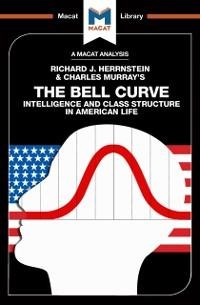
Herrnstein & Murray's The Bell Curve is a deeply controversial text that raises serious issues about the stakes involved in reasoning and interpretation. The authors' central contention is that intelligence is the primary factor determining social outcomes for individuals - and that it is a better predictor of achievement than income, background or socioeconomic status. One of the major issues raised by the book was its discussion of 'racial differences in intelligence,' and its contention that there is a link between the low observed test scores and social outcomes for African-Americans and their lack of social attainment. While the authors produce and interpret a great deal of data to back up their contentions, they ultimately fail to tackle the problem that neither 'intelligence' nor 'race' have widely accepted definitions in biology, anthropology or sociology. In consequence, the book has been termed both 'racist' and 'pseudoscientific' thanks to what its critics see as both its faulty reasoning and its uncautious interpretation of evidence. The debate continues to this day, with academics on both sides engaged in fierce arguments over what can be argued from the data that Herrnstein and Murray used.
Dr Christine Ma received her Ph.D. in Social Psychology from the University of California, Santa Barbara in 2011. She was then a postdoctoral fellow at Harvard University in the Psychology Department and the Harvard Kennedy School. She is currently an Assistant Professor of psychology at the Univeristy of Laverne, California. Michael Schapira is an associate professor at the The School of Computer Science and Engineering, the Hebrew University of Jerusalem.
Ways in to the Text Who were Herrnstein and Murray? What does The Bell Curve: Intelligence and Class Structure in American Life Say? Why does The Bell Curve: Intelligence and Class Structure in American Life Matter? Section 1: Influences Module 1: The Author and the Historical Context Module 2: Academic Context Module 3: The Problem Module 4: The Author's Contribution Section 2: Ideas Module 5: Main Ideas Module 6: Secondary Ideas Module 7: Achievement Module 8: Place in the Author's Work Section 3: Impact Module 9: The First Responses Module 10: The Evolving Debate Module 11: Impact and Influence Today Module 12: Where Next? Glossary of Terms People Mentioned in the Text Works Cited
Dieses eBook wird im PDF-Format geliefert und ist mit einem Adobe Kopierschutz (DRM) versehen. Sie können dieses eBook mit allen Geräten lesen, die das PDF-Format und den Adobe Kopierschutz (DRM) unterstützen.
Zum Beispiel mit den folgenden Geräten:
• tolino Reader
Laden Sie das eBook direkt über den Reader-Shop auf dem tolino herunter oder übertragen Sie das eBook auf Ihren tolino mit einer kostenlosen Software wie beispielsweise Adobe Digital Editions.
• Sony Reader & andere eBook Reader
Laden Sie das eBook direkt über den Reader-Shop herunter oder übertragen Sie das eBook mit der kostenlosen Software Sony READER FOR PC/Mac oder Adobe Digital Editions auf ein Standard-Lesegeräte mit epub- und Adobe DRM-Unterstützung.
• Tablets & Smartphones
Möchten Sie dieses eBook auf Ihrem Smartphone oder Tablet lesen, finden Sie hier unsere kostenlose Lese-App für iPhone/iPad und Android Smartphone/Tablets.
• PC & Mac
Lesen Sie das eBook direkt nach dem Herunterladen mit einer kostenlosen Lesesoftware, beispielsweise Adobe Digital Editions, Sony READER FOR PC/Mac oder direkt über Ihre eBook-Bibliothek in Ihrem Konto unter „Meine eBooks“ - „online lesen“.
Schalten Sie das eBook mit Ihrer persönlichen Adobe ID auf bis zu sechs Geräten gleichzeitig frei.
Bitte beachten Sie, dass die Kindle-Geräte das Format nicht unterstützen und dieses eBook somit nicht auf Kindle-Geräten lesbar ist.