Und dann auf "Zum Home-Bildschirm [+]".

Stöbern
genialokal zum Startbildschirm hinzufügen
Installieren Sie die genialokal App auf Ihrem Startbildschirm für einen schnellen Zugriff und eine komfortable Nutzung.
Installieren Sie die genialokal App auf Ihrem Startbildschirm für einen schnellen Zugriff und eine komfortable Nutzung.
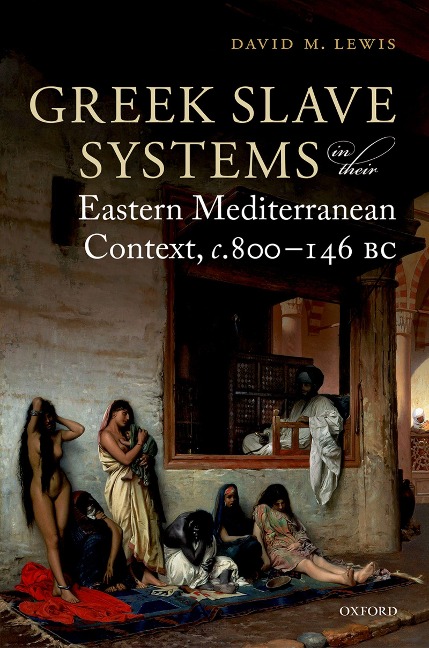
The orthodox view of slavery in the ancient Mediterranean holds that Greece and Rome were its only 'genuine slave societies', that is, societies in which slave labour contributed significantly to the economy and underpinned the wealth of elites. Other societies, traditionally labelled 'societies with slaves', are thought to have made little use of slave labour and therefore have been largely ignored in recent scholarship. This volume presents a radically different view of the ancient Eastern Mediterranean world, showing that elite exploitation of slave labour in Greece and the Near East shared some fundamental similarities, although the degree of elite dependence on slaves varied from region to region. Whilst slavery was indeed particularly highly developed in Greece and Rome, it was also economically entrenched in Carthage, and played a not insignificant role in the affairs of elites in Israel, Assyria, Babylonia, and Persia. The differing degrees to which Eastern Mediterranean elites exploited slave labour represents the outcome of a complex interplay between cultural, economic, political, geographical, and demographic factors. Proceeding on a regional basis, this book tracks the ways in which local conditions shaped a wide variety of Greek and Near Eastern slave systems, and how the legal architecture of slavery in individual regions was altered and adapted to accommodate these needs. The result is a nuanced exploration of the economic underpinnings of Greek elite culture that sets its reliance on slavery within a broader historical context and sheds light on the complex circumstances from which it emerged.
David M. Lewis is Lecturer in Greek History and Culture at the University of Edinburgh. He hails from the Ards Peninsula in Co. Down, Northern Ireland, and studied at Durham University, gaining his PhD in 2012. Between 2013 and 2016 he worked at the University of Edinburgh, first as a postdoctoral fellow, and then as a Leverhulme Early Career fellow, then in 2016 took up the post of Assistant Professor of Ancient History at the University of Nottingham. He returned to Edinburgh to take up his current post in 2018. His work focuses on Greek socio-economic history in a wider Eastern Mediterranean context.
- Frontmatter - List of Abbreviations - i: Introduction and Brief History of the Issue - Part I: Prolegomena - 1: Ownership and the Articulation of Slave Status in Greek and Near Eastern Legal Practice - 2: The Riddle of Freedom - 3: Status Distinctions in Greece and the Ancient Near East - 4: Slave Societies, Societies with Slaves: Capturing the Relative Importance of Slavery to Ancient Economies - Part II: Epichoric Slave Systems of the Greek World - 5: The Archaic Greek World - 6: Helotic Slavery in Classical Sparta - 7: Classical Crete - 8: Classical Attica - Part III: Slave Systems of the Wider Eastern Mediterranean World - 9: Iron Age II Israel - 10: Assyria: The 8th-7th Centuries BC - 11: Babylonia: The 7th-5th Centuries BC - 12: The Persian Empire - 13: Punic Carthage - Part IV: Why Slavery? - 14: Differentials in the Magnitude of Slaveholding: Towards an Understanding of Regional Variation - Appendix: The Meaning of oiketes in Classical Greek - Endmatter - Bibliography - General Index - Index locorum
Dieses eBook wird im PDF-Format geliefert und ist mit einem Adobe Kopierschutz (DRM) versehen. Sie können dieses eBook mit allen Geräten lesen, die das PDF-Format und den Adobe Kopierschutz (DRM) unterstützen.
Zum Beispiel mit den folgenden Geräten:
• tolino Reader
Laden Sie das eBook direkt über den Reader-Shop auf dem tolino herunter oder übertragen Sie das eBook auf Ihren tolino mit einer kostenlosen Software wie beispielsweise Adobe Digital Editions.
• Sony Reader & andere eBook Reader
Laden Sie das eBook direkt über den Reader-Shop herunter oder übertragen Sie das eBook mit der kostenlosen Software Sony READER FOR PC/Mac oder Adobe Digital Editions auf ein Standard-Lesegeräte mit epub- und Adobe DRM-Unterstützung.
• Tablets & Smartphones
Möchten Sie dieses eBook auf Ihrem Smartphone oder Tablet lesen, finden Sie hier unsere kostenlose Lese-App für iPhone/iPad und Android Smartphone/Tablets.
• PC & Mac
Lesen Sie das eBook direkt nach dem Herunterladen mit einer kostenlosen Lesesoftware, beispielsweise Adobe Digital Editions, Sony READER FOR PC/Mac oder direkt über Ihre eBook-Bibliothek in Ihrem Konto unter „Meine eBooks“ - „online lesen“.
Schalten Sie das eBook mit Ihrer persönlichen Adobe ID auf bis zu sechs Geräten gleichzeitig frei.
Bitte beachten Sie, dass die Kindle-Geräte das Format nicht unterstützen und dieses eBook somit nicht auf Kindle-Geräten lesbar ist.