Und dann auf "Zum Home-Bildschirm [+]".

Stöbern
genialokal zum Startbildschirm hinzufügen
Installieren Sie die genialokal App auf Ihrem Startbildschirm für einen schnellen Zugriff und eine komfortable Nutzung.
Installieren Sie die genialokal App auf Ihrem Startbildschirm für einen schnellen Zugriff und eine komfortable Nutzung.
Ihr gewünschter Artikel ist in 0 Buchhandlungen vorrätig - wählen Sie hier eine Buchhandlung in Ihrer Nähe aus:

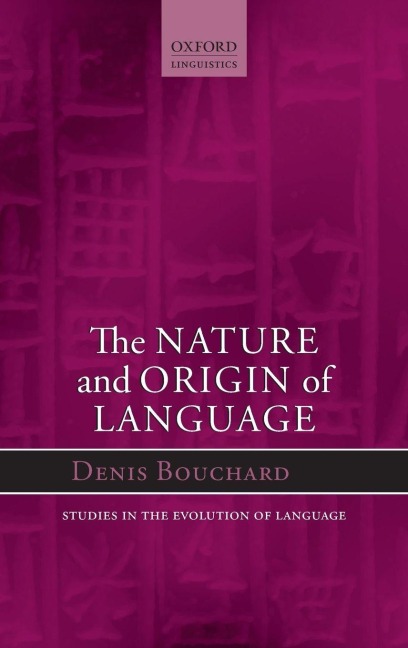
This book looks at how the human brain got the capacity for language and how language then evolved. Its four parts are concerned with different views on the emergence of language, with what language is, how it evolved in the human brain, and finally how this process led to the properties of language. Part I considers the main approaches to the subject and how far language evolved culturally or genetically. Part II argues that language is a system of signs and considers how these elements first came together in the brain. Part III examines the evidence for brain mechanisms to allow the formation of signs. Part IV shows how the book's explanation of language origins and evolution is not only consistent with the complex properties of languages but provides the basis for a theory of syntax that offers insights into the learnability of language and to the nature of constructions that have defied decades of linguistic analysis, including including subject-verb inversion in questions, existential constructions, and long-distance dependencies.
Denis Bouchard is Professor of Linguistics at the University of Quebec in Montreal. His publications include The Semantics of Syntax (University of Chicago Press, 1995), On the Content of Empty Categories (Foris Publications, 1984), and Adjectives, Number and Interfaces (Elsevier Science, 2002).
Part I The emergence of language
1: Scenarios for the emergence of language
Part II What is language that it could have evolved?
2: Language facts and theory
3: The Sign Theory of Language
Part III The Origin of language from neurons to signs
4: The neurogenetic factors: Offline Brain Systems
5: The Emergence of Linguistic Signs
6: Self-organizing constraints due to building materials
7: The protolanguage hypothesis
Part IV Explaining the properties of language
8: Combinatorial signs and Universal Grammar
9: How signs account for some complex properties of language
10: In the beginning was the sign
Bibliography
Index