Und dann auf "Zum Home-Bildschirm [+]".

Stöbern
genialokal zum Startbildschirm hinzufügen
Installieren Sie die genialokal App auf Ihrem Startbildschirm für einen schnellen Zugriff und eine komfortable Nutzung.
Installieren Sie die genialokal App auf Ihrem Startbildschirm für einen schnellen Zugriff und eine komfortable Nutzung.
Ihr gewünschter Artikel ist in 0 Buchhandlungen vorrätig - wählen Sie hier eine Buchhandlung in Ihrer Nähe aus:

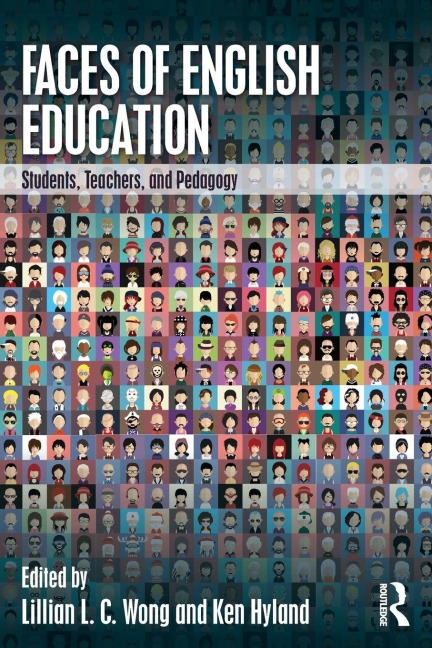
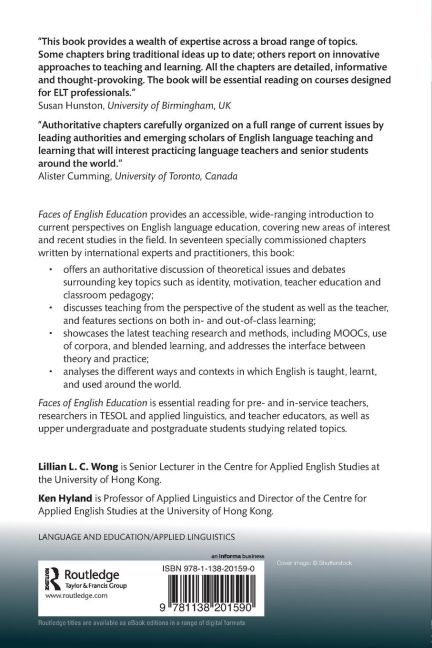
Faces of English Education provides an accessible, wide-ranging introduction to current perspectives on English language education, covering new areas of interest and recent studies in the field. In seventeen specially commissioned chapters written by international experts and practitioners, this book:
offers an authoritative discussion of theoretical issues and debates surrounding key topics such as identity, motivation, teacher education and classroom pedagogy;
discusses teaching from the perspective of the student as well as the teacher, and features sections on both in- and out-of-class learning;
showcases the latest teaching research and methods, including MOOCs, use of corpora, and blended learning, and addresses the interface between theory and practice;
analyses the different ways and contexts in which English is taught, learned and used around the world.
Faces of English Education is essential reading for pre- and in-service teachers, researchers in TESOL and applied linguistics, and teacher educators, as well as upper undergraduate and postgraduate students studying related topics.
Lillian Wong is Senior Lecturer in the Centre for Applied English Studies at the University of Hong Kong. Ken Hyland is Professor of Applied Linguistics and Director of the Centre for Applied English Studies at the University of Hong Kong.
1. Faces of English language research and teaching Part I: Students: identity, motivation and learning2. Identity and English language learners across global sites 3. What influences performance? Personal style or the task being done? 4. Incorporating reflective writing to promote language development and identity awareness 5. Exploring the motivational development and academic choices of local and international English majors in China Part II: Teaching: classroom pedagogies and practices6. Teaching as input 7. The production-oriented approach: a pedagogical innovation in university English teaching in China 8. Do-it-yourself corpora in the classroom: views of students and teachers 9. Popular culture as content-based instruction in the second language classroom to enhance critical engagement Part III: Learning: activities beyond the classroom 10. Language learning beyond the classroom 11. ESP project work: the collaborative processes involved in students' learning experiences 12. Participants' engagement in and perceptions of English language MOOCs 13. Social learning analytics in online language learning: challenges and future directions Part IV: Teachers: education and professional development14. Going online: affordances and limitations for teachers and teacher educators 15. Examining the discourse of language teacher supervision: the learning experiences of two supervisor trainees 16. The personal and professional development of novice English teachers working in South Korea 17. Preparing teachers for the challenges of constructivist teaching