Und dann auf "Zum Home-Bildschirm [+]".

Stöbern
genialokal zum Startbildschirm hinzufügen
Installieren Sie die genialokal App auf Ihrem Startbildschirm für einen schnellen Zugriff und eine komfortable Nutzung.
Installieren Sie die genialokal App auf Ihrem Startbildschirm für einen schnellen Zugriff und eine komfortable Nutzung.
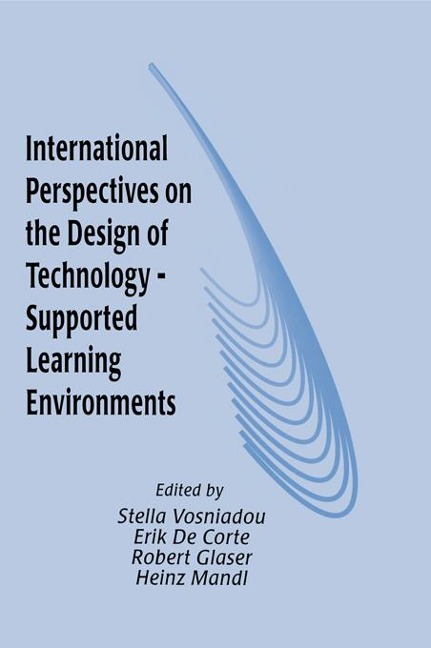
In recent years, the use of technology for the purposes of improving and enriching traditional instructional practices has received a great deal of attention. However, few works have explicitly examined cognitive, psychological, and educational principles on which technology-supported learning environments are based. This volume attempts to cover the need for a thorough theoretical analysis and discussion of the principles of system design that underlie the construction of technology-enhanced learning environments. It presents examples of technology-supported learning environments that cover a broad range of content domains, from the physical sciences and mathematics to the teaching of language and literacy. The emphasis in this book is not on the design of educational software but on the design of learning environments. A great deal of research on learning and instruction has recently moved out of the laboratory into the design of applications in instructional settings. By designing technology-supported learning environments instructional scientists attempt to better understand the theories and principles that are explicit in their theories of learning. The contributors to this volume examine how factors such as social interaction, the creation of meaningful activities, the use of multiple perspectives, and the construction of concrete representations influence the acquisition of new information and transfer.
Robert Glaser, Stella Vosniadou, Erik De Corte, Heinz Mandl
Contents: Preface. R. Glaser, E.L. Ferguson, S. Vosniadou, Introduction: Cognition and the Design of Environments for Learning. Part I: Representation.S. Vosniadou, Learning Environments for Representational Growth and Cognitive Flexibility. J. Bliss, Externalizing Thinking Through Modeling: ESRC Tools for Exploratory Learning Research Program. R. Kozma, J. Russell, T. Jones, N. Marx, J. Davis, The Use of Multiple, Linked Representations to Facilitate Science Understanding. B. Schwarz, M.J. Nathan, L.B. Resnick, Acquisition of Meaning for Arithmetic Structures with the Planner. K. Reusser, From Cognitive Modeling to the Design of Pedagogical Tools. E. Lehtinen, S. Repo, Activity, Social Interaction, and Reflective Abstraction: Learning Advanced Mathematical Concepts in a Computer Environment. E. De Corte, Changing Views of Computer-Suppported Learning Environments for the Acquistion of Knowledge and Thinking Skills. Part II: Social Interaction.M. Scardamalia, C. Bereiter, Adaptation and Understanding: A Case for New Cultures of Schooling. P. Dillenbourg, Distributing Cognition Over Humans and Machines. G. Kanselaar, G. Erkens, Interactivity in Cooperative Problem Solving with Computers. J. Torney-Purta, Conceptual Change Among Adolescents Using Computer Networks and Peer Collaboration in Studying International Political Issues. Part III: Meaningful Contexts and Multiple Perspectives.J.D. Bransford et al., MOST Environments for Accelerating Literacy Development. S.R. Goldman et al., Anchoring Science Instruction in Multimedia Learning Environments. Cognition and Technology Group at Vanderbilt, Multimedia Environments for Enhancing Learning in Mathematics. H. Mandl, H. Gruber, A. Renkl, Learning to Apply: From "School Garden Instruction" to Techonolgy-Based Learning Environments. P. Mendelsohn, Mapping Models of Cognitive Development to Design Principles of Learning Environments. Part IV: Principles of System Design.A. Collins, Design Issues for Learning Environments. G. Salomon, Studying Novel Learning Environments as Patterns of Change.
Dieses eBook wird im PDF-Format geliefert und ist mit einem Adobe Kopierschutz (DRM) versehen. Sie können dieses eBook mit allen Geräten lesen, die das PDF-Format und den Adobe Kopierschutz (DRM) unterstützen.
Zum Beispiel mit den folgenden Geräten:
• tolino Reader
Laden Sie das eBook direkt über den Reader-Shop auf dem tolino herunter oder übertragen Sie das eBook auf Ihren tolino mit einer kostenlosen Software wie beispielsweise Adobe Digital Editions.
• Sony Reader & andere eBook Reader
Laden Sie das eBook direkt über den Reader-Shop herunter oder übertragen Sie das eBook mit der kostenlosen Software Sony READER FOR PC/Mac oder Adobe Digital Editions auf ein Standard-Lesegeräte mit epub- und Adobe DRM-Unterstützung.
• Tablets & Smartphones
Möchten Sie dieses eBook auf Ihrem Smartphone oder Tablet lesen, finden Sie hier unsere kostenlose Lese-App für iPhone/iPad und Android Smartphone/Tablets.
• PC & Mac
Lesen Sie das eBook direkt nach dem Herunterladen mit einer kostenlosen Lesesoftware, beispielsweise Adobe Digital Editions, Sony READER FOR PC/Mac oder direkt über Ihre eBook-Bibliothek in Ihrem Konto unter „Meine eBooks“ - „online lesen“.
Schalten Sie das eBook mit Ihrer persönlichen Adobe ID auf bis zu sechs Geräten gleichzeitig frei.
Bitte beachten Sie, dass die Kindle-Geräte das Format nicht unterstützen und dieses eBook somit nicht auf Kindle-Geräten lesbar ist.