Und dann auf "Zum Home-Bildschirm [+]".

Stöbern
genialokal zum Startbildschirm hinzufügen
Installieren Sie die genialokal App auf Ihrem Startbildschirm für einen schnellen Zugriff und eine komfortable Nutzung.
Installieren Sie die genialokal App auf Ihrem Startbildschirm für einen schnellen Zugriff und eine komfortable Nutzung.
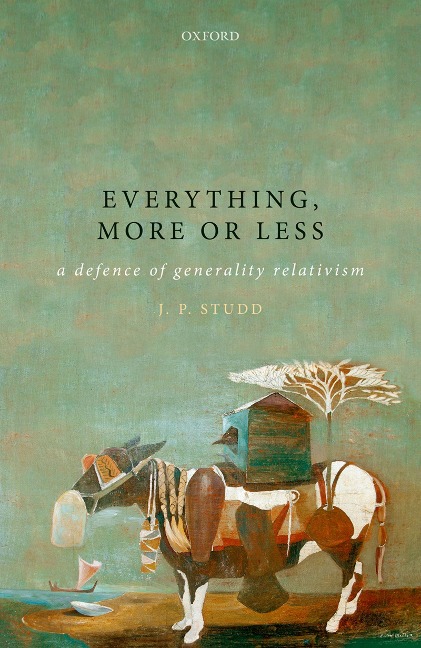
Almost no systematic theorizing is generality-free. Scientists test general hypotheses; set theorists prove theorems about every set; metaphysicians espouse theses about all things regardless of their kind. But how general can we be and do we ever succeed in theorizing about absolutely everything? Not according to generality relativism. In its most promising form, this kind of relativism maintains that what 'everything' and other quantifiers encompass is always open to expansion: no matter how broadly we may generalize, a more inclusive 'everything' is always available. The importance of the issue comes out, in part, in relation to the foundations of mathematics. Generality relativism opens the way to avoid Russell's paradox without imposing ad hoc limitations on which pluralities of items may be encoded as a set. On the other hand, generality relativism faces numerous challenges: What are we to make of seemingly absolutely general theories? What prevents our achieving absolute generality simply by using 'everything' unrestrictedly? How are we to characterize relativism without making use of exactly the kind of generality this view foreswears? This book offers a sustained defence of generality relativism that seeks to answer these challenges. Along the way, the contemporary absolute generality debate is traced through diverse issues in metaphysics, logic, and the philosophy of language; some of the key works that lie behind the debate are reassessed; an accessible introduction is given to the relevant mathematics; and a relativist-friendly motivation for Zermelo-Fraenkel set theory is developed.
J. P. Studd is an Associate Professor at the University of Oxford, and a Fellow of Lady Margaret Hall. He works primarily in logic, metaphysics, and the philosophy of mathematics.
- 1: Absolutism and Relativism - 2: Russell, Zermelo, and Dummett - 3: Quantiers - 4: Restrictionism and Expansionism - 5: Schemas - 6: Modal Operators - 7: Russell Reductio Redux - 8: How Universes Expand - Appendix A: Logic - Appendix B: Modalization - Appendix C: Set Theory
Dieses eBook wird im PDF-Format geliefert und ist mit einem Adobe Kopierschutz (DRM) versehen. Sie können dieses eBook mit allen Geräten lesen, die das PDF-Format und den Adobe Kopierschutz (DRM) unterstützen.
Zum Beispiel mit den folgenden Geräten:
• tolino Reader
Laden Sie das eBook direkt über den Reader-Shop auf dem tolino herunter oder übertragen Sie das eBook auf Ihren tolino mit einer kostenlosen Software wie beispielsweise Adobe Digital Editions.
• Sony Reader & andere eBook Reader
Laden Sie das eBook direkt über den Reader-Shop herunter oder übertragen Sie das eBook mit der kostenlosen Software Sony READER FOR PC/Mac oder Adobe Digital Editions auf ein Standard-Lesegeräte mit epub- und Adobe DRM-Unterstützung.
• Tablets & Smartphones
Möchten Sie dieses eBook auf Ihrem Smartphone oder Tablet lesen, finden Sie hier unsere kostenlose Lese-App für iPhone/iPad und Android Smartphone/Tablets.
• PC & Mac
Lesen Sie das eBook direkt nach dem Herunterladen mit einer kostenlosen Lesesoftware, beispielsweise Adobe Digital Editions, Sony READER FOR PC/Mac oder direkt über Ihre eBook-Bibliothek in Ihrem Konto unter „Meine eBooks“ - „online lesen“.
Schalten Sie das eBook mit Ihrer persönlichen Adobe ID auf bis zu sechs Geräten gleichzeitig frei.
Bitte beachten Sie, dass die Kindle-Geräte das Format nicht unterstützen und dieses eBook somit nicht auf Kindle-Geräten lesbar ist.