Und dann auf "Zum Home-Bildschirm [+]".

Stöbern
genialokal zum Startbildschirm hinzufügen
Installieren Sie die genialokal App auf Ihrem Startbildschirm für einen schnellen Zugriff und eine komfortable Nutzung.
Installieren Sie die genialokal App auf Ihrem Startbildschirm für einen schnellen Zugriff und eine komfortable Nutzung.
Ihr gewünschter Artikel ist in 0 Buchhandlungen vorrätig - wählen Sie hier eine Buchhandlung in Ihrer Nähe aus:

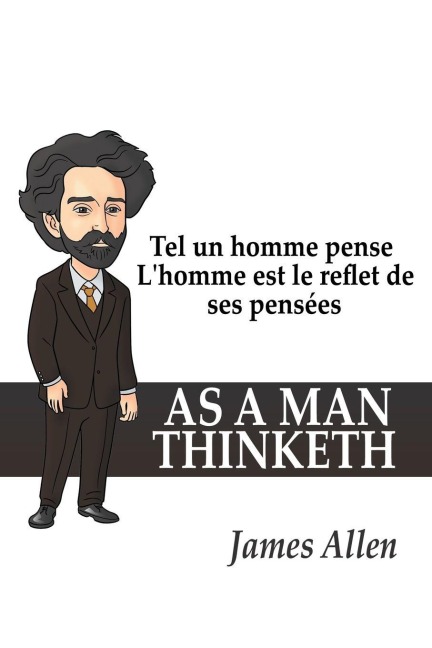

Tel un homme pense est le plus célèbre des livres de James Allen. L'auteur en donnait lui-même la description suivante : " (...) traite du pouvoir de la pensée, et particulièrement de l'utilisation et l'application de la pensée pour d'heureuses issues. J'ai essayé de rendre le livre simple pour qu'on puisse aisément le prendre en main, suivre son enseignement et mettre en pratique les méthodes qu'il conseille. Il montre comment, dans le monde propre de sa pensée, chaque homme détient la clé de sa condition, bonne ou mauvaise, et qu'ainsi, par un travail patient et intelligent sur ses pensées, il peut remodeler sa vie et transformer ses circonstances. C'est un livre qui vous aidera à vous aider vous-même."
James Allen was a British philosophical and inspirational writer whose work helped shape the early modern self-help and New Thought traditions. Born in Leicester, England, in 1864, Allen wrote essays and books concerned with thought, character, spiritual discipline, serenity, moral development, and the relationship between the inner life and outward circumstance. Though he lived quietly and died relatively young, his writings became influential far beyond his own lifetime, especially among readers interested in self-culture, personal responsibility, and the disciplined use of thought.Allen's best-known work, As a Man Thinketh, has become one of the most widely read classics of inspirational literature. Its central argument-that character and circumstance are deeply affected by habitual thought-helped establish many of the themes later associated with positive thinking, success literature, self-mastery, and spiritual personal development. Allen's prose is compact, serious, and morally charged, placing him closer to the tradition of practical philosophy than to modern motivational writing. His books remain important to readers of New Thought, spiritual self-help, inspirational classics, and the literature of inner transformation.