Und dann auf "Zum Home-Bildschirm [+]".

Stöbern
genialokal zum Startbildschirm hinzufügen
Installieren Sie die genialokal App auf Ihrem Startbildschirm für einen schnellen Zugriff und eine komfortable Nutzung.
Installieren Sie die genialokal App auf Ihrem Startbildschirm für einen schnellen Zugriff und eine komfortable Nutzung.
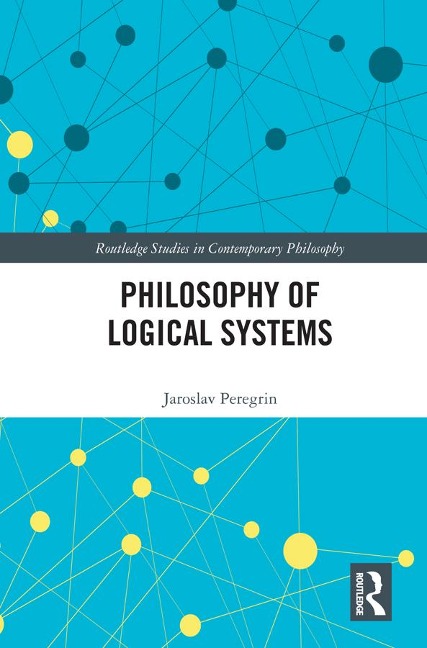
This book addresses the hasty development of modern logic, especially its introducing and embracing various kinds of artificial languages and moving from the study of natural languages to that of artificial ones. This shift seemed extremely helpful and managed to elevate logic to a new level of rigor and clarity. However, the change that logic underwent in this way was in no way insignificant, and it is also far from an insignificant matter to determine to what extent the "new logic" only engaged new and more powerful instruments to answer the questions posed by the "old" one, and to what extent it replaced these questions with new ones. Hence, this movement has generated brand new kinds of philosophical problems that have still not been dealt with systematically. Philosophy of Logical Systems addresses these new kinds of philosophical problems that are intertwined with the development of modern logic. Jaroslav Peregrin analyzes the rationale behind the introduction of the artificial languages of logic; classifies the various tools which were adopted to build such languages; gives an overview of the various kinds of languages introduced in the course of modern logic and the motifs of their employment; discusses what can actually be achieved by relocating the problems of logic from natural language into them; and reaches certain conclusions with respect to the possibilities and limitations of this "formal turn" of logic. This book is both an important scholarly contribution to the philosophy of logic and a systematic survey of the standard (and not so standard) logical systems that were established during the short history of modern logic.
Jaroslav Peregrin is the research professor at the Department of Logic of the Institute of Philosophy of the Czech Academy of Sciences and a professor at the Faculty of Philosophy of the University of Hradec Králové, Czechia. He is the author of Doing Worlds with Words (1995), Meaning and Structure (Ashgate, 2001), Inferentialism (2014) and Reflective Equilibrium and the Principles of Logical Analysis (together with V. Svoboda; Routledge, 2017). His current research focuses on logical and philosophical aspects of inferentialism and on more general questions of normativity.
Preface 1. The Transmutation of Logic 2. Correctness of Arguments 3. Languages of Logic 4. Basic Sentential Operators 5. Gentzenian Logical Calculi 6. Hilbertian Logical Calculi 7. Properties of Calculi 8. Calculi of Propositional Logic 9. Quantification 10. Calculi of Predicate Logic 11. From Calculi to Formal Semantics 12. Truth-Functional Semantics 13. Extensional Denotational Semantics 14. Denotations Beyond Extensions 15. Matching Calculi and Systems of Formal Semantics 16. Through the Looking Glass 17. Conclusion: Philosophical Problems of Logical Systems
Dieses eBook wird im PDF-Format geliefert und ist mit einem Adobe Kopierschutz (DRM) versehen. Sie können dieses eBook mit allen Geräten lesen, die das PDF-Format und den Adobe Kopierschutz (DRM) unterstützen.
Zum Beispiel mit den folgenden Geräten:
• tolino Reader
Laden Sie das eBook direkt über den Reader-Shop auf dem tolino herunter oder übertragen Sie das eBook auf Ihren tolino mit einer kostenlosen Software wie beispielsweise Adobe Digital Editions.
• Sony Reader & andere eBook Reader
Laden Sie das eBook direkt über den Reader-Shop herunter oder übertragen Sie das eBook mit der kostenlosen Software Sony READER FOR PC/Mac oder Adobe Digital Editions auf ein Standard-Lesegeräte mit epub- und Adobe DRM-Unterstützung.
• Tablets & Smartphones
Möchten Sie dieses eBook auf Ihrem Smartphone oder Tablet lesen, finden Sie hier unsere kostenlose Lese-App für iPhone/iPad und Android Smartphone/Tablets.
• PC & Mac
Lesen Sie das eBook direkt nach dem Herunterladen mit einer kostenlosen Lesesoftware, beispielsweise Adobe Digital Editions, Sony READER FOR PC/Mac oder direkt über Ihre eBook-Bibliothek in Ihrem Konto unter „Meine eBooks“ - „online lesen“.
Schalten Sie das eBook mit Ihrer persönlichen Adobe ID auf bis zu sechs Geräten gleichzeitig frei.
Bitte beachten Sie, dass die Kindle-Geräte das Format nicht unterstützen und dieses eBook somit nicht auf Kindle-Geräten lesbar ist.