Und dann auf "Zum Home-Bildschirm [+]".

Stöbern
genialokal zum Startbildschirm hinzufügen
Installieren Sie die genialokal App auf Ihrem Startbildschirm für einen schnellen Zugriff und eine komfortable Nutzung.
Installieren Sie die genialokal App auf Ihrem Startbildschirm für einen schnellen Zugriff und eine komfortable Nutzung.
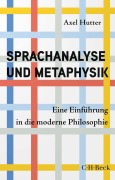
José L. Zalabardo puts forward a new interpretation of central ideas in Wittgenstein's Tractatus Logico-Philosophicus concerning the structure of reality and our representations of it in thought and language. He shows the origins of Wittgenstein's picture theory of propositional representation in Russell's theories of judgment, arguing that the picture theory is Wittgenstein's solution to some of the problems that he found in Russell's position. Zalabardo defends the view that, for Wittgenstein, facts in general, and the facts that play the role of propositions in particular, are not composite items, arising from the combination of their constituents. They are ultimate, irreducible units, and what we think of as their constituents are features that facts have in common with one another. These common features have built into them their possibilities of combination with other features into possible situations. This is the source of the Tractarian account of non-actual possibilities. It is also the source of the idea that it is not possible to produce propositions answering to certain descriptions, including those that would give rise to Russell's paradox. Zalabardo then considers Wittgenstein's view that every proposition is a truth function of elementary propositions. He argues that this view is motivated by Wittgenstein's epistemology of logic, according to which we should be able to see logical relations by inspecting the structures of propositions. Finally, Zalabardo considers the problems that we face if we try to extend the application of the picture theory from elementary propositions to truth functions of these.
José L. Zalabardo is Professor and Head of the Philosophy Department at University College London. He was born in Madrid, and educated at the Universidad Autónoma de Madrid, the University of St. Andrews, and the University of Michigan, where he obtained a PhD in 1994. He was a lecturer at the University of Birmingham from 1994 to 2000, when he joined UCL. He has published numerous articles in academic journals and collective volumes He is also the author of Introduction to the Theory of Logic (Westview Press, 2000) and Scepticism and Reliable Belief (OUP, 2012), and the editor of Wittgenstein's Early Philosophy (OUP, 2012).
- Introduction - 1: Russell's theories of judgment - 2: Wittgenstein and forms - 3: The vanishing subject - 4: Propositions and facts - 5: The limits of representation - 6: Logic and analysis - Conclusion - APPENDIX I: Other readings of the nonsense objection - APPENDIX II: The empty-name reading of the substance passage
Dieses eBook wird im PDF-Format geliefert und ist mit einem Adobe Kopierschutz (DRM) versehen. Sie können dieses eBook mit allen Geräten lesen, die das PDF-Format und den Adobe Kopierschutz (DRM) unterstützen.
Zum Beispiel mit den folgenden Geräten:
• tolino Reader
Laden Sie das eBook direkt über den Reader-Shop auf dem tolino herunter oder übertragen Sie das eBook auf Ihren tolino mit einer kostenlosen Software wie beispielsweise Adobe Digital Editions.
• Sony Reader & andere eBook Reader
Laden Sie das eBook direkt über den Reader-Shop herunter oder übertragen Sie das eBook mit der kostenlosen Software Sony READER FOR PC/Mac oder Adobe Digital Editions auf ein Standard-Lesegeräte mit epub- und Adobe DRM-Unterstützung.
• Tablets & Smartphones
Möchten Sie dieses eBook auf Ihrem Smartphone oder Tablet lesen, finden Sie hier unsere kostenlose Lese-App für iPhone/iPad und Android Smartphone/Tablets.
• PC & Mac
Lesen Sie das eBook direkt nach dem Herunterladen mit einer kostenlosen Lesesoftware, beispielsweise Adobe Digital Editions, Sony READER FOR PC/Mac oder direkt über Ihre eBook-Bibliothek in Ihrem Konto unter „Meine eBooks“ - „online lesen“.
Schalten Sie das eBook mit Ihrer persönlichen Adobe ID auf bis zu sechs Geräten gleichzeitig frei.
Bitte beachten Sie, dass die Kindle-Geräte das Format nicht unterstützen und dieses eBook somit nicht auf Kindle-Geräten lesbar ist.