Und dann auf "Zum Home-Bildschirm [+]".

Stöbern
genialokal zum Startbildschirm hinzufügen
Installieren Sie die genialokal App auf Ihrem Startbildschirm für einen schnellen Zugriff und eine komfortable Nutzung.
Installieren Sie die genialokal App auf Ihrem Startbildschirm für einen schnellen Zugriff und eine komfortable Nutzung.
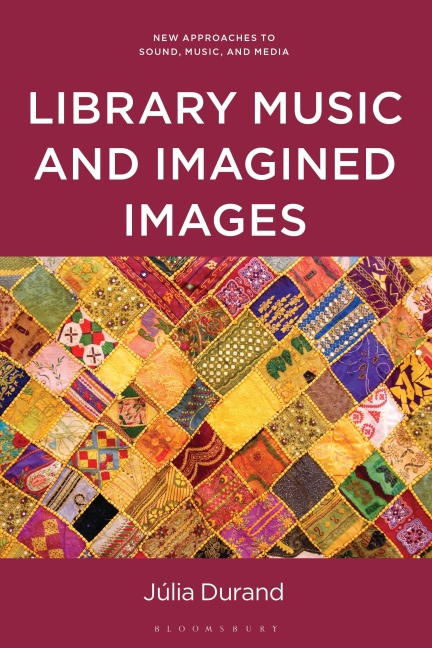
This book takes a musicological and sociological lens to the workings of this little-noticed sonic presence that shapes the media of our everyday lives, exploring how library music is created, received and used in online media, and what sets it apart from other musical practices.
Library music is an ubiquitous yet often unquestioned presence in contemporary media. This pre-existing music is used in a wide variety of contexts, from television and film trailers to YouTube videos. Although library music was first targeted at professional audiovisual producers, the spread of digital technologies has widened this music industry's client-base to include amateur videographers and online content makers.
Drawing from qualitative interviews with composers and media producers, these actors' perspectives are woven together in order to reach an in-depth insight into library music's creation and synchronization with pictures. The book teases out the patterns and peculiarities of library music that distinguish it from other musical practices: it is cast here as usable music made for imagined images, and as a repository of shared musical imaginaries.
By exploring how library music is continuously transformed in multiple and unpredictable moments of meaning-making, we also unveil its specificity not as a finished musical work, but rather as a raw material meant to be repurposed and reshaped beyond composers' hands. Ultimately, the book reframes library music as an object worthy of attention - one that can reveal much about music for media today.
Júlia Durand is a musicology researcher at CESEM (Centre for Music Studies) and a lecturer at NOVA University of Lisbon, Portugal. Her work is published in volumes such as Oxford Handbook of Music and Television (forthcoming), and in journals such as Music, Sound and the Moving Image. In addition to library music, her research focuses on music in online media with misinformation. She has published literary fiction and lyrics for music theatre.
List of Illustrations
Acknowledgements
'The music industry's step-child': an introduction to library music
I. Old Habits
1. 'The importance of being usable': library music as functional music
2. 'A soundtrack to a film that doesn't exist yet': music for unknown images
3. Sleazy sax, playful pizzicato, and other clichés we live by
4. From industry to craft: composers' practices in library music
II. New Practices
5. 'Fresh, hand-picked tracks': libraries' commercial strategies
6. 'An infinite number of hobbyists': library music's new users
7. From gender reveals to pimple popping: library music and meaning-making online
8. 'Grab your knife': library music as raw material
In constant musicking: the futures of library music
References
Index
Dieses eBook wird im PDF-Format geliefert und ist mit einem Adobe Kopierschutz (DRM) versehen. Sie können dieses eBook mit allen Geräten lesen, die das PDF-Format und den Adobe Kopierschutz (DRM) unterstützen.
Zum Beispiel mit den folgenden Geräten:
• tolino Reader
Laden Sie das eBook direkt über den Reader-Shop auf dem tolino herunter oder übertragen Sie das eBook auf Ihren tolino mit einer kostenlosen Software wie beispielsweise Adobe Digital Editions.
• Sony Reader & andere eBook Reader
Laden Sie das eBook direkt über den Reader-Shop herunter oder übertragen Sie das eBook mit der kostenlosen Software Sony READER FOR PC/Mac oder Adobe Digital Editions auf ein Standard-Lesegeräte mit epub- und Adobe DRM-Unterstützung.
• Tablets & Smartphones
Möchten Sie dieses eBook auf Ihrem Smartphone oder Tablet lesen, finden Sie hier unsere kostenlose Lese-App für iPhone/iPad und Android Smartphone/Tablets.
• PC & Mac
Lesen Sie das eBook direkt nach dem Herunterladen mit einer kostenlosen Lesesoftware, beispielsweise Adobe Digital Editions, Sony READER FOR PC/Mac oder direkt über Ihre eBook-Bibliothek in Ihrem Konto unter „Meine eBooks“ - „online lesen“.
Schalten Sie das eBook mit Ihrer persönlichen Adobe ID auf bis zu sechs Geräten gleichzeitig frei.
Bitte beachten Sie, dass die Kindle-Geräte das Format nicht unterstützen und dieses eBook somit nicht auf Kindle-Geräten lesbar ist.