Und dann auf "Zum Home-Bildschirm [+]".

Stöbern
genialokal zum Startbildschirm hinzufügen
Installieren Sie die genialokal App auf Ihrem Startbildschirm für einen schnellen Zugriff und eine komfortable Nutzung.
Installieren Sie die genialokal App auf Ihrem Startbildschirm für einen schnellen Zugriff und eine komfortable Nutzung.
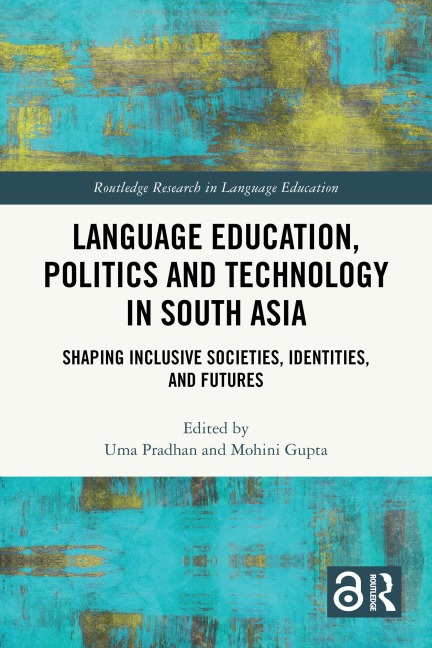
Bringing together research from the fields of linguistics, education and technology within the dynamic context of South Asia, this timely book investigates the ways in which these fields interact with each other against the backdrop of technological innovation, linguistic diversity and socio-political transformation. Developing and expanding on findings and insights originating from a conference organised by the Education South Asia Initiative at the University of Oxford, this interdisciplinary book features academic reflections on language politics and diversity as well as empirical insights on linguistic, educational and technological transformations in the region. Featuring analytical and methodological approaches to the study of language and education, chapters range in context from India, Bangladesh, Nepal, Pakistan and Sri Lanka, and address a range of issues such as the marginalisation of languages in education and policy, the interactions between language and social hierarchies in the South Asian context, and technology's impact on language education, acquisition, usage and preservation. Ultimately initiating dialogue on the need for positive changes in language, education research and policy, this book will appeal to scholars, researchers and postgraduate students in the fields of language education, international and comparative education, and education and technology. Policymakers in international development and sociolinguistics may also find the volume of use. The Open Access version of this book, available at http://www.taylorfrancis.com, has been made available under a Creative Commons Attribution-Non Commercial-No Derivatives (CC BY-NC-ND) 4.0 license.
Uma Pradhan is Associate Professor at the Institute of Education, University College London, UK. Mohini Gupta has completed a DPhil from the Faculty of Asian and Middle Eastern Studies, University of Oxford, UK. She is currently a Postdoctoral Fellow at the Danish School of Education, Aarhus University, Denmark.
Introduction: Language and Education Futures in South Asia Part I: Language and Politics Chapter 1 - Youth Perspectives on Hindi, English and India's New Politics of Language: Becoming Bharat Chapter 2 - Language Textbooks as a Site of Conflict in India: The Phenomenon of 'Erased Curriculum' Chapter 3 - The Challenges of Literacy Acquisition and Linguistic Proficiency in Multilingual Educational Landscape of Pakistan Chapter 4 - Mother-tongue-based Education and Indian Teachers' views on Language Policy Reforms by the Bharatiya Janata Party Chapter 5 - Unofficial Bilingualism in English-only Policy Context: A Postmethod Pedagogy for Difficult Circumstances in Rural Government Schools of Tamil Nadu Part II: Language and Inclusivity Chapter 6 - Kerala's Language Directive and the Erasure of Gendered Teacher Identities Chapter 7 - Multilingualism and globalisation in remote trans-Himalayan India: How topography and place-experience impact language learning Chapter 8 - Future of education in Bangladesh: Everyday politics of language between competition, integration, and modernisation Chapter 9 - Language Documentation, Dialects, and Education among the Naawa of Nepal Part III: Language and Technology Chapter 10 - Indian Languages and Language Acquisition Apps: My Phone Won't Teach Me Malayalam Chapter 11 - Remembering Nepal Bhasa through Artificial Intelligence (AI) Translations: Language, Technology and Indigenous Memory Chapter 12 - Navigating the Pedagogical Implications of Digital Education in Bangladesh Chapter 13 - Remote virtual teacher communities in Sri Lanka: Difficulties and possibilities
Dieses eBook wird im PDF-Format geliefert und ist mit einem Adobe Kopierschutz (DRM) versehen. Sie können dieses eBook mit allen Geräten lesen, die das PDF-Format und den Adobe Kopierschutz (DRM) unterstützen.
Zum Beispiel mit den folgenden Geräten:
• tolino Reader
Laden Sie das eBook direkt über den Reader-Shop auf dem tolino herunter oder übertragen Sie das eBook auf Ihren tolino mit einer kostenlosen Software wie beispielsweise Adobe Digital Editions.
• Sony Reader & andere eBook Reader
Laden Sie das eBook direkt über den Reader-Shop herunter oder übertragen Sie das eBook mit der kostenlosen Software Sony READER FOR PC/Mac oder Adobe Digital Editions auf ein Standard-Lesegeräte mit epub- und Adobe DRM-Unterstützung.
• Tablets & Smartphones
Möchten Sie dieses eBook auf Ihrem Smartphone oder Tablet lesen, finden Sie hier unsere kostenlose Lese-App für iPhone/iPad und Android Smartphone/Tablets.
• PC & Mac
Lesen Sie das eBook direkt nach dem Herunterladen mit einer kostenlosen Lesesoftware, beispielsweise Adobe Digital Editions, Sony READER FOR PC/Mac oder direkt über Ihre eBook-Bibliothek in Ihrem Konto unter „Meine eBooks“ - „online lesen“.
Schalten Sie das eBook mit Ihrer persönlichen Adobe ID auf bis zu sechs Geräten gleichzeitig frei.
Bitte beachten Sie, dass die Kindle-Geräte das Format nicht unterstützen und dieses eBook somit nicht auf Kindle-Geräten lesbar ist.