Und dann auf "Zum Home-Bildschirm [+]".

Stöbern
genialokal zum Startbildschirm hinzufügen
Installieren Sie die genialokal App auf Ihrem Startbildschirm für einen schnellen Zugriff und eine komfortable Nutzung.
Installieren Sie die genialokal App auf Ihrem Startbildschirm für einen schnellen Zugriff und eine komfortable Nutzung.
Ihr gewünschter Artikel ist in 0 Buchhandlungen vorrätig - wählen Sie hier eine Buchhandlung in Ihrer Nähe aus:

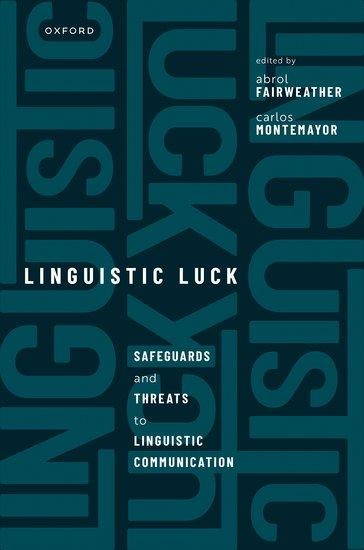
There has been much philosophical interest in the role of luck in ethics and epistemology; now this volume brings the topic to the fore in philosophy of language. Eleven new essays explore the diversity, scope, and mode of operation of luck-reducing mechanisms in language, without which linguistic communication would be impossible.
Abrol Fairweather is Emeritus Lecturer in Philosophy at San Francisco State University, USA. He has written and edited books and essays in the field of virtue epistemology, including the first collection of essays in the field, Virtue Epistemology: Essays on Epistemic Virtue and Responsibility (Fairweather, A & Zagzebski, L. eds., 2001), and has emphasized naturalized approaches to this highly normative subject, including Knowledge, Dexterity, and Attention: A Theory of Epistemic Agency (2017).
Carlos Montemayor is Professor of Philosophy at San Francisco State University, USA. His research focuses on philosophy of mind and cognitive science. Montemayor is the author of Minding Time: A Philosophical and Theoretical Approach to the Psychology of Time (2013), and co-author (with Abrol Fairweather) of Knowledge, Dexterity, and Attention: A Theory of Epistemic Agency (2017), among other books including, most recently, his open access book The Prospect of a Humanitarian Artificial Intelligence (2023).
1: Abrol Fairweather and Carlos Montemayor: Introduction
2: Maria de Ponte (University of the Basque Country), Kepa Korta (University of the Basque Country) and John Perry (Stanford University): Language and Luck
Nomological, Formal and Cognitive Luck Reduction
3: Imogen Dickie (University of Toronto): Specificity And Resolution In The Communicative Use Of Singular Terms
4: Jeffrey King (Rutgers University): Luck And Metasemantics
5: Georges Rey (University of Maryland) and John Collins (East Anglia University): Laws and Luck in Language: Problems with Devitt's Conventional, Commonsense Linguistics
6: Michael Devitt (CUNY): Linguistic Luck: A Response to Rey and Collins
7: Justin Khoo (MIT): Epistemicism without metalinguistic safety
Cognitive and Social Luck Reduction
8: Elizabeth Fricker (Oxford University): Testimony, Luck and Conversational Implicature
9: Claudine Verheggen (York University): Linguistic Luck and the Publicness of Language
10: Andrew Peet (University of Leeds): Understanding, Luck, and Communicative Value
11: Samia Hesni (Boston University): Luck-Reducing Features of Lexical Innovation
12: Georgi Gardiner (University of Tennessee): We Forge the Conditions of Love