Und dann auf "Zum Home-Bildschirm [+]".

Stöbern
genialokal zum Startbildschirm hinzufügen
Installieren Sie die genialokal App auf Ihrem Startbildschirm für einen schnellen Zugriff und eine komfortable Nutzung.
Installieren Sie die genialokal App auf Ihrem Startbildschirm für einen schnellen Zugriff und eine komfortable Nutzung.
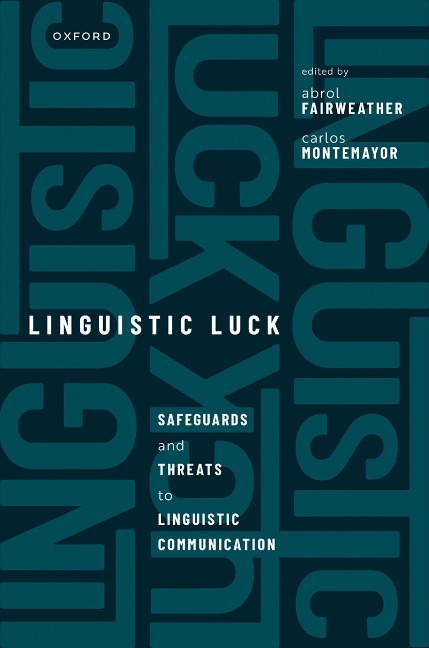
Despite the considerable attention the topic of luck has received in ethics and epistemology, very little has been published in the philosophical literature overtly on linguistic luck. The essays collected here provide the first sustained examination of the diverse forms of linguistic luck, the mechanisms available to reduce the impact of linguistic luck and how to cope with residual luck not eliminated by the causal, inferential, and intentional mechanisms which aim at its eradication. Of primary interest is not some, hitherto unnoticed widespread prevalence of luck in the determinants of meaning and communication, but rather the impressive extent to which luck is reduced or eliminated therein. Whether through casual, inferential or intentional means, the determinants of meaning and communication are impressively independent of luck and chance. In fact, it is difficult to imagine a world with human language where efforts to communicate succeed no better than chance. Linguistic communication is only possible because robust luck reducing variables are at work. The essays collected seek to understand the diversity, scope and mode of operation of luck reducing mechanisms in language. While it is not possible here to cover the full range of linguistic phenomena affected by luck, a wide range of issues in linguistics and philosophy of language are investigated, including, syntax processing, demonstrative reference, conversational implicature, testimony, lexical innovation, joint attention, communicative value, conventionalism vs. anti-conventionalism, metasemantic safety, and semantic skepticism, to name a few.
Abrol Fairweather is Emeritus Lecturer in Philosophy at San Francisco State University, USA. He has written and edited books and essays in the field of virtue epistemology, including the first collection of essays in the field, Virtue Epistemology: Essays on Epistemic Virtue and Responsibility (Fairweather, A & Zagzebski, L. eds., 2001), and has emphasized naturalized approaches to this highly normative subject, including Knowledge, Dexterity, and Attention: A Theory of Epistemic Agency (2017). Carlos Montemayor is Professor of Philosophy at San Francisco State University, USA. His research focuses on philosophy of mind and cognitive science. Montemayor is the author of Minding Time: A Philosophical and Theoretical Approach to the Psychology of Time (2013), and co-author (with Abrol Fairweather) of Knowledge, Dexterity, and Attention: A Theory of Epistemic Agency (2017), among other books including, most recently, his open access book The Prospect of a Humanitarian Artificial Intelligence (2023).
- 1: Abrol Fairweather and Carlos Montemayor: Introduction - 2: Maria de Ponte (University of the Basque Country), Kepa Korta (University of the Basque Country) and John Perry (Stanford University): Language and Luck - Nomological, Formal and Cognitive Luck Reduction - 3: Imogen Dickie (University of Toronto): Specificity And Resolution In The Communicative Use Of Singular Terms - 4: Jeffrey King (Rutgers University): Luck And Metasemantics - 5: Georges Rey (University of Maryland) and John Collins (East Anglia University): Laws and Luck in Language: Problems with Devitt's Conventional, Commonsense Linguistics - 6: Michael Devitt (CUNY): Linguistic Luck: A Response to Rey and Collins - 7: Justin Khoo (MIT): Epistemicism without metalinguistic safety - Cognitive and Social Luck Reduction - 8: Elizabeth Fricker (Oxford University): Testimony, Luck and Conversational Implicature - 9: Claudine Verheggen (York University): Linguistic Luck and the Publicness of Language - 10: Andrew Peet (University of Leeds): Understanding, Luck, and Communicative Value - 11: Samia Hesni (Boston University): Luck-Reducing Features of Lexical Innovation - 12: Georgi Gardiner (University of Tennessee): We Forge the Conditions of Love
Dieses eBook wird im PDF-Format geliefert und ist mit einem Adobe Kopierschutz (DRM) versehen. Sie können dieses eBook mit allen Geräten lesen, die das PDF-Format und den Adobe Kopierschutz (DRM) unterstützen.
Zum Beispiel mit den folgenden Geräten:
• tolino Reader
Laden Sie das eBook direkt über den Reader-Shop auf dem tolino herunter oder übertragen Sie das eBook auf Ihren tolino mit einer kostenlosen Software wie beispielsweise Adobe Digital Editions.
• Sony Reader & andere eBook Reader
Laden Sie das eBook direkt über den Reader-Shop herunter oder übertragen Sie das eBook mit der kostenlosen Software Sony READER FOR PC/Mac oder Adobe Digital Editions auf ein Standard-Lesegeräte mit epub- und Adobe DRM-Unterstützung.
• Tablets & Smartphones
Möchten Sie dieses eBook auf Ihrem Smartphone oder Tablet lesen, finden Sie hier unsere kostenlose Lese-App für iPhone/iPad und Android Smartphone/Tablets.
• PC & Mac
Lesen Sie das eBook direkt nach dem Herunterladen mit einer kostenlosen Lesesoftware, beispielsweise Adobe Digital Editions, Sony READER FOR PC/Mac oder direkt über Ihre eBook-Bibliothek in Ihrem Konto unter „Meine eBooks“ - „online lesen“.
Schalten Sie das eBook mit Ihrer persönlichen Adobe ID auf bis zu sechs Geräten gleichzeitig frei.
Bitte beachten Sie, dass die Kindle-Geräte das Format nicht unterstützen und dieses eBook somit nicht auf Kindle-Geräten lesbar ist.