Und dann auf "Zum Home-Bildschirm [+]".

Stöbern
genialokal zum Startbildschirm hinzufügen
Installieren Sie die genialokal App auf Ihrem Startbildschirm für einen schnellen Zugriff und eine komfortable Nutzung.
Installieren Sie die genialokal App auf Ihrem Startbildschirm für einen schnellen Zugriff und eine komfortable Nutzung.
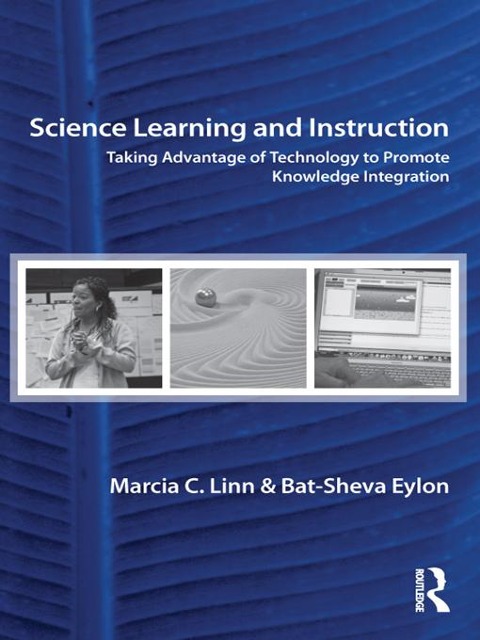
Science Learning and Instruction describes advances in understanding the nature of science learning and their implications for the design of science instruction. The authors show how design patterns, design principles, and professional development opportunities coalesce to create and sustain effective instruction in each primary scientific domain: earth science, life science, and physical science. Calling for more in depth and less fleeting coverage of science topics in order to accomplish knowledge integration, the book highlights the importance of designing the instructional materials, the examples that are introduced in each scientific domain, and the professional development that accompanies these materials. It argues that unless all these efforts are made simultaneously, educators cannot hope to improve science learning outcomes. The book also addresses how many policies, including curriculum, standards, guidelines, and standardized tests, work against the goal of integrative understanding, and discusses opportunities to rethink science education policies based on research findings from instruction that emphasizes such understanding.
Marcia C. Linn is a professor of development and cognition specializing in education in mathematics, science, and technology in the Graduate School of Education at the University of California, Berkeley. Bat-Sheva Eylon is a professor at the Science Teaching Department at the Weizmann Institute of Science, Israel. She specializes in learning, instruction, and professional development of physics and science teachers. She holds the Chief Justice Bora Laskin Chair of Science Teaching.
Chapter 1 - Introduction and Overview Chapter 2 - Typical Instructional Patterns Chapter 3 - Transforming Science Instruction with Technology: A Thermodynamics Case Study Chapter 4 - Particulate Structure of Matter: A Case Study Chapter 5 - Knowledge Integration Principles and Patterns Chapter 6 - Lectures and Technology Chapter 7 - Experimentation and Knowledge Integration Chapter 8 - Making Visualizations Valuable Chapter 9 - Collaboration for Knowledge Integration Chapter 10 - Professional Development for Knowledge Integration Chapter 11 - The Case for Knowledge Integration
Dieses eBook wird im PDF-Format geliefert und ist mit einem Adobe Kopierschutz (DRM) versehen. Sie können dieses eBook mit allen Geräten lesen, die das PDF-Format und den Adobe Kopierschutz (DRM) unterstützen.
Zum Beispiel mit den folgenden Geräten:
• tolino Reader
Laden Sie das eBook direkt über den Reader-Shop auf dem tolino herunter oder übertragen Sie das eBook auf Ihren tolino mit einer kostenlosen Software wie beispielsweise Adobe Digital Editions.
• Sony Reader & andere eBook Reader
Laden Sie das eBook direkt über den Reader-Shop herunter oder übertragen Sie das eBook mit der kostenlosen Software Sony READER FOR PC/Mac oder Adobe Digital Editions auf ein Standard-Lesegeräte mit epub- und Adobe DRM-Unterstützung.
• Tablets & Smartphones
Möchten Sie dieses eBook auf Ihrem Smartphone oder Tablet lesen, finden Sie hier unsere kostenlose Lese-App für iPhone/iPad und Android Smartphone/Tablets.
• PC & Mac
Lesen Sie das eBook direkt nach dem Herunterladen mit einer kostenlosen Lesesoftware, beispielsweise Adobe Digital Editions, Sony READER FOR PC/Mac oder direkt über Ihre eBook-Bibliothek in Ihrem Konto unter „Meine eBooks“ - „online lesen“.
Schalten Sie das eBook mit Ihrer persönlichen Adobe ID auf bis zu sechs Geräten gleichzeitig frei.
Bitte beachten Sie, dass die Kindle-Geräte das Format nicht unterstützen und dieses eBook somit nicht auf Kindle-Geräten lesbar ist.