Und dann auf "Zum Home-Bildschirm [+]".

Stöbern
genialokal zum Startbildschirm hinzufügen
Installieren Sie die genialokal App auf Ihrem Startbildschirm für einen schnellen Zugriff und eine komfortable Nutzung.
Installieren Sie die genialokal App auf Ihrem Startbildschirm für einen schnellen Zugriff und eine komfortable Nutzung.
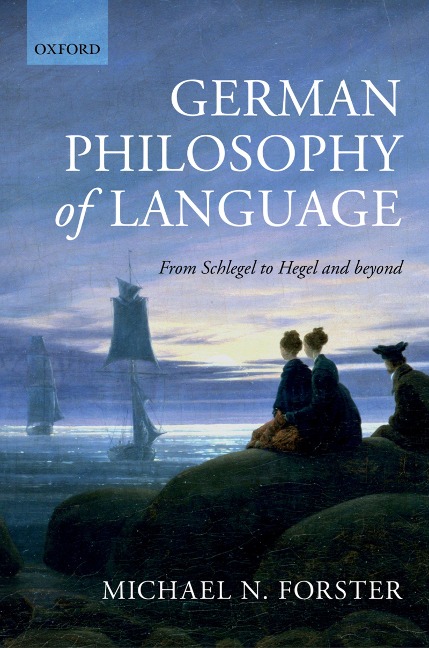
Michael Forster here presents a ground-breaking study of German philosophy of language in the nineteenth century (and beyond). His previous book, After Herder, showed that the eighteenth-century philosopher J.G. Herder played the fundamental role in founding modern philosophy of language, including new theories of interpretation ('hermeneutics') and translation, as well as in establishing such whole new disciplines concerned with language as anthropology and linguistics. This new volume reveals that Herder's ideas continued to have a profound impact on such important nineteenth-century thinkers as Friedrich Schlegel (the leading German Romantic), Wilhelm von Humboldt (a founder of linguistics), and G.W.F. Hegel (the leading German Idealist). Forster shows that the most valuable ideas about language in this tradition were continuous with Herder's, whereas deviations from the latter that occurred tended to be inferior. This book not only sets the historical record straight but also champions the Herderian tradition for its philosophical depth and breadth.
Michael N. Forster read P.P.E. at Oxford University, and earned his PhD in Philosophy at Princeton University. Since 1985 he has taught at the University of Chicago, where he served for ten years as chairman of the Philosophy Department and is currently Glen A. Lloyd Distinguished Service Professor in Philosophy. He is the author of six books on German philosophy, as well as many articles on German philosophy, ancient philosophy, and contemporary philosophy of language.
- Acknowledgements - Introduction - Part I: Schlegel - 1: Friedrich Schlegel - 2: Friedrich Schlegel's Hermeneutics - Part II: Humboldt - 3: Wilhelm von Humboldt - 4: Herder, Schlegel, Humboldt, and the Birth of Modern Linguistics - Part III: Hegel - 5: Hegel on Language - 6: Hegel and Some (Near-)Contemporaries: Narrow or Broad Expressivism? - 7: Hegel and Hermeneutics - Part IV: And Beyond - 8: Philosophy of Language in the Nineteenth Century - 9: Hermeneutics - Select Bibliography - Index
Dieses eBook wird im PDF-Format geliefert und ist mit einem Adobe Kopierschutz (DRM) versehen. Sie können dieses eBook mit allen Geräten lesen, die das PDF-Format und den Adobe Kopierschutz (DRM) unterstützen.
Zum Beispiel mit den folgenden Geräten:
• tolino Reader
Laden Sie das eBook direkt über den Reader-Shop auf dem tolino herunter oder übertragen Sie das eBook auf Ihren tolino mit einer kostenlosen Software wie beispielsweise Adobe Digital Editions.
• Sony Reader & andere eBook Reader
Laden Sie das eBook direkt über den Reader-Shop herunter oder übertragen Sie das eBook mit der kostenlosen Software Sony READER FOR PC/Mac oder Adobe Digital Editions auf ein Standard-Lesegeräte mit epub- und Adobe DRM-Unterstützung.
• Tablets & Smartphones
Möchten Sie dieses eBook auf Ihrem Smartphone oder Tablet lesen, finden Sie hier unsere kostenlose Lese-App für iPhone/iPad und Android Smartphone/Tablets.
• PC & Mac
Lesen Sie das eBook direkt nach dem Herunterladen mit einer kostenlosen Lesesoftware, beispielsweise Adobe Digital Editions, Sony READER FOR PC/Mac oder direkt über Ihre eBook-Bibliothek in Ihrem Konto unter „Meine eBooks“ - „online lesen“.
Schalten Sie das eBook mit Ihrer persönlichen Adobe ID auf bis zu sechs Geräten gleichzeitig frei.
Bitte beachten Sie, dass die Kindle-Geräte das Format nicht unterstützen und dieses eBook somit nicht auf Kindle-Geräten lesbar ist.