Und dann auf "Zum Home-Bildschirm [+]".

Stöbern
genialokal zum Startbildschirm hinzufügen
Installieren Sie die genialokal App auf Ihrem Startbildschirm für einen schnellen Zugriff und eine komfortable Nutzung.
Installieren Sie die genialokal App auf Ihrem Startbildschirm für einen schnellen Zugriff und eine komfortable Nutzung.
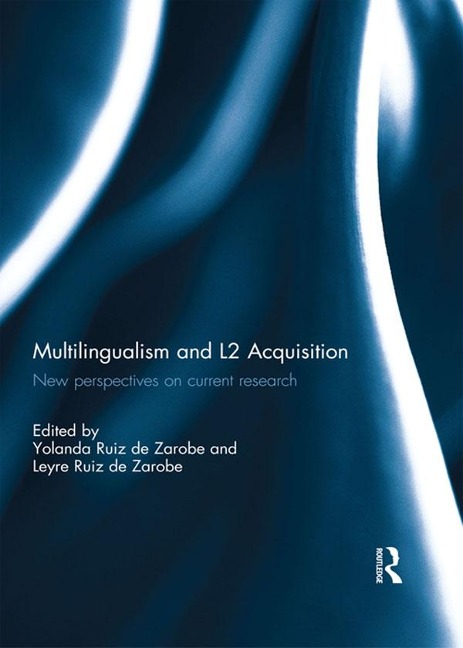
In recent years we have witnessed a growing interest in multilingualism and its relationship with the learning and teaching of second/foreign languages. However, multilingualism is a highly complex phenomenon, which has a direct influence on how we learn languages. For instance, do we learn a second/foreign language in a similar way in a multilingual context as in a monolingual one? What is the role of the other languages spoken in the community? Do contrasting learning contexts, like CLIL or studying abroad, produce different results? Can positive emotions such as foreign language enjoyment have an active role in the foreign language learning process? These and other topics will be discussed in this book, with the aim of understanding multilingualism, how languages are learned and how to teach them better. This book was originally published as a special issue of the International Journal of Multilingualism.
Yolanda Ruiz de Zarobe is Associate Professor in Language and Applied Linguistics at the University of the Basque Country, UPV/EHU, Spain. Her research interests focus on the acquisition of English as a second and a third language, multilingualism and Content and Language Integrated Learning (CLIL). Her work has appeared in books, edited books and international journals. Leyre Ruiz de Zarobe is Associate Professor in French Linguistics in the Department of French Philology at the University of the Basque Country, UPV/EHU, Spain. Her main research interests and publications are in the field of French pragmatics, discourse analysis, and French as a Second/Foreign Language.
1. New perspectives on multilingualism and L2 acquisition: an introduction 2. A bright future for interdisciplinary multilingualism research 3. How does pragmatic competence develop in bilinguals? 4. English L3 learning in a multilingual context: the role of parental education and L2 exposure within the living community 5. Practice makes best: contrasting learning contexts, comparing learner progress 6. Towards new learning partnerships in bilingual educational contexts - raising learner awareness and creating conditions for reciprocity and pedagogic attention
Dieses eBook wird im PDF-Format geliefert und ist mit einem Adobe Kopierschutz (DRM) versehen. Sie können dieses eBook mit allen Geräten lesen, die das PDF-Format und den Adobe Kopierschutz (DRM) unterstützen.
Zum Beispiel mit den folgenden Geräten:
• tolino Reader
Laden Sie das eBook direkt über den Reader-Shop auf dem tolino herunter oder übertragen Sie das eBook auf Ihren tolino mit einer kostenlosen Software wie beispielsweise Adobe Digital Editions.
• Sony Reader & andere eBook Reader
Laden Sie das eBook direkt über den Reader-Shop herunter oder übertragen Sie das eBook mit der kostenlosen Software Sony READER FOR PC/Mac oder Adobe Digital Editions auf ein Standard-Lesegeräte mit epub- und Adobe DRM-Unterstützung.
• Tablets & Smartphones
Möchten Sie dieses eBook auf Ihrem Smartphone oder Tablet lesen, finden Sie hier unsere kostenlose Lese-App für iPhone/iPad und Android Smartphone/Tablets.
• PC & Mac
Lesen Sie das eBook direkt nach dem Herunterladen mit einer kostenlosen Lesesoftware, beispielsweise Adobe Digital Editions, Sony READER FOR PC/Mac oder direkt über Ihre eBook-Bibliothek in Ihrem Konto unter „Meine eBooks“ - „online lesen“.
Schalten Sie das eBook mit Ihrer persönlichen Adobe ID auf bis zu sechs Geräten gleichzeitig frei.
Bitte beachten Sie, dass die Kindle-Geräte das Format nicht unterstützen und dieses eBook somit nicht auf Kindle-Geräten lesbar ist.