Und dann auf "Zum Home-Bildschirm [+]".

Stöbern
genialokal zum Startbildschirm hinzufügen
Installieren Sie die genialokal App auf Ihrem Startbildschirm für einen schnellen Zugriff und eine komfortable Nutzung.
Installieren Sie die genialokal App auf Ihrem Startbildschirm für einen schnellen Zugriff und eine komfortable Nutzung.
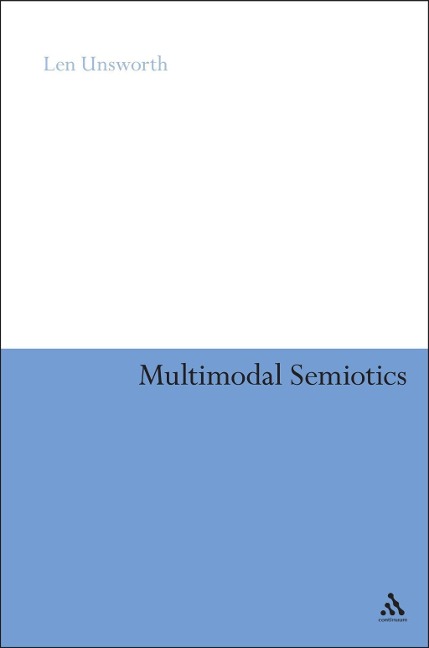
This volume presents an overview of new developments and applications of social semiotic theory. Pioneered by M.A.K. Halliday, social semiotic theory sees meaning as created through the interaction of texts (including writing, images, sound and space) within a given context. Divided into five sections, the contributors use social semiotic theory to analyse a range of contexts, including the classroom, the museum and cinema. The case studies show the range and scope of this method of analysis, and include: the school curriculum; literacy; print media; online resources; film; and advertising.
Multimodal Semiotics will be of interest to academics researching social semiotic theory, systemic functional linguistics and applied linguistics.
Contents
Introduction
1. Multimodal semiotic analyses and education, Len Unsworth (University of New England, Australia)
Part I: Semiotics and 3D Space
2. Analysing space, Louise Ravelli (University of New South Wales, Australia)
3. The discursive construction of social space, Theo Van Leeuwen (University of Technology, Sydney, Australia)
4. Interpersonal meaning in 3D space: How a Bonding icon gets its 'charge', Maree Stenglin (University of Sydney, Australia)
5. The interplay of discourse, place and space in pedagogic relations, Pauline Jones (University of Wollongong, Australia)
Part II: Semiotics in Film
6. Cohesive harmony in filmic text, Chiaoi Tseng (University of Bremen, Germany)
7. Metafunctional analyses of sound in film communication, Betty Pun (University of New South Wales, Australia)
Part III: Semiotics in News and Public Media
8. Intermodal relations in image nuclear news stories, Helen Caple (University of Sydney, Australia)
9. Online newspapers and TESOL classrooms: A multimodal perspective, John Knox (Macquarie University, Australia)
10. Symbolic constructions in global public visuals: A Pedagogic Framework for Critical Visual Literacy, Jan Connelly (University of New England, Armidale, Australia)
Part IV: Semiotics in School Curricula
11. Literacy across the school subjects: A multimodal approach, Kristina Love (University of Melbourne, Australia)
12. Time visuals in history text books: some pedagogic issues (Beverly Derewianka (University of Wollongong, Australia) and Caroline Coffin (The Open University, UK)
13. Multimodal representation of educational meanings in Montessori pedagogy, Susan Feez (University of New England, Australia)
14. Children's website structure and navigation, Emilia Djonov (Macquarie University, Australia)
15. Metaphor in art education products, Ulla Oksanen (University of Helsinki, Finland)
Dieses eBook wird im PDF-Format geliefert und ist mit einem Adobe Kopierschutz (DRM) versehen. Sie können dieses eBook mit allen Geräten lesen, die das PDF-Format und den Adobe Kopierschutz (DRM) unterstützen.
Zum Beispiel mit den folgenden Geräten:
• tolino Reader
Laden Sie das eBook direkt über den Reader-Shop auf dem tolino herunter oder übertragen Sie das eBook auf Ihren tolino mit einer kostenlosen Software wie beispielsweise Adobe Digital Editions.
• Sony Reader & andere eBook Reader
Laden Sie das eBook direkt über den Reader-Shop herunter oder übertragen Sie das eBook mit der kostenlosen Software Sony READER FOR PC/Mac oder Adobe Digital Editions auf ein Standard-Lesegeräte mit epub- und Adobe DRM-Unterstützung.
• Tablets & Smartphones
Möchten Sie dieses eBook auf Ihrem Smartphone oder Tablet lesen, finden Sie hier unsere kostenlose Lese-App für iPhone/iPad und Android Smartphone/Tablets.
• PC & Mac
Lesen Sie das eBook direkt nach dem Herunterladen mit einer kostenlosen Lesesoftware, beispielsweise Adobe Digital Editions, Sony READER FOR PC/Mac oder direkt über Ihre eBook-Bibliothek in Ihrem Konto unter „Meine eBooks“ - „online lesen“.
Schalten Sie das eBook mit Ihrer persönlichen Adobe ID auf bis zu sechs Geräten gleichzeitig frei.
Bitte beachten Sie, dass die Kindle-Geräte das Format nicht unterstützen und dieses eBook somit nicht auf Kindle-Geräten lesbar ist.