Und dann auf "Zum Home-Bildschirm [+]".

Stöbern
genialokal zum Startbildschirm hinzufügen
Installieren Sie die genialokal App auf Ihrem Startbildschirm für einen schnellen Zugriff und eine komfortable Nutzung.
Installieren Sie die genialokal App auf Ihrem Startbildschirm für einen schnellen Zugriff und eine komfortable Nutzung.
Ihr gewünschter Artikel ist in 0 Buchhandlungen vorrätig - wählen Sie hier eine Buchhandlung in Ihrer Nähe aus:

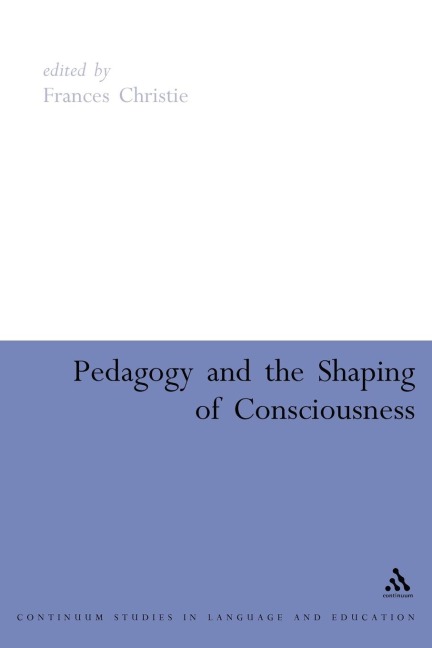
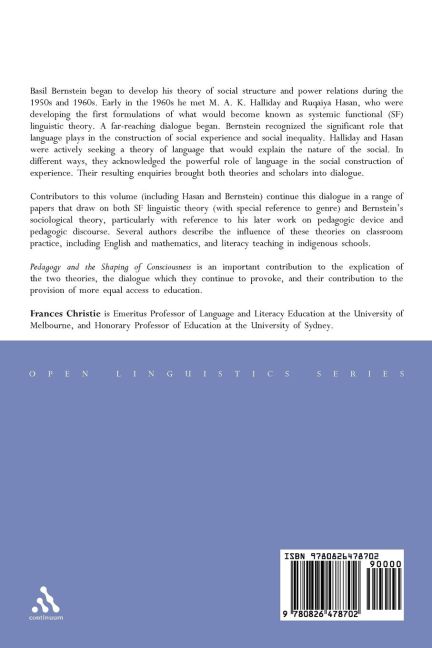
Basil Bernstein began to develop his theory of social structure and power relations during the 1950s and 1960s. Early in the 1960s he met M. A. K. Halliday and Ruqaiya Hasan, who were developing the first formulations of what would become known as systemic functional (SF) linguistic theory. A far-reaching dialogue began. Bernstein recognized the significant role that language plays in the construction of social experience and social inequality. Halliday and Hasan were actively seeking a theory of language that would explain the nature of the social. In different ways, they acknowledged the powerful role of language in the social construction of experience. Their resulting enquiries brought both theories and scholars into dialogue. Contributors to this volume (including Hasan and Bernstein) continue this dialogue in a range of papers that draw on both SF linguistic theory (with special reference to genre) and Bernstein's sociological theory, particularly with reference to his later work on pedagogic device and pedagogic discourse. Several authors describe the influence of these theories on classroom practice, including English and mathematics, and literacy teaching in indigenous schools. Pedagogy and the Shaping of Consciousness is an important contribution to the explication of the two theories, the dialogue which they continue to provoke, and their contribution to the provision of more equal access to education.
Frances Christie
Introduction; 1. Society, language and the mind: the meta-dialogism of Basil Bernstein's theory; Ruqaiya Hasan; 2. Contexts for learning; Carmel Cloran; 3. Preparing for school: developing a semantic style for educational knowledge; Clare Painter; 4. The pedagogic device and the production of pedagogic discourse: a case example in early literacy education; 5. Mentoring semogenesis: 'genre-based' literacy pedagogy; J. R. Martin; 6. The pedagogic device and the teaching of English; Frances Christie; 7. Language, knowledge and authority in school mathematics; Robert Veel; 8. Culture, competence and schooling: approaches to literacy teaching in indigenous school education; David Rose; 9. Offical knowledge and pedagogic identities; Basil Bernstein; 10. Pedagogic identities and educational reform in the 1990s: the cultural dynamics of national curricula; William Tyler