Und dann auf "Zum Home-Bildschirm [+]".

Stöbern
genialokal zum Startbildschirm hinzufügen
Installieren Sie die genialokal App auf Ihrem Startbildschirm für einen schnellen Zugriff und eine komfortable Nutzung.
Installieren Sie die genialokal App auf Ihrem Startbildschirm für einen schnellen Zugriff und eine komfortable Nutzung.
Honourable Mention, Best Monograph Award, BAFTSS Publication Awards 2022
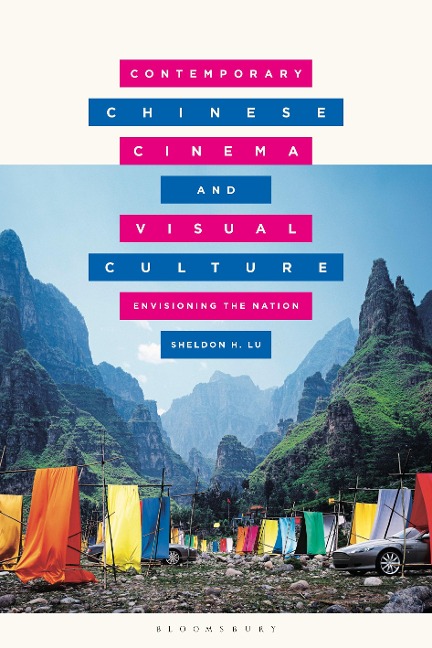
Sheldon Lu's wide-ranging new book investigates how filmmakers and visual artists from mainland China, Hong Kong and Taiwan have envisioned China as it transitions from a socialist to a globalized capitalist state. It examines how the modern nation has been refashioned and re-imagined in order to keep pace with globalization and transnationalism.
At the heart of Lu's analysis is a double movement in the relationship between nation and transnationalism in the Chinese post-socialist state. He considers the complexity of how the Chinese economy is integrated in the global capitalist system while also remaining a repressive body politic with mechanisms of control and surveillance. He explores the interrelations of the local, the national, the subnational, and the global as China repositions itself in the world.
Lu considers examples from feature and documentary film, mainstream and marginal cinema, and a variety of visual arts: photography, painting, digital video, architecture, and installation. His close case studies include representations of class, masculinity and sexuality in contemporary Taiwanese and Chinese cinema; the figure of the sex worker as a symbol of modernity and mobility; and artists' representations of Beijing at the time of the 2008 Olympics.
Sheldon Lu is Distinguished Professor of Comparative Literature at UC Davis, USA. He is the author and editor of more than a dozen books in English and Chinese. These include Chinese Modernity and Global Biopolitics: Studies in Literature and Visual Culture (2007), China, Transnational Visuality, Global Postmodernity (2001), and From Historicity to Fictionality: The Chinese Poetics of Narrative (1994). Chinese-Language Film: Historiography, Poetics, Politics (co-edited with Emilie Y. Y. Yeh, 2005) was named a Choice Outstanding Academic Title.
Introduction: Refashioning the Nation in Transnational Cinema and Art
Part 1: Nationhood, Gender, Sexuality, Masculinity in Feature Film
1.Projecting the Chinese Nation on Domestic and Global Screens
2. Space, Mobility, Modernity: The Female Prostitute in Chinese-language Film
3. Re-orientations of Hong Kong Cinema and Transformations of Masculinity
4. Masculinity in Crisis: Male Characters in Jia Zhangke's Films
Part 2. Multimedia Engagements with the Local, National, and Global
5. Peripheral, Underground, and Independent Cinema
6. Performing and Romancing the Other in Film, Television Drama, and Ballet
7. Reshaping Beijing's Space: Architecture, Art, Photography, Film
8. Artistic and Multimedia Interventions
Conclusion: Globalization at Bay
Filmography
Bibliography
Index
Dieses eBook wird im PDF-Format geliefert und ist mit einem Adobe Kopierschutz (DRM) versehen. Sie können dieses eBook mit allen Geräten lesen, die das PDF-Format und den Adobe Kopierschutz (DRM) unterstützen.
Zum Beispiel mit den folgenden Geräten:
• tolino Reader
Laden Sie das eBook direkt über den Reader-Shop auf dem tolino herunter oder übertragen Sie das eBook auf Ihren tolino mit einer kostenlosen Software wie beispielsweise Adobe Digital Editions.
• Sony Reader & andere eBook Reader
Laden Sie das eBook direkt über den Reader-Shop herunter oder übertragen Sie das eBook mit der kostenlosen Software Sony READER FOR PC/Mac oder Adobe Digital Editions auf ein Standard-Lesegeräte mit epub- und Adobe DRM-Unterstützung.
• Tablets & Smartphones
Möchten Sie dieses eBook auf Ihrem Smartphone oder Tablet lesen, finden Sie hier unsere kostenlose Lese-App für iPhone/iPad und Android Smartphone/Tablets.
• PC & Mac
Lesen Sie das eBook direkt nach dem Herunterladen mit einer kostenlosen Lesesoftware, beispielsweise Adobe Digital Editions, Sony READER FOR PC/Mac oder direkt über Ihre eBook-Bibliothek in Ihrem Konto unter „Meine eBooks“ - „online lesen“.
Schalten Sie das eBook mit Ihrer persönlichen Adobe ID auf bis zu sechs Geräten gleichzeitig frei.
Bitte beachten Sie, dass die Kindle-Geräte das Format nicht unterstützen und dieses eBook somit nicht auf Kindle-Geräten lesbar ist.