Und dann auf "Zum Home-Bildschirm [+]".

Stöbern
genialokal zum Startbildschirm hinzufügen
Installieren Sie die genialokal App auf Ihrem Startbildschirm für einen schnellen Zugriff und eine komfortable Nutzung.
Installieren Sie die genialokal App auf Ihrem Startbildschirm für einen schnellen Zugriff und eine komfortable Nutzung.
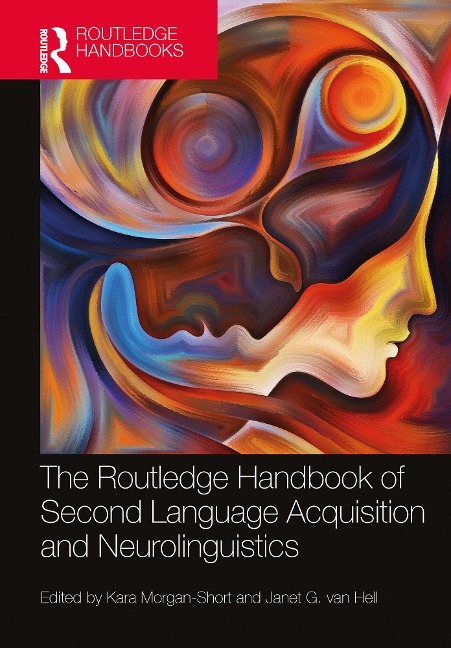
The Routledge Handbook of Second Language Acquisition and Neurolinguistics provides a comprehensive discussion of a wide range of neurocognitive and neurobiological scientific research about learning second or additional languages. It is a one-of-a-kind centralized resource that brings together research that is typically found in disperse publication venues. Eminent global scholars from various disciplines synthesize and cross-fertilize current and past neural research about second language through systematic, in-depth, and timely chapters that discuss cores issues for understanding the neurocognition of second language learning, representation, and processing. Handbook sections provide overviews of extant and emerging neuroscience methods, syntheses of neurocognitive research on second language syntax, morphosyntax, lexicon, phonology, and pragmatics, and up-to-date descriptions of theoretical approaches of the neural basis of second language learning. The volume provides additional sections that synthesize research on a variety of topics including factors that affect the neurocognition of second language, the neural mechanisms underlying second language learning, individual differences in the neurocognition of second language, as well as research on understudied languages and populations, such as sign language, child second language learners, and individuals with aphasia. This handbook will be an indispensable resource to scholars and students across a wide range of disciplines, including those interested in second language acquisition, applied linguistics, cognitive science, psychology, neuroscience, and research methodology. It should facilitate transformative connections between ideas and disciplines and lead to informative and productive paths for future research.
Kara Morgan-Short is Professor of Hispanic Linguistics and Psychology at the University of Illinois Chicago, USA. She directs the Cognition of Second Language Acquisition laboratory, has served as Associate Editor of the journal Language Learning, and has won undergraduate and graduate teaching and mentoring awards. Janet G. van Hell is Distinguished Professor of Psychology and Linguistics and Director of the Center for Language Science at the Pennsylvania State University, USA. She has served as Editor of the Journal of Cognitive Psychology, and has received excellence in graduate student and postdoc mentoring awards.
List of Contributors 1. Second Language Acquisition and Neurolinguistics: A Synthesis of Perspectives Janet G. van Hell and Kara Morgan-Short 2. Using Time-Based Encephalography to Investigate Second Language Danielle S. Dickson and Eric Pelzl 3. Using Quantitative Encephalography (qEEG) to Investigate Second Language learning Malayka Mottarella and Chantel S. Prat 4. Using Functional Neuroimaging to Investigate Second Language Organization Shanna Kousaie and Denise Klein 5. Using Structural Neuroimaging to Investigate Second Language Eleonora Rossi, Toms Voits, and Vincent DeLuca 6. Using Non-Invasive Brain Stimulation to Investigate Second Language Nick Pandza 7. The Neurolinguistics of Second Language Phonology: A View of Phonemic Contrast Learning Emily Myers and Pamela Fuhrmeister 8. The Neurolinguistics of the Second Language Lexico-Semantic System Natasha Tokowicz and Victoria Tkacikova 9. The Neurolinguistics of the Second Language Morphological System: The Role of Grammar-Related and Speaker-Related Factors Nicoletta Biondo, Nicola Molinaro, and Simona Mancini 10. The Neurolinguistics of the Second Language Syntactic System José Alemán Bañon, Robert Fiorentino, and Alison Gabriele 11. The Neurolinguistics of the Second Language Pragmatic System Francesca M. M. Citron Part III - Neurolinguistic Theories and Models of Second Language 12. How the Declarative and Procedural Memory Brain Circuits Support Second Language: Electrophysiological, Neuroimaging, and Neurological Evidence Michael T. Ullman and Kara Morgan-Short 13. Neurolinguistic Methods and Generative Approaches to Second Language Acquisition David Miller, Vincent DeLuca, Kyle Swanson, and Jason Rothman 14. Second Language Acquisition and Neuroplasticity: Insights from the Dynamic Restructuring Model Michal Korenar and Christos Pliatsikas 15. Linguistic Relativity and Second Language: How Learning a Second Language May Reshape Cognition Aina Casaponsa and Guillaume Thierry 16. Neurocognition of Social Learning of Second Language: How Can Second Language be Learned as First Language? Hyeonjeong Jeong and Ping Li 17. Genetic Factors in Second Language Neurocognition Kelly A. Vaughn, Anushka Oak, and Arturo E. Hernandez 18. Age and Proficiency in Second Language Neurocognition Lauren A. Fromont 19. De-generacy as an Organizing Principle of Bilingual Language Processing: Evidence from Brain and Behavior Anne L. Beatty-Martínez and Debra A. Titone 20. Factors Accounting for Individual Differences in Second Language Neurocognition Alicia Luque and Lauren Covey 21. Cross-Linguistic Transfer in Second Language Neurocognition Laura Sabourin and Gabrielle Manning 22. Second Language Neurocognition and First Language Attrition Merel Keijzer and Bregtje Seton 23. First Language/Second Language Crosslinguistic Influence on Third Language Acquisition via Neurocognitive Memory Systems Emily Shimeng Xu and Patrick Chun Man Wong 24. The Neurocognition of Prediction in Second Language Processing and Learning Edith Kaan 25. Feedback in Second Language Neurocognition Sybrine Bultena 26. Memory Consolidation in Second Language Neurocognition Clara Eckerdt, Atsuko Takashima, and James M. McQueen 27. Context of Learning in Second Language Neurocognition Harriet Wood Bowden and Mandy Faretta-Stutenberg 28. Embodied Second Language Processing and Learning from a Neurocognitive Perspective Ana Zappa and Cheryl Frenck-Mestre 29. The Neurocognition of Foreign Accent Perception Sendy Caffara, Leah Gosselin, Trisha Thomas and Clara D. Martin 30. Decision Making and Second Language Neurocognition Alice Foucart 31. Cognitive Control in Second Language Neurocognition Taomei Guo and Fengyang Ma 32. The Neurocognition of Child Second Language Development Valeria Ortiz-Villalobos, Ioulia Kovelman, and Teresa Satterfield 33. The Neurocognition of Learning a Second Language in the Visual-Manual Modality Gabriela Meade 34. Aphasia, Rehabilitation, and Second Language Neurocognition Michael Scimeca, Erin Carpenter, and Swathi Kiran Index
Dieses eBook wird im PDF-Format geliefert und ist mit einem Adobe Kopierschutz (DRM) versehen. Sie können dieses eBook mit allen Geräten lesen, die das PDF-Format und den Adobe Kopierschutz (DRM) unterstützen.
Zum Beispiel mit den folgenden Geräten:
• tolino Reader
Laden Sie das eBook direkt über den Reader-Shop auf dem tolino herunter oder übertragen Sie das eBook auf Ihren tolino mit einer kostenlosen Software wie beispielsweise Adobe Digital Editions.
• Sony Reader & andere eBook Reader
Laden Sie das eBook direkt über den Reader-Shop herunter oder übertragen Sie das eBook mit der kostenlosen Software Sony READER FOR PC/Mac oder Adobe Digital Editions auf ein Standard-Lesegeräte mit epub- und Adobe DRM-Unterstützung.
• Tablets & Smartphones
Möchten Sie dieses eBook auf Ihrem Smartphone oder Tablet lesen, finden Sie hier unsere kostenlose Lese-App für iPhone/iPad und Android Smartphone/Tablets.
• PC & Mac
Lesen Sie das eBook direkt nach dem Herunterladen mit einer kostenlosen Lesesoftware, beispielsweise Adobe Digital Editions, Sony READER FOR PC/Mac oder direkt über Ihre eBook-Bibliothek in Ihrem Konto unter „Meine eBooks“ - „online lesen“.
Schalten Sie das eBook mit Ihrer persönlichen Adobe ID auf bis zu sechs Geräten gleichzeitig frei.
Bitte beachten Sie, dass die Kindle-Geräte das Format nicht unterstützen und dieses eBook somit nicht auf Kindle-Geräten lesbar ist.