Und dann auf "Zum Home-Bildschirm [+]".

Stöbern
genialokal zum Startbildschirm hinzufügen
Installieren Sie die genialokal App auf Ihrem Startbildschirm für einen schnellen Zugriff und eine komfortable Nutzung.
Installieren Sie die genialokal App auf Ihrem Startbildschirm für einen schnellen Zugriff und eine komfortable Nutzung.
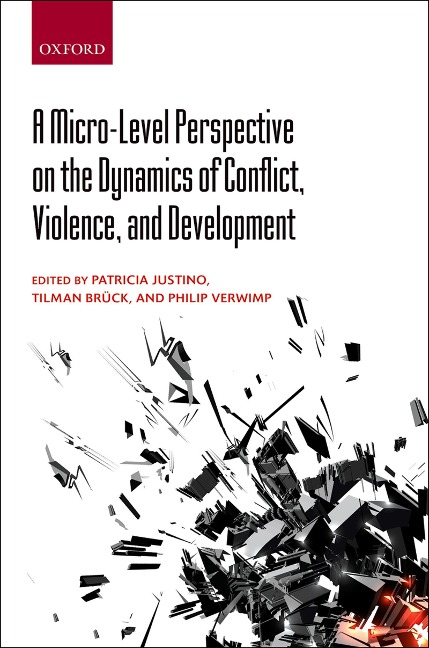
This volume presents an innovative new analytical framework for understanding the dynamics of violent conflict and its impact on people and communities living in contexts of violence. Bringing together the findings of MICROCON, an influential five year research programme funded by the European Commission, this book provides readers with the most current and comprehensive evidence available on violent conflict from a micro-level perspective. MICROCON was the largest programme on conflict analysis in Europe from 2007-2011, and its policy outreach has helped to influence EU development policy, and supported policy capacity in many conflict-affected countries.
Whilst traditional studies into conflict have been through an international /regional lens with the state as the primary unit of analysis, the micro-level perspective offered by this volume places the individuals, households, groups and communities affected by conflict at the centre of analysis. Studying how people behave in groups and communities; and how they interact with the formal and informal institutions that manage local tensions, is crucial to understanding the conflict cycle. These micro-foundations therefore provide a more in-depth analysis of the causes and consequences of violent conflict. By challenging the ways we think about conflict, this book bridges the gap in evidence, allowing for more specific and accurate policy interventions for conflict resolution and development processes to help reduce poverty in the lives of those affected by conflict.
This volume is divided into four parts. Part I introduces the conceptual framework of MICROCON. Part II focuses on individual and group motivations in conflict processes. Part III highlights the micro-level consequences of violent conflict. The final section of this volume focuses on policy implications and future research agenda.
Patricia Justino is a development economist specialising in applied microeconomics. Her research work focuses on the impact of violence and conflict on household welfare and local institutional structures, the micro-foundations of violent conflict, and the implications of violence for economic development. Dr Justino has led several research projects funded by the British Academy, DFID, the European Commission, the ESRC, FAO, the Leverhulme Trust, UNDP, UNESCO, UN Women, and the World Bank. She is the Director of MICROCON and co-founder and co-director of the Households in Conflict Network. Since June 2010, she has convened the Conflict, Violence and Development cluster, part of the Vulnerability and Poverty Reduction Team, at the Institute of Development Studies.
Tilman Brück is the Director of the Stockholm International Peace Research Institute, and a Professor at Humboldt-University of Berlin. Previously he was Head of the Department of Development and Security at the German Institute for Economic Research. He studied economics at Glasgow University and Oxford University and obtained his doctorate in economics from Oxford University. His research interests focus on the economics of household behaviour and well-being in conflict and post-conflict economies and the economics of terrorism and insecurity. Professor Brück is a co-founder and co-director of the Households in Conflict Network, the coordinator of the Economics of Security Initiative, and the coordinator or deputy coordinator of several European research projects in the 6th and 7th framework programmes. He has also worked as a consultant for BMZ, DFID, the European Commission, GIZ, ILO, KfW, OECD, UNDP, USAID, and the World Bank.
Philip Verwimp obtained his PhD in Economics from the Catholic University of Leuven in January 2003 with a dissertation on the political economy of development and genocide in Rwanda. He specialises in the economic causes and consequences of conflict at the micro-level. He has done quantitative work on the death toll of the genocide and on the demography of post-genocide Rwanda. He works on poverty and health in conflict-affected countries. Dr Verwimp was a Fulbright-Hays Fellow at Yale University and worked for the World Bank as a Poverty Economist. He received the Jacques Rozenberg Award from the Auschwitz Foundation for his dissertation. He taught Development Economics at the Institute of Social Studies in The Hague and at the Universities of Antwerp, Leuven, and Utrecht. He was a research fellow from the Fund for Scientific Research (Flanders, Belgium) and visiting fellow at ECARES (2007-2009).
- Part I: Understanding Violent Conflict from a Micro-Level Perspective - 1: Patricia Justino, Tilman Brück, and Philip Verwimp: Micro-Level Dynamics of Conflict, Violence, and Development: A New Analytical Framework - 2: Timothy Raeymaekers: The Social Geography of Armed Conflict - 3: José Cuesta and Syed Mansoob Murshed: Greed, Grievance, and Globalization - Part II: Individual and Group Motivations in Conflict Processes - 4: Yvan Guichaoua: Group Formation, Identities, and Violent Mobilization: Evidence from Nigeria and Niger - 5: Frances Stewart: Inequality, Conflict, and Policy: A Review of some MICROCON Findings - 6: Michael Emerson: Interculturalism: Europe and its Muslims in Search of Sound Societal Models - Part III: Micro-Level Consequences of Violent Conflict - 7: Julie Litchfield: Poverty, Livelihoods, and Violent Conflict - 8: Philip Verwimp and Olivia D'Aoust: Risk, Security, and Coping Mechanisms in Contexts of Violent Conflict: Evidence from Rwanda and Burundi - 9: Chiara Altare and Debarati Guha-Sapir: The Burden of Armed Conflict: A Public Health Approach - 10: Roger Zetter, Andrea Purdekova, and Ana Maríá Ibáñez Londoño: Violence, Conflict, and Mobility: A Micro-Level Analysis - 11: Colette Harris: What Can Applying a Gender Lens Contribute to Conflict Studies? A Review of Selected MICROCON Working Papers - Part IV: Policy Implications and Future Research Agenda - 12: Carlos Bozzoli, Tilman Brück and Nina Wald: Evaluating Programmes in Conflict-Affected Areas - 13: Nathalie Tocci: EU, Conflict Transformation, and Civil Society: Promoting Peace from the Bottom Up? - 14: Patricia Justino: Research and Policy Implications From a Micro-Level Perspective on the Dynamics of Conflict, Violence, and Development
Dieses eBook wird im PDF-Format geliefert und ist mit einem Adobe Kopierschutz (DRM) versehen. Sie können dieses eBook mit allen Geräten lesen, die das PDF-Format und den Adobe Kopierschutz (DRM) unterstützen.
Zum Beispiel mit den folgenden Geräten:
• tolino Reader
Laden Sie das eBook direkt über den Reader-Shop auf dem tolino herunter oder übertragen Sie das eBook auf Ihren tolino mit einer kostenlosen Software wie beispielsweise Adobe Digital Editions.
• Sony Reader & andere eBook Reader
Laden Sie das eBook direkt über den Reader-Shop herunter oder übertragen Sie das eBook mit der kostenlosen Software Sony READER FOR PC/Mac oder Adobe Digital Editions auf ein Standard-Lesegeräte mit epub- und Adobe DRM-Unterstützung.
• Tablets & Smartphones
Möchten Sie dieses eBook auf Ihrem Smartphone oder Tablet lesen, finden Sie hier unsere kostenlose Lese-App für iPhone/iPad und Android Smartphone/Tablets.
• PC & Mac
Lesen Sie das eBook direkt nach dem Herunterladen mit einer kostenlosen Lesesoftware, beispielsweise Adobe Digital Editions, Sony READER FOR PC/Mac oder direkt über Ihre eBook-Bibliothek in Ihrem Konto unter „Meine eBooks“ - „online lesen“.
Schalten Sie das eBook mit Ihrer persönlichen Adobe ID auf bis zu sechs Geräten gleichzeitig frei.
Bitte beachten Sie, dass die Kindle-Geräte das Format nicht unterstützen und dieses eBook somit nicht auf Kindle-Geräten lesbar ist.