Und dann auf "Zum Home-Bildschirm [+]".

Stöbern
genialokal zum Startbildschirm hinzufügen
Installieren Sie die genialokal App auf Ihrem Startbildschirm für einen schnellen Zugriff und eine komfortable Nutzung.
Installieren Sie die genialokal App auf Ihrem Startbildschirm für einen schnellen Zugriff und eine komfortable Nutzung.
Ihr gewünschter Artikel ist in 0 Buchhandlungen vorrätig - wählen Sie hier eine Buchhandlung in Ihrer Nähe aus:

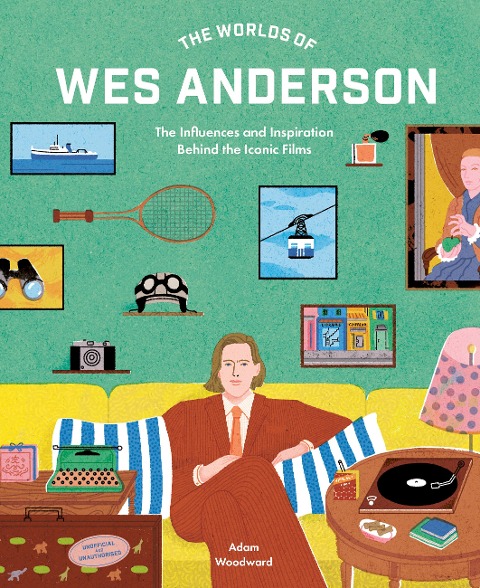
In all his films, Wes Anderson turns the mundane into magic by building distinctive and eccentric worlds. But how well do you know the man behind the camera? Discover the inspirations of one of our most revered auteurs with The Worlds of Wes Anderson. Anderson’s playful and vibrant aesthetic is universally admired – but how has he managed to create such a recognisable identity? From Hitchcock and Spielberg to Truffaut and Varda, there are countless homages and references scattered throughout Anderson’s filmography, while his cultural anchor points go far beyond film into the worlds of art and literature. Evocations of place and time underpin his work, from mid-century Paris in The French Dispatch to grand pre-war Europe in The Grand Budapest Hotel, while cultural institutions – such as Jacques Cousteau and The New Yorker magazine – are other touchstones. For Wes Anderson fans and cinephiles alike, this is an essential insight into the creative process of one of the world’s most unique filmmakers.
Adam Woodward is Editor-at-Large at Little White Lies magazine, the leading independent voice in film.
Introduction Chapter 1 Youth in Revolt Part 1 Les quatre cents coups (François Truffaut, 1959) Part 2 On the Waterfront (Elia Kazan, 1954) Part 3 The British Invasion (1964–67) Part 4 Melody (Waris Hussein, 1971) Chapter 2 Forbidden Love Part 1 The Graduate (Mike Nichols, 1967) Part 2 Harold and Maude (Hal Ashby, 1971) Part 3 The Passionate Friends (David Lean, 1949) Part 4 A Story from Chikamatsu (Kenji Mizoguchi, 1954) Chapter 3 Family Values Part 1 The Magnificent Ambersons (Orson Welles, 1942) Part 2 Charulata (Satyajit Ray, 1964) Part 3 Tokyo Story (Yasujir- Ozu, 1953) Part 4 Husbands (John Cassavetes, 1970) Chapter 4 Under Authority Part 1 La grande illusion (Jean Renoir, 1937) Part 2 Torn Curtain (Alfred Hitchcock, 1966) Part 3 L’enfance nue (Maurice Pialat, 1968) Part 4 La chinoise (Jean-Luc Godard, 1967) Chapter 5 Great Escapes Part 1 Badlands (Terrence Malick, 1973) Part 2 The Last Detail (Hal Ashby, 1973) Part 3 Le monde du silence (Jacques-Yves Cousteau, Louis Malle, 1956) Part 4 Paper Moon (Peter Bogdanovich, 1973) Chapter 6 Creature Comforts Part 1 My Neighbor Totoro (Hayao Miyazaki, 1988) Part 2 Kes (Ken Loach, 1969) Part 3 Fantastic Mr Fox (Roald Dahl, 1970) Part 4 Watership Down (Martin Rosen, 1978) Chapter 7 Life and Death Part 1 Ikiru (Akira Kurosawa, 1952) Part 2 Vagabond (Agnès Varda, 1985) Part 3 Quai des Orfèvres (Henri-Georges Clouzot, 1947) Part 4 Pigs and Battleships (Shôhei Imamura, 1961) Chapter 8 Character and Perspective Part 1 Stefan Zweig, selected works Part 2 Barry Lyndon (Stanley Kubrick, 1975) Part 3 Mean Streets (Martin Scorsese, 1973) Part 4 The Red Shoes (Michael Powell, Emeric Pressburger, 1948) Chapter 9 Colour and Composition Part 1 Pieter Bruegel the Elder, selected works Part 2 Mark Rothko, selected works Part 3 Jacques Henri Lartigue, selected works Part 4 Close Encounters of the Third Kind (Steven Spielberg, 1977) Viewing Recommendations Wes Anderson Filmography Index Image Credits Biographies and Author Acknowledgements