Und dann auf "Zum Home-Bildschirm [+]".

Stöbern
genialokal zum Startbildschirm hinzufügen
Installieren Sie die genialokal App auf Ihrem Startbildschirm für einen schnellen Zugriff und eine komfortable Nutzung.
Installieren Sie die genialokal App auf Ihrem Startbildschirm für einen schnellen Zugriff und eine komfortable Nutzung.
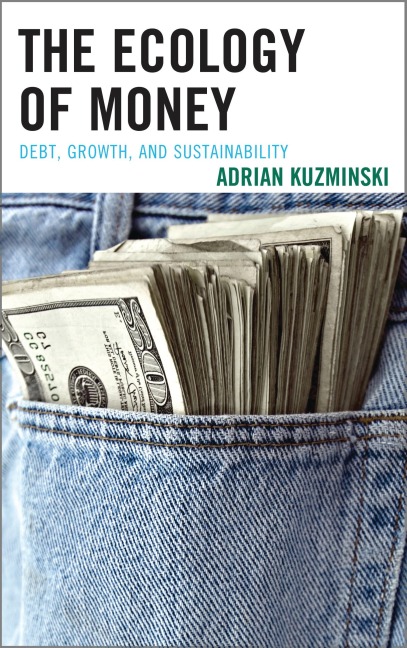
Modern economies must "grow" because money borrowed for investment can be repaid only by expanding production and consumption to meet the burden of usurious rates of interest.
The roots of this dynamic between debt and growth lay in the financial revolution of the late seventeenth and early eighteenth centuries in Britain which established a new usurious monetary system.
For the first time in history credit was made widely available, but only on condition of an exponentially increasing debt burden. To pay back debts production had to increase correspondingly, leading to the industrial revolution, economic "growth", and modernity itself.
Though private creditors gained a monopoly over the creation of credit, and were disproportionately enriched, the resulting economic growth for a time was great enough to benefit most debtors as well as creditors, ensuring widespread prosperity.
That is no longer the case. With today's eco-crisis we have reached the limits of growth. We no longer have the natural resources to grow fast enough to pay our debts. This is the real root of our current financial crisis.
If we are to live sustainably, our system of money and credit must be transformed. We need a non-usurious monetary system appropriate to a steady-state economy, with capital broadly distributed at non-usurious rates of interest.
Such a system was developed by an early nineteenth century American thinker, Edward Kellogg, and is explored here in depth. His work inspired the populist movement and remains more relevant than ever as a viable alternative to the a financial system we can no longer afford.
Adrian Kuzminski is an author and Research Scholar in Philosophy at Hartwick College. His previous works include Fixing the System: A History of Populism, Ancient and Modern (Continuum, 2008); Pyrrhonism: How the Ancient Greeks Reinvented Buddhism (Lexington, 2008); and The Soul (Peter Lang, 1994). He is also Founder and Moderator of Sustainable Otsego, a social network of several hundred subscribers in the Cooperstown, NY, area, focused on promoting sustainable practices.
Chapter One: Growth and Money
Chapter Two: Equal and Unequal Exchanges
Chapter Three: The Commercial Revolution
Chapter Four: The Financial Revolution
Chapter Five: The Industrial Revolution
Chapter Six: Natural and Unnatural Interest
Chapter Seven: The Peoples' Money
Chapter Eight: Understanding Money
Bibliography
Dieses eBook wird im PDF-Format geliefert und ist mit einem Adobe Kopierschutz (DRM) versehen. Sie können dieses eBook mit allen Geräten lesen, die das PDF-Format und den Adobe Kopierschutz (DRM) unterstützen.
Zum Beispiel mit den folgenden Geräten:
• tolino Reader
Laden Sie das eBook direkt über den Reader-Shop auf dem tolino herunter oder übertragen Sie das eBook auf Ihren tolino mit einer kostenlosen Software wie beispielsweise Adobe Digital Editions.
• Sony Reader & andere eBook Reader
Laden Sie das eBook direkt über den Reader-Shop herunter oder übertragen Sie das eBook mit der kostenlosen Software Sony READER FOR PC/Mac oder Adobe Digital Editions auf ein Standard-Lesegeräte mit epub- und Adobe DRM-Unterstützung.
• Tablets & Smartphones
Möchten Sie dieses eBook auf Ihrem Smartphone oder Tablet lesen, finden Sie hier unsere kostenlose Lese-App für iPhone/iPad und Android Smartphone/Tablets.
• PC & Mac
Lesen Sie das eBook direkt nach dem Herunterladen mit einer kostenlosen Lesesoftware, beispielsweise Adobe Digital Editions, Sony READER FOR PC/Mac oder direkt über Ihre eBook-Bibliothek in Ihrem Konto unter „Meine eBooks“ - „online lesen“.
Schalten Sie das eBook mit Ihrer persönlichen Adobe ID auf bis zu sechs Geräten gleichzeitig frei.
Bitte beachten Sie, dass die Kindle-Geräte das Format nicht unterstützen und dieses eBook somit nicht auf Kindle-Geräten lesbar ist.