Und dann auf "Zum Home-Bildschirm [+]".

Stöbern
genialokal zum Startbildschirm hinzufügen
Installieren Sie die genialokal App auf Ihrem Startbildschirm für einen schnellen Zugriff und eine komfortable Nutzung.
Installieren Sie die genialokal App auf Ihrem Startbildschirm für einen schnellen Zugriff und eine komfortable Nutzung.
Ihr gewünschter Artikel ist in 0 Buchhandlungen vorrätig - wählen Sie hier eine Buchhandlung in Ihrer Nähe aus:

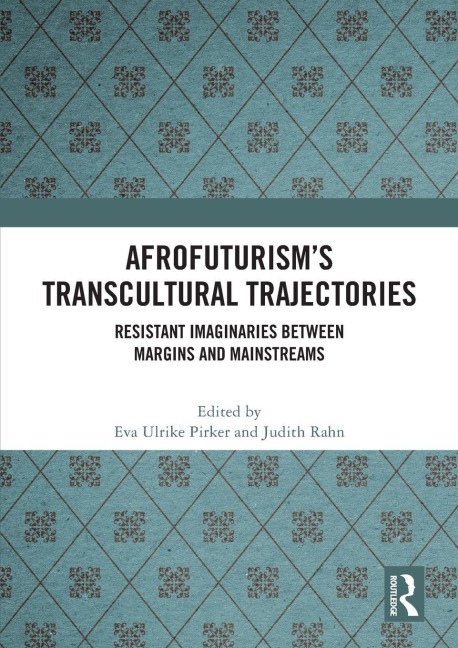

This book contextualizes Afrofuturism's diverse approaches in the past and present through investigations into overlapping horizons between Afrofuturist agendas and other intellectual and/or artistic movements and through explorations of Afrofuturist approaches in 21st century across media cultures and in a transcultural perspective.
Eva Ulrike Pirker is Senior Lecturer in Anglophone Studies and Literary Translation at Heinrich-Heine-University Düsseldorf, Germany, where she also curates the Centre for Translation Studies' programme (ctsdus.hhu.de). Judith Rahn is Lecturer at the Department of English and American Studies at Heinrich-Heine-Universität Düsseldorf, Germany. She has published on issues of posthumanism, affect and monstrosity.
1. Afrofuturist trajectories across time, space and media Section 1: Trajectories of Alternative Visions on Three Continents 2. "Afrotopia?": an Afrofuturist examination of Chad Hartigan's film Morris from America (2016) 3. Reframing the post-apocalypse in Black British film: the dystopian Afrofuturism of Welcome II the Terrordome and Shank 4. Wangari Maathai's environmental Afrofuturist imaginary in Wanuri Kahiu's Pumzi Section 2: Afrofuturist Soundscapes 5. A question of the sonic: problematizing Afrofuturism and its relation to Black Sound, with a case study of DJ Steloolive's performance art 6. The cosmic submarine-Yugen Blakrok's sonar echoes Section 3: Envisioning Afrofutures in Literature and Film 7. Math and magic: Nnedi Okorafor's Binti trilogy and its challenge to the dominance of Western science in science fiction 8. Wakanda Africa do you see? Reading Black Panther as a decolonial film through the lens of the Sankofa theory