Und dann auf "Zum Home-Bildschirm [+]".

Stöbern
genialokal zum Startbildschirm hinzufügen
Installieren Sie die genialokal App auf Ihrem Startbildschirm für einen schnellen Zugriff und eine komfortable Nutzung.
Installieren Sie die genialokal App auf Ihrem Startbildschirm für einen schnellen Zugriff und eine komfortable Nutzung.
Ihr gewünschter Artikel ist in 0 Buchhandlungen vorrätig - wählen Sie hier eine Buchhandlung in Ihrer Nähe aus:

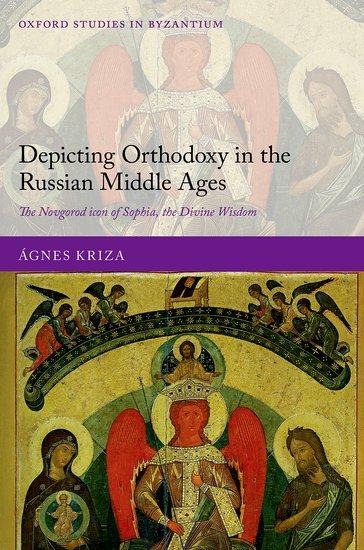
This volume offers an interpretation of the image of Divine Wisdom, traditionally associated with the Sophia Cathedral in Novgorod. Kriza argues that the figure stands for the Orthodox Church, in response to events in the fifteenth century.
Ágnes Kriza's research interests include medieval Russian, Byzantine, and post-Byzantine art, literature, and theology, with a focus on the interface between text and image. She holds a PhD from the University of Cambridge, and is the author of a monograph on the reception of Byzantine iconophile literature in Rus. She is a former Alexander von Humboldt post-doctoral fellow at the University of Cologne, exploring the significance of anti-Latin visual polemics in medieval Russian art.
Introduction
PART I. WORD
1: The Icon and its Commentary
2: The Winged Bride: Quotations in the Sophia Commentary
3: Medieval Russian Sophiology: The Context of the Sophia Commentary in the Manuscripts
PART II. IMAGE
4: Representations of Wisdom in Rus
5: The Novgorod Sophia as a Deesis
6: Sophia in the Womb of the Virgin
PART III. IDENTITY
7: Slavonic Sophia Churches and the Schism of 1054
8: Leaven and Byzantine Marian iconography
9: Depicting Orthodoxy in Rus
PART IV. HISTORY
10: Sophia, the Divine Wisdom and the Union of Florence
11: Evfimii II, Archbishop of Novgorod
12: The Hagia Sophia in Rome
Conclusions
Appendices:
Critical Edition of the Sophia Commentary with English Translation
Table 1: The 'Sophiological Block'
Table 2: The 'Sophiological Synthesis'
Catalogue: The Iconography of the Novgorod Sophia in the Fifteenth and Sixteenth Centuries