Und dann auf "Zum Home-Bildschirm [+]".

Stöbern
genialokal zum Startbildschirm hinzufügen
Installieren Sie die genialokal App auf Ihrem Startbildschirm für einen schnellen Zugriff und eine komfortable Nutzung.
Installieren Sie die genialokal App auf Ihrem Startbildschirm für einen schnellen Zugriff und eine komfortable Nutzung.
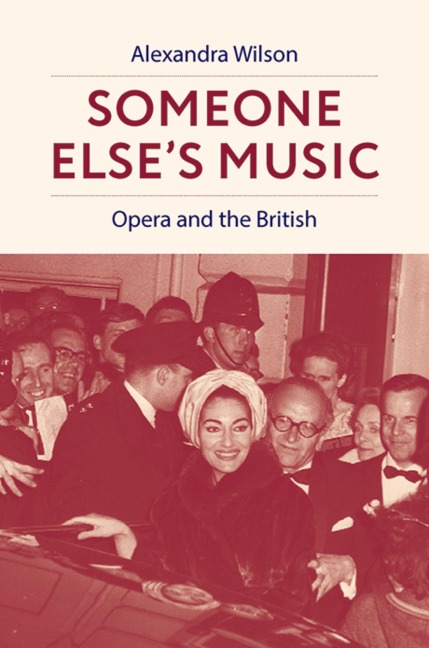
In Britain today, opera is routinely called elitist. But things were not always so. Examining shifting cultural attitudes over the century from 1920 to 2020, Someone Else's Music reveals a hidden history of popular opera-going in Britain, which defies the opera-elitism stereotype. At the same time, the book traces how, when, and why that stereotype arose. It uses opera as a lens through which to examine the broader history of changing cultural values in the UK, from 1920s Reithian ideals about art's civilising qualities to contemporary culture wars. The controversies opera has prompted over the last century reveal a great deal about national identity who Britons think they are and who they want to be. The book ranges widely across topics including education, public broadcasting, arts policy, and attitudes towards subsidy, and traces opera's surprisingly close relationship with popular culture. We meet a diverse cast of characters, including working-class East-End opera fans, opera-singing Welsh miners, soldiers discovering opera in wartime Italy, and holidaymakers watching it at Butlin's. The book is as much about the secretary camping out in the queue for gallery tickets as it is about the duchess in the stalls. But at what point did people start calling opera elitist and why? Analysing lasting stereotypes around opera, Wilson reveals them to be politically motivated, founded in deep-seated British anxieties about class, education, and national identity. Someone Else's Music is essential reading for anybody who wants to understand the debates we are having today about arts funding, accessibility and who opera is 'for'. It reveals that opera used to be for everyone - and shows us how it could be again.
Professor Alexandra Wilson is a musicologist and cultural historian. After holding two Oxford Junior Research Fellowships, she taught at Oxford Brookes University for nineteen years, latterly as Professor of Music and Cultural History. She is currently Researcher in Residence at the Guildhall School of Music and Drama in London and a Senior Research Fellow at Jesus College, Oxford. She has previously published The Puccini Problem (2007), Opera in the Jazz Age (2019), Puccini's La bohème (2021) and Puccini in Context (2023). She writes and broadcasts widely about cultural matters and works regularly with the UK's leading opera companies.
To follow.
Dieses eBook wird im PDF-Format geliefert und ist mit einem Adobe Kopierschutz (DRM) versehen. Sie können dieses eBook mit allen Geräten lesen, die das PDF-Format und den Adobe Kopierschutz (DRM) unterstützen.
Zum Beispiel mit den folgenden Geräten:
• tolino Reader
Laden Sie das eBook direkt über den Reader-Shop auf dem tolino herunter oder übertragen Sie das eBook auf Ihren tolino mit einer kostenlosen Software wie beispielsweise Adobe Digital Editions.
• Sony Reader & andere eBook Reader
Laden Sie das eBook direkt über den Reader-Shop herunter oder übertragen Sie das eBook mit der kostenlosen Software Sony READER FOR PC/Mac oder Adobe Digital Editions auf ein Standard-Lesegeräte mit epub- und Adobe DRM-Unterstützung.
• Tablets & Smartphones
Möchten Sie dieses eBook auf Ihrem Smartphone oder Tablet lesen, finden Sie hier unsere kostenlose Lese-App für iPhone/iPad und Android Smartphone/Tablets.
• PC & Mac
Lesen Sie das eBook direkt nach dem Herunterladen mit einer kostenlosen Lesesoftware, beispielsweise Adobe Digital Editions, Sony READER FOR PC/Mac oder direkt über Ihre eBook-Bibliothek in Ihrem Konto unter „Meine eBooks“ - „online lesen“.
Schalten Sie das eBook mit Ihrer persönlichen Adobe ID auf bis zu sechs Geräten gleichzeitig frei.
Bitte beachten Sie, dass die Kindle-Geräte das Format nicht unterstützen und dieses eBook somit nicht auf Kindle-Geräten lesbar ist.