
Stöbern
genialokal zum Startbildschirm hinzufügen
Installieren Sie die genialokal App auf Ihrem Startbildschirm für einen schnellen Zugriff und eine komfortable Nutzung.
Installieren Sie die genialokal App auf Ihrem Startbildschirm für einen schnellen Zugriff und eine komfortable Nutzung.
Tippen Sie einfach auf Teilen:
 Und dann auf "Zum Home-Bildschirm [+]".
Bei genialokal.de kaufen Sie online bei Ihrer lokalen, inhabergeführten Buchhandlung!
Ihr gewünschter Artikel ist in 0 Buchhandlungen vorrätig - wählen Sie hier eine Buchhandlung in Ihrer Nähe aus:

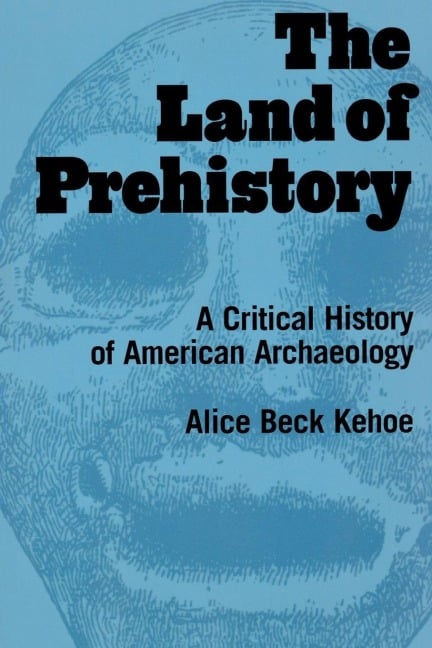
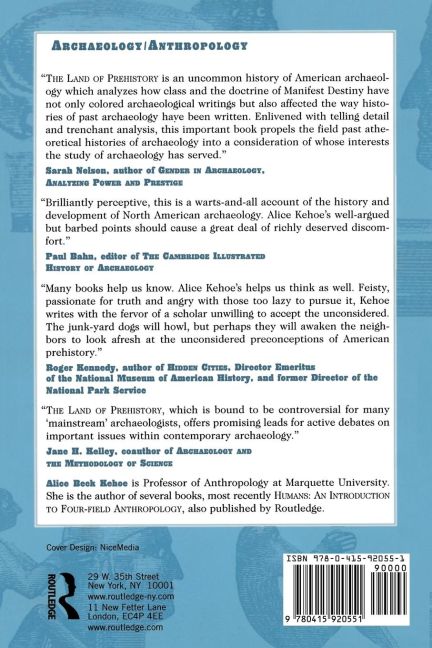
First published in 1998. Routledge is an imprint of Taylor & Francis, an informa company.
Alice Beck Kehoe is Professor of Anthropology at Marquette University. She is the author of Humans: An Introductionto Four-Field Anthropology (1998), published by Routledge. She has served the Society for American Archaeology as Public Relations Committee Chair and on its Public Education Task Force, and was nominated for President, Archaeology Division of the American Anthropological Association.
Introduction Chapter 1: The Construction of the Science of Archaeology Daniel Wilson models a science of prehistory on geology and the pre-Darwinian evolution of his mentor Robert Chambers of Edinburgh. Chapter 2: Science Boldly Predicts Behind Wilson's science of prehistory were the Scottish reformers George Combe and Robert Chambers; opposed to the Scots was the London scientific Establishment led by Sir John Lubbock. Nineteenth-century mainstream science boldy predicts. Chapter 3: Consolidating Prehistory Comparing Wilson's Prehistoric Man with Lubbock's rival volume, it is Lubbock's more purely ideological, racist statements that, coupled with his influential social position, won his Pre-historic Times its place in the Whig histories of archaeology. Chapter 4: America's History A detailed examination of Wilson's presentation of American prehistory, in which he recognizes the civilizations of American Indian nations. Chapter 5: Positivists of the New Frontier Professional American archaeology took off at the time when Turner announced that the physical frontier was at last closed, challenging Americans to go to new internal frontiers of research and economic development. American archaeology used positivist science to investigate the trans-frontier Land of Prehistory. Chapter 6: Petrified Puddle Ducks Walter Taylor's 1948 monograph acidly criticized contemporary American archaeology. Chapter 7: The New Archaeology Ten years after Taylor, Lewis Binford launched an attack on American archaeology. Carefully planned strategies and rhetoric blatantly dressing up proposals as Big Science gained National Science Foundation funding and made older archaeologists look naive. Chapter 8: The Philosophy of the New Archaeology An analysis of the much-touted philosophy of science of the New Archaeology. Chapter 9: Cahokia: Hidden in Plain Sight Mainstream American archaeologists' treatment of Cahokia, the awesome capital of an eleventh-century Midwestern state, reveals how powerfully Manifest Destiny ideology still affects American archaeology. Chapter 10: Burrowing Through the Chiefdom Lewis Henry Morgan's origin myth for American industrial capitalism is carried on through White, Service, and their students such as Timothy Earle. Chapter 11: The Taboo Topic Mainstream American archaeology absolutely refuses to discuss prehistoric contacts across salt water, even across the Gulf of Mexico. This legacy from Wilson's interpretation of American prehistory has been reinforced by Manifest Destiny ideology. Chapter 12: Land of Prehistory Postmodernists, sociologists of science, and many members of America's First Nations show little confidence in archaeologists' capacity to study the past. This final chapter outlines an approach to archaeological data that recognizes the social construction of knowledge without discounting empiricism or denigrating First Nations' own historical universes.