
Stöbern
genialokal zum Startbildschirm hinzufügen
Installieren Sie die genialokal App auf Ihrem Startbildschirm für einen schnellen Zugriff und eine komfortable Nutzung.
Installieren Sie die genialokal App auf Ihrem Startbildschirm für einen schnellen Zugriff und eine komfortable Nutzung.
Tippen Sie einfach auf Teilen:
 Und dann auf "Zum Home-Bildschirm [+]".
Bei genialokal.de kaufen Sie online bei Ihrer lokalen, inhabergeführten Buchhandlung!
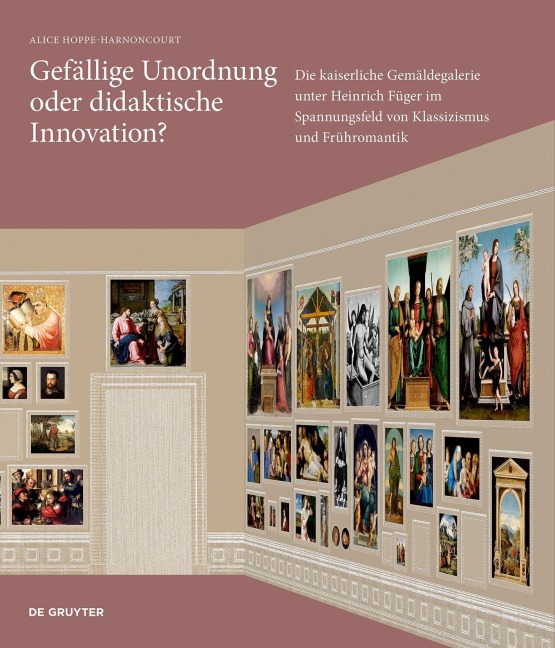
The Wiener Gemäldegalerie is generally acknowledged as an innovative foundation dating from the Enlightenment. But how did the presentation of the paintings change under Heinrich Füger (1806-1818)? While his hanging of the works was often misunderstood as arbitrary disorder, Alice Hoppe-Harnoncourt reveals the concept's didactic innovation for the first time. The new arrangement only becomes clear when considering Füger's role as an academic teacher and his artistic positioning between classicism and early romanticism. Füger broke with the static system of the 1780s to make space for contemporary art and a new classification of the 'old schools'. This reorganisation is interpreted here as a visual representation of contemporary discourse during the transition to the museum's institutional formation in the 19th century. - Collection history of the Imperial Picture Gallery in Vienna, now part of the Kunsthistorisches Museum - The gallery design under Füger is presented as an innovative development and visual representation of contemporary discourse
Alice Hoppe-Harnoncourt is an art historian in Vienna with a research profile at the interface of science and museum practice. In her work, she focuses on the links between art-historical analysis and art-technological investigation. She collaborated on the inventory catalogue of German Renaissance paintings, and was assistant curator of the Bruegel anniversary exhibition (2018-2019). Her other research interests include the history of restoration and issues in the preservation of monuments. Lately active in the art trade, with a focus on 20th-century Austrian painting.