Stöbern
genialokal zum Startbildschirm hinzufügen
Installieren Sie die genialokal App auf Ihrem Startbildschirm für einen schnellen Zugriff und eine komfortable Nutzung.
Installieren Sie die genialokal App auf Ihrem Startbildschirm für einen schnellen Zugriff und eine komfortable Nutzung.
Tippen Sie einfach auf Teilen:
 Und dann auf "Zum Home-Bildschirm [+]".
Ihr gewünschter Artikel ist in 0 Buchhandlungen vorrätig - wählen Sie hier eine Buchhandlung in Ihrer Nähe aus:

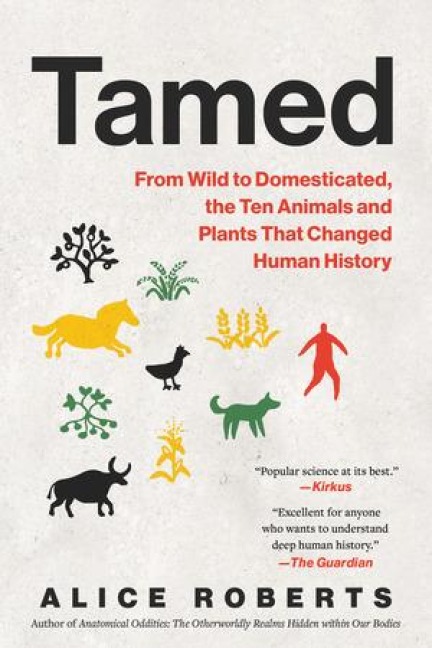
Dogs became our companions.
Wheat fed booming populations.
Cattle gave us meat and milk.
Corn fueled the growth of empires.
Potatoes brought feast and famine.
Chickens inspired new branches of science.
Rice promised a golden future.
Horses gave us strength and speed.
Apples provided harvestable sweetness.
Humans tamed them all.
For hundreds of thousands of years, our ancestors were just one wild species among many, their survival dependent on the whims of nature. Then, gradually, we began to tame the plants and animals all around us-and ourselves.
Combining genetics, archaeology, evolutionary biology, and anthropology, Tamed tells the story of the greatest revolution in human history, revealing the fascinating origins of crucial domesticated species and how they, in turn, transformed us. Dogs, our first natural ally, aided Ice Age-era hunters and gatherers. Domesticated horses led to new ideas about hunting and combat in the Eurasian Steppe. The reliability of wheat and corn allowed humans to settle down and build civilizations of unprecedented complexity.
As she uncovers the astounding global implications of domestication, Alice Roberts urges us to look again at our relationship with the natural world-and our incredible influence upon it.
Alice Roberts is an academic, author, and broadcaster specializing in human anatomy, physiology, evolution, archaeology, and history. Roberts has been a professor of public engagement with science at the University of Birmingham since 2012. Her more than ten other science and history books include Anatomical Oddities: The Otherworldly Realms Hidden within Our Bodies.
Introduction- Dogs- Wheat- Cattle- Corn- Potatoes- Chickens- Rice- Horses- Apples- Humans Acknowledgments References Index About the Author