
Stöbern
genialokal zum Startbildschirm hinzufügen
Installieren Sie die genialokal App auf Ihrem Startbildschirm für einen schnellen Zugriff und eine komfortable Nutzung.
Installieren Sie die genialokal App auf Ihrem Startbildschirm für einen schnellen Zugriff und eine komfortable Nutzung.
Tippen Sie einfach auf Teilen:
 Und dann auf "Zum Home-Bildschirm [+]".


Bei genialokal.de kaufen Sie online bei Ihrer lokalen, inhabergeführten Buchhandlung!
?bibletType=single&genialokalurl=www.genialokal.de/affiliates/book2look/?produkt=9781394242313%26storeID%3Dmondo%26genialokallogourl%3Dimages.genialokal-cdn.de/chameleon/mediapool/1/0b/mondo_logo_web_id40512.jpg)
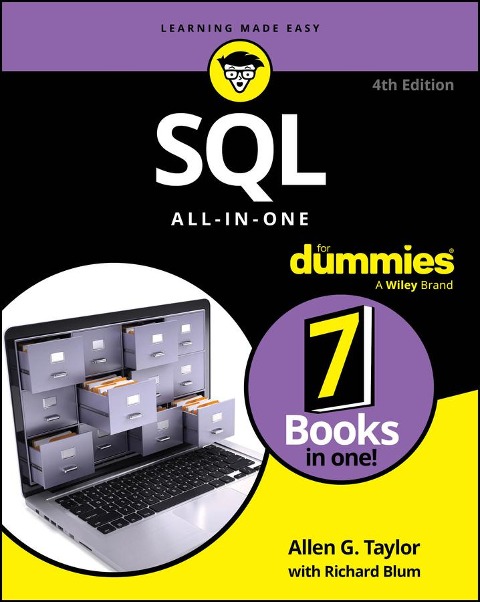

The most thorough SQL reference, now updated for SQL:2023 SQL All-in-One For Dummies has everything you need to get started with the SQL programming language, and then to level up your skill with advanced applications. This relational database coding language is one of the most used languages in professional software development. And, as it becomes ever more important to take control of data, there's no end in sight to the need for SQL know-how. You can take your career to the next level with this guide to creating databases, accessing and editing data, protecting data from corruption, and integrating SQL with other languages in a programming environment. Become a SQL guru and turn the page on the next chapter of your coding career. * Get 7 mini-books in one, covering basic SQL, database development, and advanced SQL concepts * Read clear explanations of SQL code and learn to write complex queries * Discover how to apply SQL in real-world situations to gain control over large datasets * Enjoy a thorough reference to common tasks and issues in SQL development This Dummies All-in-One guide is for all SQL users--from beginners to more experienced programmers. Find the info and the examples you need to reach the next stage in your SQL journey.
Allen G. Taylor is a 30-year veteran of the computer industry and the author of more than 40 books, including previous editions of SQL For Dummies and SQL All-in-One For Dummies. Richard Blum has more than 30 years of experience in the IT industry as a systems and network administrator. He is author of Linux All-in-One For Dummies 7th Edition, and PHP, MySQL, & JavaScript All-in-One For Dummies.
Introduction 1 Book 1: Getting Started with SQL 5 Chapter 1: Understanding Relational Databases 7 Chapter 2: Modeling a System 29 Chapter 3: Getting to Know SQL 53 Chapter 4: SQL and the Relational Model 65 Chapter 5: Knowing the Major Components of SQL 75 Chapter 6: Drilling Down to the SQL Nitty-Gritty 99 Book 2: Developing Relational Databases 133 Chapter 1: System Development Overview 135 Chapter 2: Building a Database Model 151 Chapter 3: Balancing Performance and Correctness 169 Chapter 4: Creating a Database with SQL 203 Book 3: Writing SQL Queries 217 Chapter 1: Values, Variables, Functions, and Expressions 219 Chapter 2: SELECT Statements and Modifying Clauses 249 Chapter 3: Querying Multiple Tables with Subqueries 295 Chapter 4: Querying Multiple Tables with Relational Operators 323 Chapter 5: Cursors 345 Book 4: Securing Your Data 357 Chapter 1: Protecting Against Hardware Failure and External Threats 359 Chapter 2: Protecting Against User Errors and Conflicts 391 Chapter 3: Assigning Access Privileges 419 Chapter 4: Error Handling 431 Book 5: Programming with SQL 447 Chapter 1: Database Development Environments 449 Chapter 2: Interfacing SQL to a Procedural Language 455 Chapter 3: Using SQL in an Application Program 461 Chapter 4: Designing a Sample Application 477 Chapter 5: Building an Application 497 Chapter 6: Understanding SQL's Procedural Capabilities 513 Chapter 7: Connecting SQL to a Remote Database 531 Book 6: Working with Advanced Data Types in SQL: XML, JSON, and PGQ 545 Chapter 1: Using XML with SQL 547 Chapter 2: Storing XML Data in SQL Tables 575 Chapter 3: Retrieving Data from XML Documents 599 Chapter 4: Using JSON with SQL 617 Chapter 5: Exploring Property Graph Queries 633 Book 7: Optimizing Your Database 645 Chapter 1: Tuning the Database 647 Chapter 2: Tuning the Environment 659 Chapter 3: Finding and Eliminating Performance Bottlenecks 681 Book 8: Appendixes 709 Chapter 1: SQL:2023 Reserved Words 711 Chapter 2: Glossary 721 Index 731