Und dann auf "Zum Home-Bildschirm [+]".

Stöbern
genialokal zum Startbildschirm hinzufügen
Installieren Sie die genialokal App auf Ihrem Startbildschirm für einen schnellen Zugriff und eine komfortable Nutzung.
Installieren Sie die genialokal App auf Ihrem Startbildschirm für einen schnellen Zugriff und eine komfortable Nutzung.
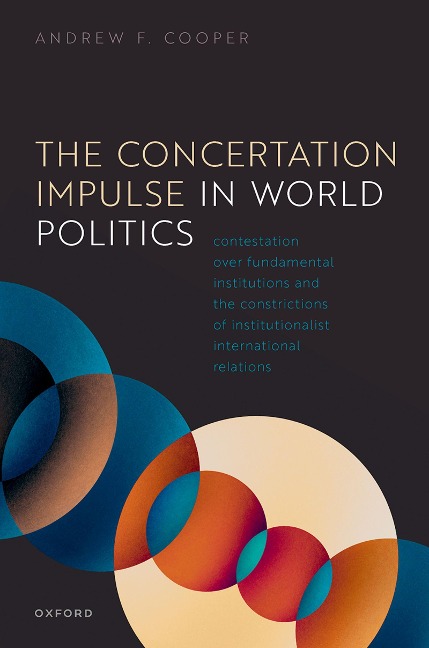
This book unravels the centrality of contestation over international institutions under the shadow of crisis. Breaking with the widely accepted image in the mainstream, US-centric literature of an advance of global governance supported by pillars of institutionalized formality, Andrew Cooper points to the retention of a habitual impulse towards concertation related to informal institutionalism. Rather than endorsing the view that world politics is moving inexorably towards a multilateral, rules-based order, he places the onus on the resilience of a hierarchical self-selected concert model that combines a stigmatized legacy with the ability to reproduce in an array of associational formats. Relying for conceptual guidance on the recovery of a valuable component in the intellectual contribution of Hedley Bull, a compelling case is made that concertation represents a fundamental institution as a peer competitor to multilateralism. In effect, the debate over institutional design is recast away from an emphasis on utilitarian maximization towards a wider set of cardinal - and highly contested - questions: the nature of rules at the global level, the salience of institutional clubs, and the meaning and impact of (in)equality and cooperation/coordination among states across the incumbent West/non-incumbent Global South divide.
Andrew F. Cooper is University Research Chair, Department of Political Science, and Professor at the Balsillie School of International Affairs, University of Waterloo. From 2003 to 2010 he was Associate Director of the Centre for International Governance Innovation, and in 2019 he received the Distinguished Scholar Award from the Diplomacy Section of ISA. He is the author of 11 books, and the editor/co-editor of 22 collections, and his articles have been published in prestigious journals such as International Organization, International Affairs, World Development, and International Studies Review.
- 1: Unravelling the centrality of the contest over international institutions - 2: Concertation as a foundational/fundamental institution - 3: Crises as potential animators of institutional transformation - 4: Raising the stakes of the institutional contest over the normative dimension - 5: Hierarchical privileges of institutional convenience - 6: Between aspirations and anxiety: The ambivalent hold of formal institutions by non-incumbents from the Global South - 7: Inserting designers into institutional design: Institutional entrepreneurship and the evolution of state-based plurilateralism - 8: Recalibrated but still contested: The G20 as a twenty-first century institutional concert format - 9: The challenge of personalist-populist institutional disruption at the core of the system - 10: Aspirations of a BRICS solidarity concert/hanging together as a pluralist club - Conclusions
Dieses eBook wird im PDF-Format geliefert und ist mit einem Adobe Kopierschutz (DRM) versehen. Sie können dieses eBook mit allen Geräten lesen, die das PDF-Format und den Adobe Kopierschutz (DRM) unterstützen.
Zum Beispiel mit den folgenden Geräten:
• tolino Reader
Laden Sie das eBook direkt über den Reader-Shop auf dem tolino herunter oder übertragen Sie das eBook auf Ihren tolino mit einer kostenlosen Software wie beispielsweise Adobe Digital Editions.
• Sony Reader & andere eBook Reader
Laden Sie das eBook direkt über den Reader-Shop herunter oder übertragen Sie das eBook mit der kostenlosen Software Sony READER FOR PC/Mac oder Adobe Digital Editions auf ein Standard-Lesegeräte mit epub- und Adobe DRM-Unterstützung.
• Tablets & Smartphones
Möchten Sie dieses eBook auf Ihrem Smartphone oder Tablet lesen, finden Sie hier unsere kostenlose Lese-App für iPhone/iPad und Android Smartphone/Tablets.
• PC & Mac
Lesen Sie das eBook direkt nach dem Herunterladen mit einer kostenlosen Lesesoftware, beispielsweise Adobe Digital Editions, Sony READER FOR PC/Mac oder direkt über Ihre eBook-Bibliothek in Ihrem Konto unter „Meine eBooks“ - „online lesen“.
Schalten Sie das eBook mit Ihrer persönlichen Adobe ID auf bis zu sechs Geräten gleichzeitig frei.
Bitte beachten Sie, dass die Kindle-Geräte das Format nicht unterstützen und dieses eBook somit nicht auf Kindle-Geräten lesbar ist.