Stöbern
genialokal zum Startbildschirm hinzufügen
Installieren Sie die genialokal App auf Ihrem Startbildschirm für einen schnellen Zugriff und eine komfortable Nutzung.
Installieren Sie die genialokal App auf Ihrem Startbildschirm für einen schnellen Zugriff und eine komfortable Nutzung.
Tippen Sie einfach auf Teilen:
 Und dann auf "Zum Home-Bildschirm [+]".
Ihr gewünschter Artikel ist in 0 Buchhandlungen vorrätig - wählen Sie hier eine Buchhandlung in Ihrer Nähe aus:

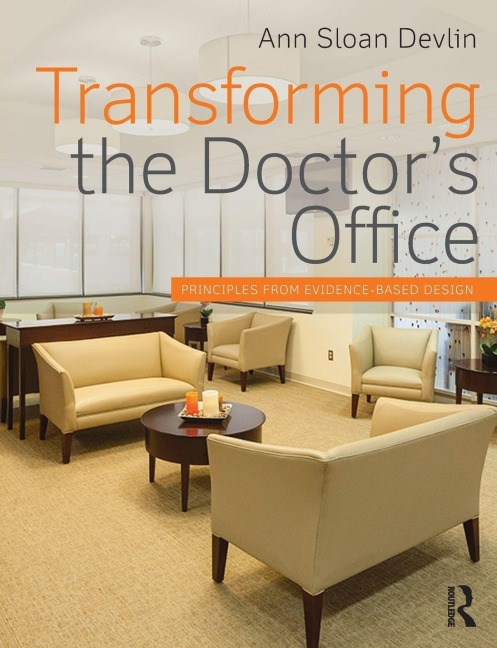
An essential reference for physicians, patients, and designers
Ann Sloan Devlin is the May Buckley Sadowski '19 Professor of Psychology at Connecticut College, New London, USA. She has published extensively on healthcare environments, investigating how perceptions of the built environment influence judgments of care and comfort. She has written three other books, most recently What Americans Build and Why: Psychological Perspectives (2010).
Preface; Acknowledgments; Introduction; Role of evidence-based design; The patient-centered care movement, Planetree, and the Center for Health Design; Green design, sustainability, and technology; ADA and HIPAA; The role of evidence; Unifying themes in this book; A call to action; Chapter 1. Office Location, Signage, and Identity: Where and Who You Are; Overview: Schemas and patients' expectations; Location; Signage; Parking; Exterior landscaping and image: An overview; Chapter 2. Arriving, Waiting, and Taking Vitals: Setting the Stage; Overview; The spatial continuum: From entrance and reception to interior spaces; Reception space: Expectations and functions; The waiting room: Territoriality, personal space, and privacy; Lighting; Furnishings; Staff areas; The toilet room (restroom); Chapter 3. Consultation and Examination Spaces: "You Feel Healthier When You're Dressed"; Overview; Anxiety and the medical consultation; Models of consultation; Privacy concerns: Overview; Illumination: Properties of lighting and dynamic lighting systems; Personalization in the office suite; The psychotherapist's office: Continuous consultation and examination; Consultation and exam spaces: A century ago; Chapter 4. The Ambient Environment: Changing the "Sick People's" Atmosphere; Overview: The waiting room should "lose its 'sick people's' atmosphere"; Ambient characteristics: Control, positive distraction, and personalization; Giving patients control and permission; The senses: Visual stimulation and positive distraction; Nature: The real deal; Music as positive distraction; Complimentary food and beverages; Other senses; Safety in the medical suite: By regulation and by association; Closing thoughts; Further reading; Index.