Und dann auf "Zum Home-Bildschirm [+]".

Stöbern
genialokal zum Startbildschirm hinzufügen
Installieren Sie die genialokal App auf Ihrem Startbildschirm für einen schnellen Zugriff und eine komfortable Nutzung.
Installieren Sie die genialokal App auf Ihrem Startbildschirm für einen schnellen Zugriff und eine komfortable Nutzung.
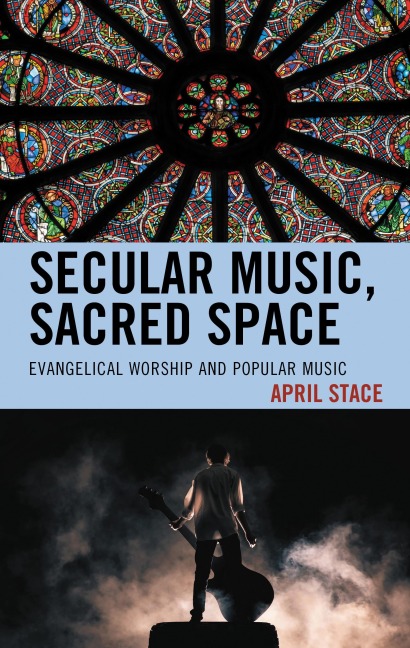
Easter Sunday, 2009, was the Sunday heard 'round the evangelical internet: NewSpring Church, the second-largest church in the Southern Baptist Convention and among the top one hundred largest churches in the US, had begun their service with the song "Highway to Hell" by hard rock band AC/DC. They had brazenly crossed the sacred/secular musical divide on the most important Sunday of the year, and commentary abounded on the value of such a step. Many were offended at the "desecration" of such a holy day, deriding Newspring as the "theater of the absurd." Others cheered NewSpring's engagement with "the culture" and suggested that music could be used to convert non-Christians. No mere debate over stylistic preferences, many expressed that foundational aspects of evangelical identity were at stake.While many books have been written about religious music that utilizes popular music styles (a.k.a. "contemporary Christian music"), there has yet to be a scholarly treatment of how and why popular, secular music is utilized by churches. This book addresses that lacuna by examining this emerging trend in evangelical and "emerging" churches in America. What is the motivation behind using music that seemingly has no connection to Christian theology, values, or themes-such as music by Katy Perry, AC/DC, or Van Halen-and what can we learn about post-denominational evangelical churches in America by uncovering these motives? In this book, April Stace uncovers several themes from an ethnographic study of these churches: the increasingly-porous boundary between the sacred and the secular, the importance placed on "authenticity" in contemporary American culture, how evangelicals are responding to what they perceive is an increasingly-secular society, the "turn to the subject" of contemporary culture, the desire to leave a space for expression of doubt in the worship service without fully authorizing that doubt, and the individualization of the construction of religious identity in the modern era.
April Stace is affiliate professor at General Theological Seminary.
Introduction
Chapter One: The Highway to Hell: Orientations in Ethnomusicology, Liturgical Studies, and Religious Studies
Chapter Two: Falling Slowly: The Context for Popular Music in Worship Services
Chapter Three: Blurred Lines: How We Define "Sacred" and "Secular"
Chapter Four: Roar: The Power of Music In and Against the "Culture"
Chapter Five: I Still Haven't Found What I'm Looking For: The Deficits of "Sacred" Music
Chapter Six: Hallelujah: Popular-Secular Music as a Language of Lament
Conclusion
Dieses eBook wird im PDF-Format geliefert und ist mit einem Adobe Kopierschutz (DRM) versehen. Sie können dieses eBook mit allen Geräten lesen, die das PDF-Format und den Adobe Kopierschutz (DRM) unterstützen.
Zum Beispiel mit den folgenden Geräten:
• tolino Reader
Laden Sie das eBook direkt über den Reader-Shop auf dem tolino herunter oder übertragen Sie das eBook auf Ihren tolino mit einer kostenlosen Software wie beispielsweise Adobe Digital Editions.
• Sony Reader & andere eBook Reader
Laden Sie das eBook direkt über den Reader-Shop herunter oder übertragen Sie das eBook mit der kostenlosen Software Sony READER FOR PC/Mac oder Adobe Digital Editions auf ein Standard-Lesegeräte mit epub- und Adobe DRM-Unterstützung.
• Tablets & Smartphones
Möchten Sie dieses eBook auf Ihrem Smartphone oder Tablet lesen, finden Sie hier unsere kostenlose Lese-App für iPhone/iPad und Android Smartphone/Tablets.
• PC & Mac
Lesen Sie das eBook direkt nach dem Herunterladen mit einer kostenlosen Lesesoftware, beispielsweise Adobe Digital Editions, Sony READER FOR PC/Mac oder direkt über Ihre eBook-Bibliothek in Ihrem Konto unter „Meine eBooks“ - „online lesen“.
Schalten Sie das eBook mit Ihrer persönlichen Adobe ID auf bis zu sechs Geräten gleichzeitig frei.
Bitte beachten Sie, dass die Kindle-Geräte das Format nicht unterstützen und dieses eBook somit nicht auf Kindle-Geräten lesbar ist.