Und dann auf "Zum Home-Bildschirm [+]".

Stöbern
genialokal zum Startbildschirm hinzufügen
Installieren Sie die genialokal App auf Ihrem Startbildschirm für einen schnellen Zugriff und eine komfortable Nutzung.
Installieren Sie die genialokal App auf Ihrem Startbildschirm für einen schnellen Zugriff und eine komfortable Nutzung.

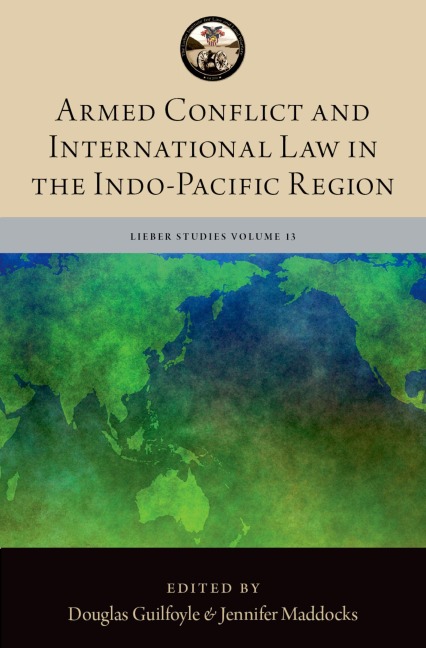
Armed Conflict and International Law in the Indo-Pacific Region provides a timely and regionally grounded analysis of how international law applies to potential armed conflict in one of the world's most strategically dynamic regions. Adopting a multi-domain approach, the volume explores the legal frameworks governing warfare across land, sea, air, space, cyber, and the information environment, while remaining attuned to the Indo-Pacific's evolving geopolitical landscape. Part I addresses foundational legal questions that may arise during any future conflict in the Indo-Pacific, including civilian protection, the law of neutrality, and the role of international law more broadly. Part II examines the legal rules guiding military operations in key domains of warfare: air, space, cyber, and the information environment. It also considers the maritime domain, highlighting the law applicable to auxiliary vessels and the weaknesses of the legal regime protecting undersea cables. Part III examines the legal implications of deepening regional cooperation, focusing on alliance politics, capability sharing, and legal interoperability, including a detailed analysis of the AUKUS security partnership. Part IV presents a focused case study on the legal issues that would arise in the event of a conflict over Taiwan. Bringing together contributions from military legal advisors, academic experts, and humanitarian practitioners, Armed Conflict and International Law in the Indo-Pacific Region combines analytical depth with practical insight. It fills a critical gap in existing scholarship, offering a comprehensive and forward-looking account of the legal challenges posed by future conflict in the Indo-Pacific.
Foreword Rear Admiral Mathew Williams, MNZM Introduction Douglas Guilfoyle and Jennifer Maddocks PART I: Overarching Challenges in Contemporary Conflict 1. Large Scale Combat Operations in the Indo-Pacific - Practical Implications for International Law J.J. Merriam 2. Reducing the Human Cost of Large-Scale Military Operations Abby Zeith and Lakmini Seneviratne 3. Applying the Law of Neutrality in an Indo-Pacific Armed Conflict Raul (Pete) Pedrozo PART II: Legal Challenges in Multi-Domain Operations 4. Interpretative Choice and Risk in Indo-Pacific Air Domain Challenges Angeline Lewis 5. Key Legal Issues in Multi-Domain Operations in the Indo-Pacific: The Space Domain Theodore T. Richard 6. Key Legal Issues in Multi-Domain Operations in the Indo-Pacific: The Cyber Domain Lauren M. Cherry 7. Calling Up (And Creating) Auxiliaries: The Use of Merchant Ships for Transport and Logistics Rob McLaughlin 8. The Protection of Submarine Cables and Pipelines in Armed Conflict in the Indo-Pacific Atsuko Kanehara 9. Winning the Information War: The Law of Armed Conflict and Public Opinion in the Indo-Pacific Aurel Sari PART III: Alliances, Partnerships, and Capability Development 10. Mutual Defense Treaties and Defense Groupings in the Indo-Pacific Region: An Introduction Erika de Wet 11. The Enhanced Defense Cooperation Agreement in Context: The Perspective from the Philippines Jay L. Batongbacal 12. AUKUS and Nuclear Submarines: Regional and NPT Implications Monique Cormier 13. AUKUS Pillar 2: Legal Implications of Sharing Advanced Technology Natalia Jevglevskaja PART IV: Case Study: Conflict on Taiwan 14. The Status of Taiwan and its Right to Collective Self-Defense Peter A. Dutton 15. Taiwan's Statehood and the Right of Collective Self-Defense: A Taiwanese Perspective Anne Hsiu-An Hsiao 16. Application of the Geneva Conventions and POW Status in a Conflict in Taiwan Emily Crawford 17. Weak Legal Guardrails: The United States and the Use of Nuclear Weapons in Great Power Conflict in the Indo-Pacific Brian Finucane Index