Und dann auf "Zum Home-Bildschirm [+]".

Stöbern
genialokal zum Startbildschirm hinzufügen
Installieren Sie die genialokal App auf Ihrem Startbildschirm für einen schnellen Zugriff und eine komfortable Nutzung.
Installieren Sie die genialokal App auf Ihrem Startbildschirm für einen schnellen Zugriff und eine komfortable Nutzung.
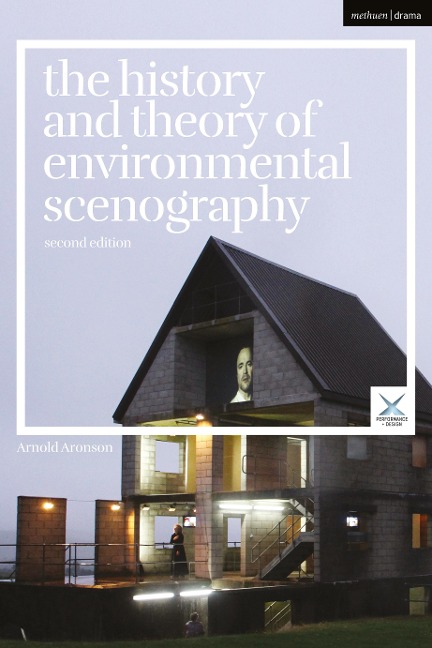
A classic work of theatre history and criticism when first published, Arnold Aronson's formative study surveyed the phenomenon known as environmental theatre. Now updated in this richly illustrated second edition to reflect developments and practice since the 1980s, it offers readers a comprehensive study of the theatre practice which has evolved to become the dominant mode of much contemporary innovative performance.
For most audiences, particularly in the Western tradition, theatre means going to a building in which seats face a stage on which actors perform a play. But there has always been a vital alternative that came to be known as environmental theatre. Whether in folk performances, street theatre, avant-garde performance, utopian architecture, Happenings, mass spectacles, or contemporary immersive theatre, the relationship of the spectator to the performance has been one in which the audience is surrounded or immersed in a shared space, in which the multiple events may be happening simultaneously, and in which the experience of theatrical space is visceral and often kinetic. This book examines the history of this phenomenon and looks at a range of contemporary practice.
New chapters examine how the 'transformed spaces' of earlier work have become the interactive and immersive productions that characterize the work of companies such as Punchdrunk, dreamthinkspeak, Teatro da Vertigem, En Garde Arts, and The Industry, among others. Updated to take account of the burgeoning scholarship on the subject, The History and Theory of Environmental Scenography remains the authoritative account that illuminates present day theatre practice and its antecedents.
Arnold Aronson is professor of theatre at Columbia University in New York City, USA. His publications include Ming Cho Lee: A Life in Design; The Disappearing Stage: Reflections on the 2011 Prague Quadrennial; Looking into the Abyss: Essays in Scenography; American Avant-Garde Theatre: A History; and American Set Design. He has a long history with the Prague Quadrennial, serving as President of the Jury in 1991 and 1999, curator of the U.S. exhibit in 1995, and General Commissioner in 2007.
List of Figures
Acknowledgments
Introduction to Revised Edition
1. The Scenography of Environmental Performance
2. The Environmental Tradition
3. Reactions Against the Proscenium
4. Surrounding Space Theatres
5. Environmental Production in Russia
6. Okhlopkov and Tonecki: Environmental Staging in the Thirties
7. Environments and Happenings
8. Found Environments
9. Transformed Spaces
10. Sites: Specific and Otherwise
11. Conclusion: Immersive Theatre
Appendix I
Appendix II
Notes
Bibliography
About the Author
Index
Dieses eBook wird im PDF-Format geliefert und ist mit einem Adobe Kopierschutz (DRM) versehen. Sie können dieses eBook mit allen Geräten lesen, die das PDF-Format und den Adobe Kopierschutz (DRM) unterstützen.
Zum Beispiel mit den folgenden Geräten:
• tolino Reader
Laden Sie das eBook direkt über den Reader-Shop auf dem tolino herunter oder übertragen Sie das eBook auf Ihren tolino mit einer kostenlosen Software wie beispielsweise Adobe Digital Editions.
• Sony Reader & andere eBook Reader
Laden Sie das eBook direkt über den Reader-Shop herunter oder übertragen Sie das eBook mit der kostenlosen Software Sony READER FOR PC/Mac oder Adobe Digital Editions auf ein Standard-Lesegeräte mit epub- und Adobe DRM-Unterstützung.
• Tablets & Smartphones
Möchten Sie dieses eBook auf Ihrem Smartphone oder Tablet lesen, finden Sie hier unsere kostenlose Lese-App für iPhone/iPad und Android Smartphone/Tablets.
• PC & Mac
Lesen Sie das eBook direkt nach dem Herunterladen mit einer kostenlosen Lesesoftware, beispielsweise Adobe Digital Editions, Sony READER FOR PC/Mac oder direkt über Ihre eBook-Bibliothek in Ihrem Konto unter „Meine eBooks“ - „online lesen“.
Schalten Sie das eBook mit Ihrer persönlichen Adobe ID auf bis zu sechs Geräten gleichzeitig frei.
Bitte beachten Sie, dass die Kindle-Geräte das Format nicht unterstützen und dieses eBook somit nicht auf Kindle-Geräten lesbar ist.