Und dann auf "Zum Home-Bildschirm [+]".

Stöbern
genialokal zum Startbildschirm hinzufügen
Installieren Sie die genialokal App auf Ihrem Startbildschirm für einen schnellen Zugriff und eine komfortable Nutzung.
Installieren Sie die genialokal App auf Ihrem Startbildschirm für einen schnellen Zugriff und eine komfortable Nutzung.
Ihr gewünschter Artikel ist in 0 Buchhandlungen vorrätig - wählen Sie hier eine Buchhandlung in Ihrer Nähe aus:


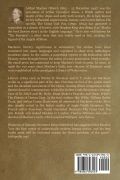
The Hill of Dreams is a semi-autobiographical novel by the Welsh writer Arthur Machen.The novel recounts the life of a young man, Lucian Taylor, focusing on his dreamy childhood in rural Wales, in a town based on Caerleon. The Hill of Dreams of the title is an old Roman fort where Lucian has strange sensual visions, including ones of the town in the time of Roman Britain. Later, the novel describes Lucian's attempts to make a living as an author in London, enduring poverty and suffering in the pursuit of art and history.
The Hill of Dreams was little noticed on its publication in 1907 save in a glowing review by Alfred Douglas. It was actually written between 1895 and 1897 and has elements of the style of the decadent and aesthetic movement of the period, seen through Machen's own mystical preoccupations.Lord Dunsany admired The Hill of Dreams and wrote an introduction to a 1954 reprint of the novel. In Henry and June, Henry Miller tells Anaïs Nin about The Hill of Dreams.According to the Friends of Arthur Machen website, the novel isalmost undoubtedly Machen's most important and moving work. Lucian Taylor, the hero, is damned either through contact with an erotically pagan "other" world or through something degenerate in his own nature, which he thinks of as a "faun". He becomes a writer, and when he moves to London he becomes trapped by the increasing reality of the dark imaginings of this creature within him, which become increasingly real. Machen drew copiously on his own early years in Wales and London, and the book as a whole is an exploration through imagination of a potential fate which he personally avoided. One of the first explorations in fiction of the figure of the doomed artist, who is biographically so much a part of the decadent 1890s. (wikipedia.org)
Arthur Machen, born Arthur Llewellyn Jones in 1863 in Caerleon, Wales, was a writer and mystic known for his contributions to supernatural fiction. His parents were John Edward Jones, an Anglican clergyman, and Janet Machen. Growing up in a region rich with folklore and ancient history, he developed an early fascination with the mystical and the unknown. He moved to London as a young man, working as a translator before gaining recognition for his eerie and imaginative tales. Deeply influenced by Edgar Allan Poe, Robert Louis Stevenson, and Charles Dickens, his works often blended horror with elements of mysticism and philosophical speculation. His most famous writings, including The Great God Pan and The White People, helped shape the weird fiction genre and inspired later writers such as H.P. Lovecraft. His storytelling frequently explored themes of hidden realities, forbidden knowledge, and the uncanny lurking beneath everyday life. Though his literary career faced periods of struggle, his work gained appreciation in later years. He died in 1947 in Beaconsfield, leaving behind a legacy that continues to influence horror and fantasy literature.