Und dann auf "Zum Home-Bildschirm [+]".

Stöbern
genialokal zum Startbildschirm hinzufügen
Installieren Sie die genialokal App auf Ihrem Startbildschirm für einen schnellen Zugriff und eine komfortable Nutzung.
Installieren Sie die genialokal App auf Ihrem Startbildschirm für einen schnellen Zugriff und eine komfortable Nutzung.
Ihr gewünschter Artikel ist in 0 Buchhandlungen vorrätig - wählen Sie hier eine Buchhandlung in Ihrer Nähe aus:

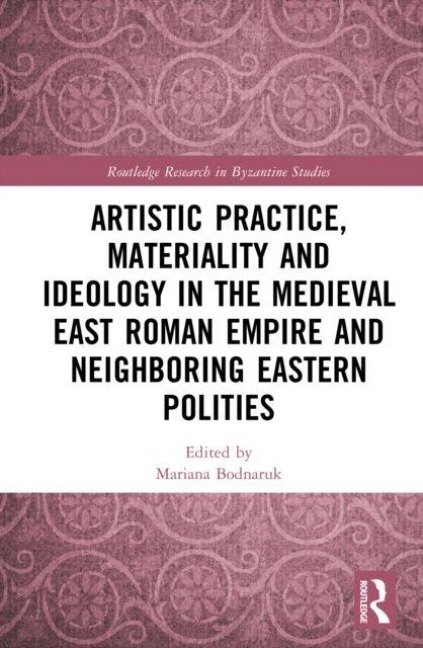
This anthology foregrounds the complex interplay of artistic production, material conditions, and political conjuncture in East Roman Empire and the wider Orthodox Commonwealth. While art-historical research has long been shaped by the "visual" and "spatial" turns, this volume insists that a decisive advance lies in engaging the "material turn" through a perspective that grounds artworks in their historically specific material conditions rather than as autonomous agents. By interrogating how artworks emerge within historically specific material realities, this book situates epigraphy, image, and monument within the lived economies, institutions, and belief systems of the medieval East Roman world. The collection's four sections map the many sites where matter and meaning intersect. Part I probes inscribed monuments in their urban settings, attending to staging, accessibility, and reception. Part II examines the construction of imperial, aristocratic, and ecclesiastical representation across diverse media. Part III turns to portrayals of imperial, lay, and churchwomen, exploring how gendered agency was mediated in sacred and secular spheres. Part IV expands the horizon to Armenia, Georgia, and Northern Mesopotamia, reframing center-periphery narratives through a transregional lens. An epilogue synthesizes these inquiries, showing how current approaches in art history theorize materiality. Aimed at scholars of Byzantine art, epigraphy, material culture, and interdisciplinary cultural studies, this volume also speaks to historians of late antiquity, medievalists, and specialists in visual studies. It offers fresh methodological insight, rigorous case studies, and a comparative reach that redefines how we understand the material and ideological contexts of art in the medieval Eastern Mediterranean.
Mariana Bodnaruk is Assistant Professor in Ancient History at the Faculty of History of the University of Warsaw. They taught at Al-Quds Bard College, Central European University, Bard College, Masaryk University, and the University of Olomouc. Their research was published in Journal of Epigraphic Studies, Journal of Late Antiquity, Antichthon, Phoenix, and Byzantinoslavica. They authored An Empire of Elites: The Self-Representation of the Senatorial Aristocracy in the Later Roman State in the Fourth Century AD (2026). Their research interests include epigraphy, art history, hagiography of the medieval East Roman Empire, as well as trans studies and queer Marxism.
Introduction. Towards a Materialist History of East Roman Art Mariana Bodnaruk Part I: Materiality and Ideology of Epigraphic Texts Chapter 1. Byzantine Lead Seals as Expressions of Power and Identity Christos Malatras Chapter 2. Imperial Inscriptions and Inscribed Images as a Means of Propaganda in Medieval Byzantium Georgios Pallis Chapter 3. The Agency of Epigraphy: Inscriptions and the Weaponization of Relics in Byzantium Brad Hostetler Part II. Material and Ideological Constructedness of Visual and Performative Representations Chapter 4. Repetition as a Mechanism of Craft and Devotion: Rethinking Art Historical Frameworks through Early Christian Reliquaries and Casket Mounts Adrien Palladino Chapter 5. A Tale of Two Cities: The Journey of the Ivory Pyxis of St. Menas Ruben Campini Chapter 6. Divine Intervention and Imperial Performance: The Pilgrimage of John VIII Palaiologos Anna Adashinskaya Part III. Female Agency and Material Turn Chapter 7. The Representation of Senatorial Women in Late Antique Inscribed Honorific Texts and Statue Monuments Mariana Bodnaruk Chapter 8. Female Presence in Moments of Death and (Re)Birth: Materializing Protective Power of Sacred Purity and Motherhood Across Late Antique Mediterranean and Beyond Teodora Georgievová Chapter 9. A Woman Who Had So Much to Lose: Theodora Palaiologina, the Union of Lyons and the Cleansing Power of Art Petra Melichar Part IV. Impact of Empire? East Roman Neighboring Polities Beyond Center and Periphery Chapter 10. Images of Orthodoxy or Political Compromise? Visual Representations in the Late Antique South Caucasus Veronika Džugan Hermanová and Ivan Foletti Chapter 11. Transcultural Art as a Sign of Power: Coins Showing the Theotokos Crowning the Ruler in Byzantium and in Al-Jaz-rah Manuela Studer-Karlen Chapter 12. Patriarchs and Anti-Patriarchs Looking for Legitimacy in --r -Abd-n in Pre-Modern Era Alexandre Varela Expósito Afterward Michele Bacci Appendix