Und dann auf "Zum Home-Bildschirm [+]".

Stöbern
genialokal zum Startbildschirm hinzufügen
Installieren Sie die genialokal App auf Ihrem Startbildschirm für einen schnellen Zugriff und eine komfortable Nutzung.
Installieren Sie die genialokal App auf Ihrem Startbildschirm für einen schnellen Zugriff und eine komfortable Nutzung.
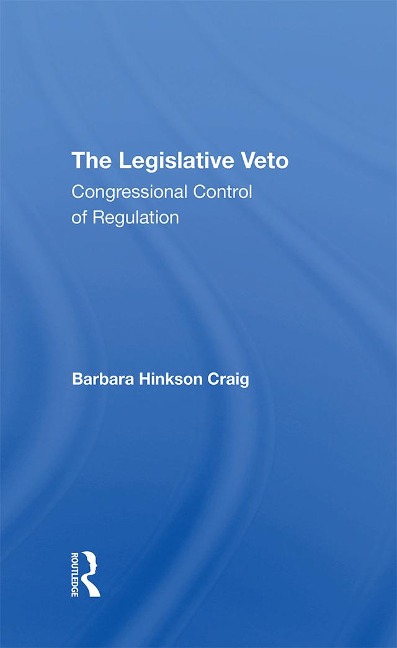
On June 23, 1983, the U.S. Supreme Court declared a legislative veto unconstitutional in theImmigration and Naturalization Service v. Chadha case, a ruling that seems to invalidate the legislative vetoes in more than two hundred laws. Two weeks later the court reaffirmed the principles ofChadha to invalidate the legislative veto in other acts. These epic cases, which are already being called the most important separation-of-powers rulings since the White House tapes cases, have generated debate over the implications of the loss of the legislative veto and the wisdom of the court's actions. In this book the author argues that the legislative veto fell far short of its promise in actual operation over the regulatory process. Instead of promoting democratic congressional control over the actions of bureaucrats, legislative veto politics more often devolved to the politics of special interest protection, heavily influenced by unelected congressional staff. Moreover, the legislative veto. allowed Congress to sidestep conflicts by issuing vague mandates that left agencies without the necessary congressional support to implement them. Dr. Craig combines a historical perspective on the legislative veto with analyses of original case studies involving some of the most important policy issues of the 1980s--housing, education, energy, and consumer protection. Assessing all the cases available for research, she points to discrepancies between the legislative veto's intended effects and its actual results. In a final chapter she considers the impact of theChadha case and discusses possible alternatives to the legislative veto for congressional control of regulation.
Barbara Hinkson Craig is assistant professor of government at Wesleyan University.
Foreword -- Introduciton -- The Legislative Veto and the Rulemaking Process -- Historical Perspective on the Legislative Veto: Legal and Administrative Issues -- The Case of the HUD "Constitutional" Vetoes -- The Education Vetoes: Conflict and Accommodation -- The Legislative Veto as a Means for Decision Avoidance: Two Targeted Vetoes -- The Legislative Veto of Regulations: Consequences for Democratic Policymaking -- Epilogue -- Appendix: Excerpts from the Epic Chadha Decision
Dieses eBook wird im PDF-Format geliefert und ist mit einem Adobe Kopierschutz (DRM) versehen. Sie können dieses eBook mit allen Geräten lesen, die das PDF-Format und den Adobe Kopierschutz (DRM) unterstützen.
Zum Beispiel mit den folgenden Geräten:
• tolino Reader
Laden Sie das eBook direkt über den Reader-Shop auf dem tolino herunter oder übertragen Sie das eBook auf Ihren tolino mit einer kostenlosen Software wie beispielsweise Adobe Digital Editions.
• Sony Reader & andere eBook Reader
Laden Sie das eBook direkt über den Reader-Shop herunter oder übertragen Sie das eBook mit der kostenlosen Software Sony READER FOR PC/Mac oder Adobe Digital Editions auf ein Standard-Lesegeräte mit epub- und Adobe DRM-Unterstützung.
• Tablets & Smartphones
Möchten Sie dieses eBook auf Ihrem Smartphone oder Tablet lesen, finden Sie hier unsere kostenlose Lese-App für iPhone/iPad und Android Smartphone/Tablets.
• PC & Mac
Lesen Sie das eBook direkt nach dem Herunterladen mit einer kostenlosen Lesesoftware, beispielsweise Adobe Digital Editions, Sony READER FOR PC/Mac oder direkt über Ihre eBook-Bibliothek in Ihrem Konto unter „Meine eBooks“ - „online lesen“.
Schalten Sie das eBook mit Ihrer persönlichen Adobe ID auf bis zu sechs Geräten gleichzeitig frei.
Bitte beachten Sie, dass die Kindle-Geräte das Format nicht unterstützen und dieses eBook somit nicht auf Kindle-Geräten lesbar ist.