Und dann auf "Zum Home-Bildschirm [+]".

Stöbern
genialokal zum Startbildschirm hinzufügen
Installieren Sie die genialokal App auf Ihrem Startbildschirm für einen schnellen Zugriff und eine komfortable Nutzung.
Installieren Sie die genialokal App auf Ihrem Startbildschirm für einen schnellen Zugriff und eine komfortable Nutzung.
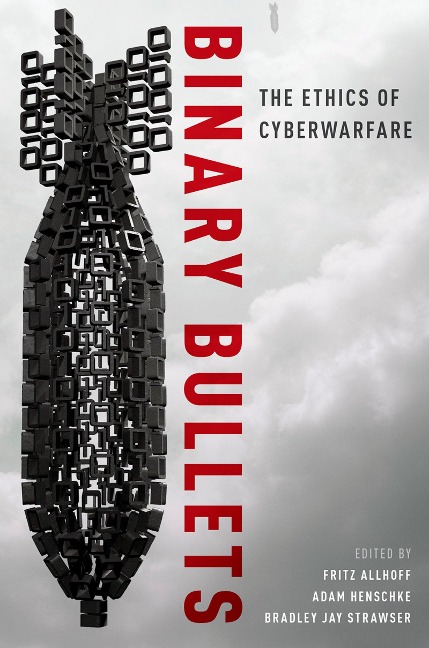
Philosophical and ethical discussions of warfare are often tied to emerging technologies and techniques. Today we are presented with what many believe is a radical shift in the nature of war-the realization of conflict in the cyber-realm, the so-called "fifth domain" of warfare. Does an aggressive act in the cyber-realm constitute an act of war? If so, what rules should govern such warfare? Are the standard theories of just war capable of analyzing and assessing this mode of conflict? These changing circumstances present us with a series of questions demanding serious attention. Is there such a thing as cyberwarfare? How do the existing rules of engagement and theories from the just war tradition apply to cyberwarfare? How should we assess a cyber-attack conducted by a state agency against private enterprise and vice versa? Furthermore, how should actors behave in the cyber-realm? Are there ethical norms that can be applied to the cyber-realm? Are the classic just war constraints of non-combatant immunity and proportionality possible in this realm? Especially given the idea that events that are constrained within the cyber-realm do not directly physically harm anyone, what do traditional ethics of war conventions say about this new space? These questions strike at the very center of contemporary intellectual discussion over the ethics of war. In twelve original essays, plus a foreword from John Arquilla and an introduction, Binary Bullets: The Ethics of Cyberwarfare, engages these questions head on with contributions from the top scholars working in this field today.
Fritz Allhoff is an Associate Professor in the Department of Philosophy and an Adjunct Community Associate Professor in the Homer Stryker School of Medicine at Western Michigan University. Adam Henschke is a Research Fellow at the National Security College of the Australian National University, College of Asia and the Pacific. Bradley Jay Strawser is an Assistant Professor of Philosophy in the Defense Analysis Department at the Naval Postgraduate School in Monterey, CA.
Contents Notes on Contributors Foreword John Arquilla Introduction I Foundational Norms for Cyberwarfare 1. Emerging Norms for Cyberwarfare George R. Lucas, Jr. 2. The Emergence of International Legal Norms for Cyber-Conflict Michael N. Schmitt and Liis Vihul 3. Distinctive Ethical Issues of Cyberwarfare Randall R. Dipert
II Cyberwarfare and the Just War Tradition 4. Cyber Chevauchées: Cyber War Can Happen David Whetham 5. Cyberwarfare as Ideal War Ryan Jenkins 6. Post-Cyber: Dealing With The Aftermath of Cyber-Attacks Brian Orend
III ETHOS OF CYBERWARFARE 7. Beyond Tallinn: The Code of the Cyber-Warrior?" Matthew Beard 8. Immune from Cyber-Fire? The Psychological & Physiological Effects of Cyberwarfare Daphna Canetti, Michael L. Gross, & Israel Waismel-Manor
9. Beyond Machines: Humans in Cyber Operations, Espionage, and Conflict David Danks and Joseph H. Danks
IV CYBERWARFARE, DECEPTION, AND PRIVACY 10. Cyber Perfidy, Ruse, and Deception Heather M. Roff 11. Cyber-attacks and 'Dirty Hands': Cyberwar, Cyber-crimes or Covert Political Action? Seumas Miller 12. Moral Concerns with Cyber Espionage: Automated Key-word Searches and Data-Mining Michael Skerker
Index
Dieses eBook wird im PDF-Format geliefert und ist mit einem Adobe Kopierschutz (DRM) versehen. Sie können dieses eBook mit allen Geräten lesen, die das PDF-Format und den Adobe Kopierschutz (DRM) unterstützen.
Zum Beispiel mit den folgenden Geräten:
• tolino Reader
Laden Sie das eBook direkt über den Reader-Shop auf dem tolino herunter oder übertragen Sie das eBook auf Ihren tolino mit einer kostenlosen Software wie beispielsweise Adobe Digital Editions.
• Sony Reader & andere eBook Reader
Laden Sie das eBook direkt über den Reader-Shop herunter oder übertragen Sie das eBook mit der kostenlosen Software Sony READER FOR PC/Mac oder Adobe Digital Editions auf ein Standard-Lesegeräte mit epub- und Adobe DRM-Unterstützung.
• Tablets & Smartphones
Möchten Sie dieses eBook auf Ihrem Smartphone oder Tablet lesen, finden Sie hier unsere kostenlose Lese-App für iPhone/iPad und Android Smartphone/Tablets.
• PC & Mac
Lesen Sie das eBook direkt nach dem Herunterladen mit einer kostenlosen Lesesoftware, beispielsweise Adobe Digital Editions, Sony READER FOR PC/Mac oder direkt über Ihre eBook-Bibliothek in Ihrem Konto unter „Meine eBooks“ - „online lesen“.
Schalten Sie das eBook mit Ihrer persönlichen Adobe ID auf bis zu sechs Geräten gleichzeitig frei.
Bitte beachten Sie, dass die Kindle-Geräte das Format nicht unterstützen und dieses eBook somit nicht auf Kindle-Geräten lesbar ist.