Und dann auf "Zum Home-Bildschirm [+]".

Stöbern
genialokal zum Startbildschirm hinzufügen
Installieren Sie die genialokal App auf Ihrem Startbildschirm für einen schnellen Zugriff und eine komfortable Nutzung.
Installieren Sie die genialokal App auf Ihrem Startbildschirm für einen schnellen Zugriff und eine komfortable Nutzung.
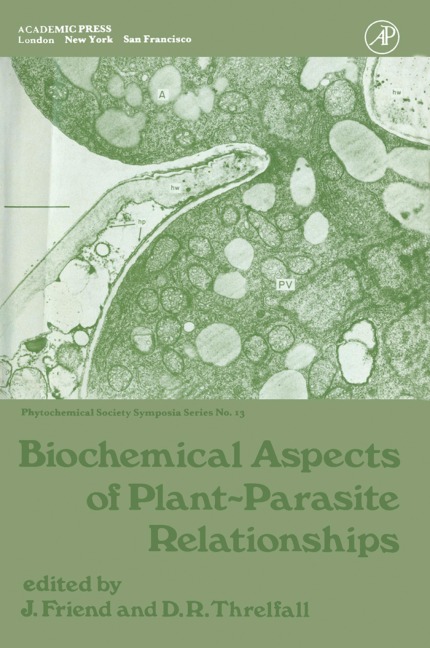
Biochemical Aspects of Plant-Parasite Relationships is a collection of papers from the Phytochemical Society Symposium of the same subject held at Hull in April 1975. This collection discusses biochemical research on the mechanisms involved in the invasion of plants by pathogens, the production of disease symptoms, and the mechanisms occurring in plant resistance against the invading microorganisms. Some papers discuss the genetics of fungal-plant interactions and the structural features of both infection and resistance processes, Such genetic interactions and structural features point to a biochemical reason for the plant-parasite interaction. Several attempts to correlate production of a cell wall degrading enzyme in vitro by a pathogen's virulence have shown great differences between in vitro and in vivo environments. One paper cites as an example the pathogens which produce both pectic hydrolases and lyases: the type of enzyme that is found to predominate often is actually associated with the pH of the environment. One paper also investigates nucleic acid transfer and the possible role of RNA in the host-parasite specificity. This collection can prove beneficial for microbiologists, biochemists, biotechnologists, plant biologists, and academicians connected with the biological sciences.
ContributorsPrefaceChapter 1 Some Observations on Leaf Surfaces During the Early Stages of Infection by Fungi I. Introduction II. The Pre-Penetration Stages of Infection of Leaves III. The Arrival of Spores on Leaves IV. Adhesion of Spores on Leaves V. External Growth Prior to Penetration VI. Rain-Water Washing Leaf Surfaces VII. Pollen on Leaves and Infection ReferencesChapter 2 Some Interactions in Soil Between Plants, Sclerotium-Forming Fungi and Other Microorganisms I. Introduction II. The Nature of Fungal Sclerotia III. Host-Stimulated Germination of Sclerotia IV. The Effect of Fungal Sclerotia on the Soil Microflora Acknowledgements ReferencesChapter 3 Development and Use of Some Genetically Controlled Lines for Studies of Host-Parasite Interactions I. Introduction II. Host Lines A. Nearly-Isogenic Lines B. Chromosome Substitution Lines C. Genetically Diverse Host Lines III. Pathogen Lines IV. Conclusions Acknowledgements ReferencesChapter 4 Structural Aspects of Infection by Biotrophic Fungi I. Introduction II. The Infection of Lettuce by Bremia Lactucae A. Pre-Penetration B. Penetration C. Intracellular Infection Structures III. Discussion A. Alteration of the Metabolism of the Host B. Molecular Exchange C. Incompatibility ReferencesChapter 5 Plant Cell Wall Hydrolysis by Pathogens I. Introduction II. The Plant Cell Wall: A Current Concept III. Enzymes that Cleave Cell Wall Polysaccharides A. Pectic Enzymes B. Hemicellulases and Cellulases IV. Regulation of Production of Polysaccharidases by Pathogens V. Enzymatic Degradation of Cell Walls A. Decomposition of Isolated Walls B. Decomposition of Host Cell Walls in Infected Tissues VI. Enzymatic Basis of Tissue Maceration and its Consequences VII. Conclusions ReferencesChapter 6 Killing of Protoplasts I. Introduction II. Relation Between Cell Separation and Protoplast Death III. Action of Pectic Enzymes on Parenchyma IV. Effect of Other Enzymes on Parenchyma V. Effects of Plasmolysis VI. Effects of Enzymes Other than Pectic Enzymes VII. Killing of Protoplasts other than by Pectic Enzymes VIII. Other Causes of Death of Protoplasts IX. Consequences of Protoplast Death ReferencesChapter 7 Hormonal Involvement in Metabolism of Host-Parasite Interactions I. Introduction II. Hormones and Pathogenesis III. Hormonal Changes in Diseases Caused by Biotrophic Organisms A. Respiration and Host Growth -. IAA Decarboxylation and Disease Resistance C. Peroxidase Changes D. Properties of Isozyme 9 E. Cytokinins and Translocation F. Other Hormones IV. Present Outlook Acknowledgements ReferencesChapter 8 Toxins of Plant Pathogenic Bacteria and Fungi I. Introduction II. Helminthosporoside III. Some Other Host-Specific Toxins A. H. Victoriae and P. Circinata Toxins B. A. Kikuchiana Toxin C. H. Carbonum Toxin D. H. Maydis Toxins E. P. Maydis Toxin F. Alternariolide IV. Stemphylin V. Toxic Glycopeptides and Polysaccharides VI. Fusicoccin VII. Some Amino Acid Derived Bacterial Toxins A. Tabtoxins B. Phaseotoxins C. Rhizobitoxine D. Syringomycin VIII. Non Host-Specific Alternaria Toxins IX. Concluding Comments Acknowledgements ReferencesChapter 9 Structural Features of Resistance to Plant Diseases I. Introduction II. Inoculum Deposition III. Entry of the Pathogen A. Direct Entry B. Entry through Natural Openings IV. Colonization and Sporulation V.