Und dann auf "Zum Home-Bildschirm [+]".

Stöbern
genialokal zum Startbildschirm hinzufügen
Installieren Sie die genialokal App auf Ihrem Startbildschirm für einen schnellen Zugriff und eine komfortable Nutzung.
Installieren Sie die genialokal App auf Ihrem Startbildschirm für einen schnellen Zugriff und eine komfortable Nutzung.
Ihr gewünschter Artikel ist in 0 Buchhandlungen vorrätig - wählen Sie hier eine Buchhandlung in Ihrer Nähe aus:

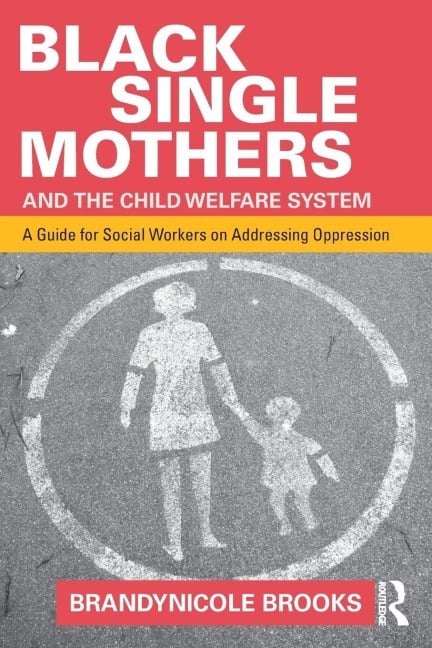
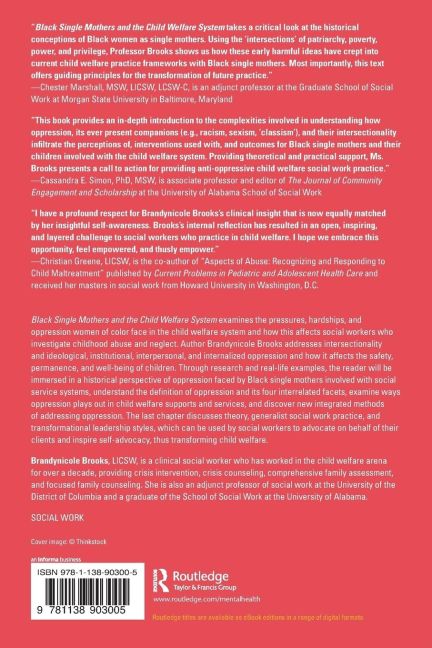
Black Single Mothers and the Child Welfare System examines the pressures, hardships, and oppression women of color face in the child welfare system, and how this affects social workers who investigate childhood abuse and neglect. Author Brandynicole Brooks addresses intersectionality and ideological, institutional, interpersonal, and internalized oppression and how it affects the safety, permanence, and well-being of children. Through research and real-life examples, the reader will be immersed in a historical perspective of oppression faced by black single mothers involved with social service systems, understand the definition of oppression and its four interrelated facets, examine ways oppression plays out in child welfare supports and services, and discover new integrated methods of addressing oppression. The last chapter discusses theory, generalist social work practice, and-transformational leadership styles,-which can be used by social workers to advocate on behalf of their clients and inspire self-advocacy, thus transforming child welfare.
Brandynicole Brooks, LICSW, is a clinical social worker who has worked in the child welfare arena for over a decade, providing crisis intervention, crisis counseling, comprehensive family assessment, and focused family counseling. She is also an adjunct professor of social work at the University of the District of Columbia and a graduate of the School of Social Work at the University of Alabama.
Preface Acknowledgements Introduction 1. Historical Perspectives of Child Welfare and Intersectionality 1.1 Child Welfare Historically 1.2 The Women's Movement 1.3 Black Women 1.4 Oppression 1.5 An Introduction to Intersectionality 2. Oppression in Child Welfare 2.1 A Separate Child Welfare System 2.2 Forms of Racism 2.3 Overrepresentation 2.4 A Mother's Perspective 2.5 Child Protection Services 2.6 Re-entry 2.7 Addressing Oppression in Child Welfare 3. The Four Layers of Oppression and Child Welfare Practice 3.1 Ideological Oppression 3.2 Addressing Ideological Oppression 3.3 Institutional and Structural Oppression 3.4 Addressing Institutional Oppression 3.5 Interpersonal Oppression 3.6 Addressing Interpersonal Oppression 3.7 Internalized Oppression 3.8 Addressing Internalized Oppression 3.9 Removing the Weight of Oppression 3.10 Privilege 4. Transforming Child Welfare 4.1 Social Justice in Social Work 4.2 Social Justice in Action 4.3 Theoretical Perspectives 4.4 Future Practice