Und dann auf "Zum Home-Bildschirm [+]".

Stöbern
genialokal zum Startbildschirm hinzufügen
Installieren Sie die genialokal App auf Ihrem Startbildschirm für einen schnellen Zugriff und eine komfortable Nutzung.
Installieren Sie die genialokal App auf Ihrem Startbildschirm für einen schnellen Zugriff und eine komfortable Nutzung.
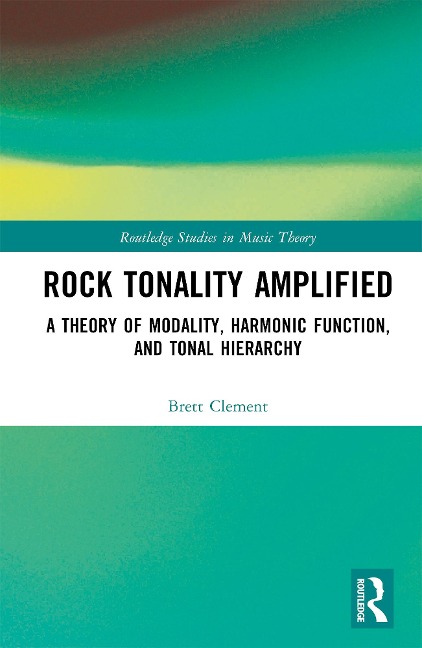
Rock Tonality Amplified presents an in-depth exploration of rock tonality. Building on several decades of research, this book develops a comprehensive music theory designed to make sense of several essential components of tonality. Within, readers learn to locate the chords they hear through various methods, to understand and predict harmonic resolution tendencies, and to identify the functions of chords as they appear in musical contexts. Further, the book offers a conceptual framework to describe tonal relations that are played out through entire songs, allowing readers to recognize the features that contribute to tonal unity in songs and the ones that are employed to create musical drama. The book contributes to a wealth of methodologies in music theory, making it of broad interest to music scholars and students. Further, it balances speculative and practical approaches so that it has clear applications for analysis and pedagogy. It includes numerous musical figures and cites hundreds of songs from a wide variety of artists. Each chapter concludes with additional practice activities, allowing for easy adaptation to various pedagogical purposes.
Brett Clement is Associate Professor of Music Theory at Ball State University. His research focuses on repertoires that fuse elements of popular and classical music, including progressive rock and the music of Frank Zappa. His work has been published in Gamut, Music Theory Spectrum, Music Theory Online, Music Analysis, Perspectives of New Music, and Journal of Music Theory.
Chapter 1: Position Finding Diatonic position finding Chromatic position finding The permanent Picardy third and related practices Reference list Chapter 2: Tonicization Factors in tonicization Diatonic tonicization Ionian tonicization Aeolian tonicization Dorian tonicization Mixolydian tonicization Lydian and Phrygian tonicization Extensions and inflections Activities Reference list Chapter 3: Harmonic Function The primary functions Prolongation function Cadence function Transition and retransition functions Departure function Subsidiary functions Functional transformations Concluding analysis Activities Reference list Chapter 4: Steady-Scale Systems Steady-scale systems: conceptual background Tonal patterns in steady-scale systems Interactions between the Ionian and Aeolian tonics Incorporating the Dorian tonic Incorporating the Mixolydian tonic Incorporating the Lydian tonic Incorporating the Phrygian tonic Conclusion: tonal endings Activities Reference list Chapter 5: Steady-Tonic Systems Harmonic sub-systems Chromatic chords in context Impressionism Direct resolutions Secondary tonicization Stepwise linear patterns Larger patterns Trajectories by s1 Trajectories by f1 Concluding analysis Activities Reference list Chapter 6: Other Approaches to Tonal Organization Mixtures of steady-tonic and steady-scale systems Other modulatory practices Concluding Analyses "Wichita Lineman" "White Rabbit" "The Ballad of Jenny Ledge" "The Burning Down" "Rikki Don't Lose That Number" "Best of All Possible Worlds" "Sharleena" Activities Reference list
Dieses eBook wird im PDF-Format geliefert und ist mit einem Adobe Kopierschutz (DRM) versehen. Sie können dieses eBook mit allen Geräten lesen, die das PDF-Format und den Adobe Kopierschutz (DRM) unterstützen.
Zum Beispiel mit den folgenden Geräten:
• tolino Reader
Laden Sie das eBook direkt über den Reader-Shop auf dem tolino herunter oder übertragen Sie das eBook auf Ihren tolino mit einer kostenlosen Software wie beispielsweise Adobe Digital Editions.
• Sony Reader & andere eBook Reader
Laden Sie das eBook direkt über den Reader-Shop herunter oder übertragen Sie das eBook mit der kostenlosen Software Sony READER FOR PC/Mac oder Adobe Digital Editions auf ein Standard-Lesegeräte mit epub- und Adobe DRM-Unterstützung.
• Tablets & Smartphones
Möchten Sie dieses eBook auf Ihrem Smartphone oder Tablet lesen, finden Sie hier unsere kostenlose Lese-App für iPhone/iPad und Android Smartphone/Tablets.
• PC & Mac
Lesen Sie das eBook direkt nach dem Herunterladen mit einer kostenlosen Lesesoftware, beispielsweise Adobe Digital Editions, Sony READER FOR PC/Mac oder direkt über Ihre eBook-Bibliothek in Ihrem Konto unter „Meine eBooks“ - „online lesen“.
Schalten Sie das eBook mit Ihrer persönlichen Adobe ID auf bis zu sechs Geräten gleichzeitig frei.
Bitte beachten Sie, dass die Kindle-Geräte das Format nicht unterstützen und dieses eBook somit nicht auf Kindle-Geräten lesbar ist.