
Stöbern
genialokal zum Startbildschirm hinzufügen
Installieren Sie die genialokal App auf Ihrem Startbildschirm für einen schnellen Zugriff und eine komfortable Nutzung.
Installieren Sie die genialokal App auf Ihrem Startbildschirm für einen schnellen Zugriff und eine komfortable Nutzung.
Tippen Sie einfach auf Teilen:
 Und dann auf "Zum Home-Bildschirm [+]".
Bei genialokal.de kaufen Sie online bei Ihrer lokalen, inhabergeführten Buchhandlung!
Ihr gewünschter Artikel ist in 0 Buchhandlungen vorrätig - wählen Sie hier eine Buchhandlung in Ihrer Nähe aus:

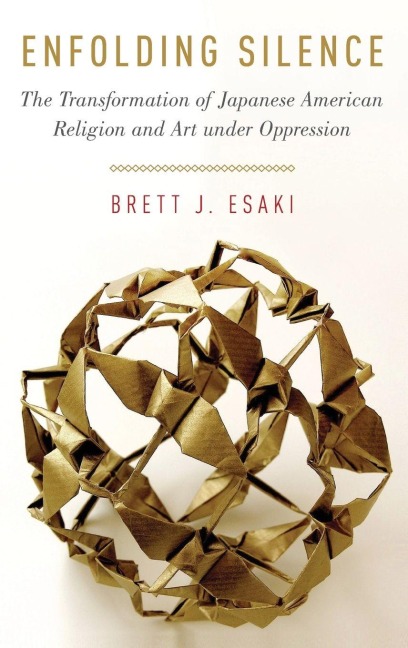
This book demonstrates how Japanese Americans have developed traditions of complex silences to survive historic moments of racial and religious oppression and how they continue to adapt these traditions today. In order to examine Japanese Americans' complex relationship to silence, Brett Esaki offers four case studies of Japanese American art--gardening, origami, jazz, and monument construction--and examines how each artistic practice has responded to a historic moment of oppression. In doing so, he finds that these artistic silences incorporate and convey obfuscated religious ideas from Buddhism, Christianity, Confucianism, Shinto, indigenous religions, and contemporary spirituality.
While silence is often thought of as the binary opposite and absence of sound, this book provides a non-binary theory of silence that articulates how multidimensional silences are formed and how they function. Brett Esaki argues that non-binary silences have allowed Japanese Americans to disguise, adapt, and innovate religious resources in order to negotiate racism and oppressive ideologies from both the United States and Japan. Drawing from the fields of religious studies, ethnic studies, theology, anthropology, art, music, history, and psychoanalysis, this book highlights the ways in which silence has been used to communicate the complex emotions of historical survival, religious experience, and artistic inspiration.
Brett J. Esaki is Assistant Professor of American Religions at Georgia State University.
List of Figures
Acknowledgements
Introduction: "They're Just like White Kids": Genealogy and Theory of Japanese American Non-Binary Silence
Chapter 1: Gardening, the Silence of Space, and the Humanity of Judgment
Chapter 2: Origami, the Silence of Self, and the Spirit of Vulnerability
Chapter 3: Jazz, the Silence of Time, and Modes of Justice
Chapter 4: Monuments, the Silence of Legacy, and Kodomo Tame Ni
Epilogue: "Whiz Kids"?: Racial Shamelessness, the Model Minority, and the Future of Silence
Notes
Bibliography
Appendix: Background Information Sheet and Interview Questionnaire
Index