Und dann auf "Zum Home-Bildschirm [+]".

Stöbern
genialokal zum Startbildschirm hinzufügen
Installieren Sie die genialokal App auf Ihrem Startbildschirm für einen schnellen Zugriff und eine komfortable Nutzung.
Installieren Sie die genialokal App auf Ihrem Startbildschirm für einen schnellen Zugriff und eine komfortable Nutzung.
Ihr gewünschter Artikel ist in 0 Buchhandlungen vorrätig - wählen Sie hier eine Buchhandlung in Ihrer Nähe aus:

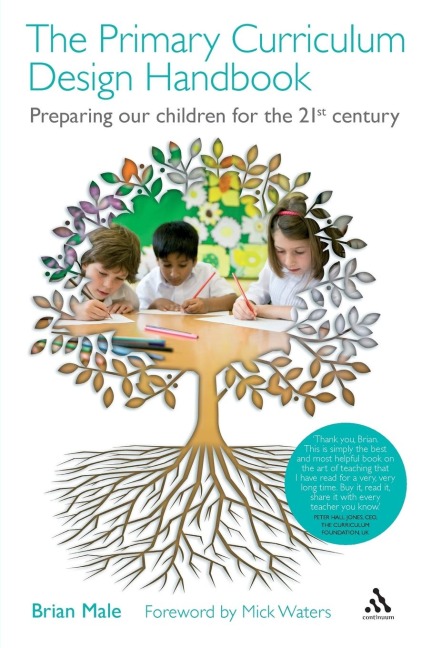
Schools across the world are struggling to balance the statutory requirements of a National Curriculum with their desire to provide the wide, engaging and exciting curriculum that they know children need. Concerns about standards often lead to a narrowing of the curriculum and many schools lack the confidence and approach to design that would enable them to resolve what seems like an impossible dilemma. In this authoritative yet engaging book, Brian Male looks at how schools can meet the requirements of a National Curriculum and yet be flexible enough to meet the needs, interests and concerns of pupils, to be rooted in their lives and localities and to give scope for teachers to use their own creativity. The Primary Curriculum Design Handbook is a practical guide on how to design a curriculum that will engage children's interest, excite their imaginations and at the same time provide them with the knowledge, skills and understanding they need to live successfully in the 21st Century.
Brian Male is a curriculum design consultant to UNESCO and a director of the Curriculum Foundation. Brian was formerly a head teacher, inspector, advisor, lecturer, and principal consultant to the Qualifications and Curriculum Authority (QCA). Mick Waters is Professor of Education at the University of Wolverhampton, UK. Mick was Director of Curriculum at the QCA, after being Chief Education Officer for Manchester. He was a head teacher, lecturer, and then became Head of Birmingham's Advisor and Support Service when Tim Brighouse was CEO.
Foreword by Mick Waters \ Introduction \ Section 1: How Do We Design a Curriculum? \ 1. Curriculum Design\ 2. A 21st Century Curriculum? \ 3. A Framework for the Curriculum \ Section 2: How Do We Organize Learning? \ 4. The Curriculum Tree \ 5. How Can We Design a Curriculum When We Have to Follow the National One? \ 6. The Deep Roots of Learning \ 7. A Canopy of Leaves: The Subject Disciplines \ 8. How Do Key Concepts and Key Skills Impact on Learning? \ 9. Putting it All Together: A Framework of Expectations \ 10. A Creative Curriculum \ 11. Making Learning Irresistible 12. National Expectations in a Local Context \ Section 3. How Will We Know if We Are Successful? \ 13. Tracking Success \ 14. Keeping an Overview: Evaluation \ Section 4. How Do We Get from Here to There? \ 15. Getting from Here to There \ Postscript: A World-Class Curriculum \ References \ Index