Und dann auf "Zum Home-Bildschirm [+]".

Stöbern
genialokal zum Startbildschirm hinzufügen
Installieren Sie die genialokal App auf Ihrem Startbildschirm für einen schnellen Zugriff und eine komfortable Nutzung.
Installieren Sie die genialokal App auf Ihrem Startbildschirm für einen schnellen Zugriff und eine komfortable Nutzung.
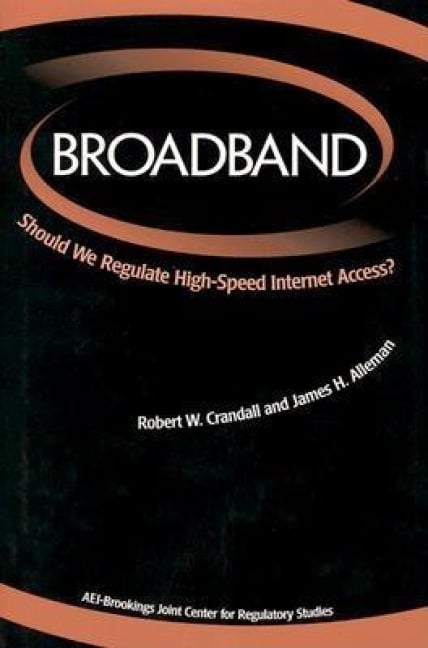
A Brookings Institution Press and American Enterprise Institute publication
There is widespread concern in the telecommunications industry that public policy may be impeding the continued development of the Internet into a high-speed communications network. In the absence of ubiquitous, high-speed ¡°broadband¡± Internet connections for residential and small-business customers, the demand for IT equipment and new Internet service applications may stagnate.
Broadband policy is controversial in large part because of the differences in the regulatory regimes faced by different types of carriers. Cable television companies face neither retail price regulation of their cable modem services nor any requirements to make their facilities available to competitors. Local telephone companies, on the other hand, face both retail price regulation for their DSL service and a requirement imposed by the 1996 Telecommunications Act that they ¡°unbundle¡± their network facilities and lease them to rivals. Finally, new entrants are largely unregulated, but many rely on facilities leased from the incumbent telephone companies at regulated rates to connect to their customers. This asymmetric regulation is the focus of this volume, in which telecommunications scholars address the public policy issues that have arisen over the deployment of new high-speed telecommunications services.
Robert W. Crandall is a senior fellow in the Economic Studies program at the Brookings Institution. His previous books include (with Martin Cave) Telecommunications Liberalization on Two Sides of the Atlantic (2001) and (with Leonard Waverman) Who Pays for Universal Service? (Brookings 2000). James H. Alleman is an associate professor in interdisciplinary telecommunications at the College of Engineering and Applied Science, University of Colorado, on leave at Columbia University.
Robert W. Crandall is a senior fellow in the Economic Studies program at the Brookings Institution, where his research has focused on telecommunications and cable television regulation, industrial organization and policy, and the changing regional structure of the U.S. economy. His previous books include Broadband: Should We Regulate Internet Access? (Brookings, 2002), Telecommunications Liberalization on Two Sides of the Atlantic (Brookings, 2001) and Who Pays for Universal Service? (Brookings, 2000). James H. Alleman is director of research at the Columbia Institute of Tele-Information, and a visiting associate professor in the Columbia Business School, on leave from the Interdisciplinary Telecommunications Department at the College of Engineering and Applied Science, University of Colorado, Boulder.
Dieses eBook wird im PDF-Format geliefert und ist mit einem Adobe Kopierschutz (DRM) versehen. Sie können dieses eBook mit allen Geräten lesen, die das PDF-Format und den Adobe Kopierschutz (DRM) unterstützen.
Zum Beispiel mit den folgenden Geräten:
• tolino Reader
Laden Sie das eBook direkt über den Reader-Shop auf dem tolino herunter oder übertragen Sie das eBook auf Ihren tolino mit einer kostenlosen Software wie beispielsweise Adobe Digital Editions.
• Sony Reader & andere eBook Reader
Laden Sie das eBook direkt über den Reader-Shop herunter oder übertragen Sie das eBook mit der kostenlosen Software Sony READER FOR PC/Mac oder Adobe Digital Editions auf ein Standard-Lesegeräte mit epub- und Adobe DRM-Unterstützung.
• Tablets & Smartphones
Möchten Sie dieses eBook auf Ihrem Smartphone oder Tablet lesen, finden Sie hier unsere kostenlose Lese-App für iPhone/iPad und Android Smartphone/Tablets.
• PC & Mac
Lesen Sie das eBook direkt nach dem Herunterladen mit einer kostenlosen Lesesoftware, beispielsweise Adobe Digital Editions, Sony READER FOR PC/Mac oder direkt über Ihre eBook-Bibliothek in Ihrem Konto unter „Meine eBooks“ - „online lesen“.
Schalten Sie das eBook mit Ihrer persönlichen Adobe ID auf bis zu sechs Geräten gleichzeitig frei.
Bitte beachten Sie, dass die Kindle-Geräte das Format nicht unterstützen und dieses eBook somit nicht auf Kindle-Geräten lesbar ist.