
Stöbern
genialokal zum Startbildschirm hinzufügen
Installieren Sie die genialokal App auf Ihrem Startbildschirm für einen schnellen Zugriff und eine komfortable Nutzung.
Installieren Sie die genialokal App auf Ihrem Startbildschirm für einen schnellen Zugriff und eine komfortable Nutzung.
Tippen Sie einfach auf Teilen:
 Und dann auf "Zum Home-Bildschirm [+]".


Bei genialokal.de kaufen Sie online bei Ihrer lokalen, inhabergeführten Buchhandlung!

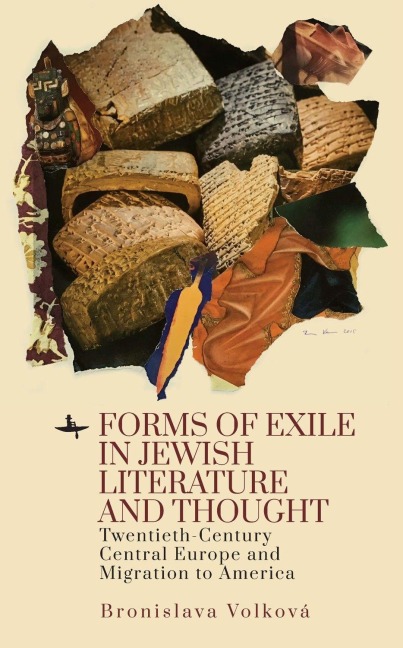
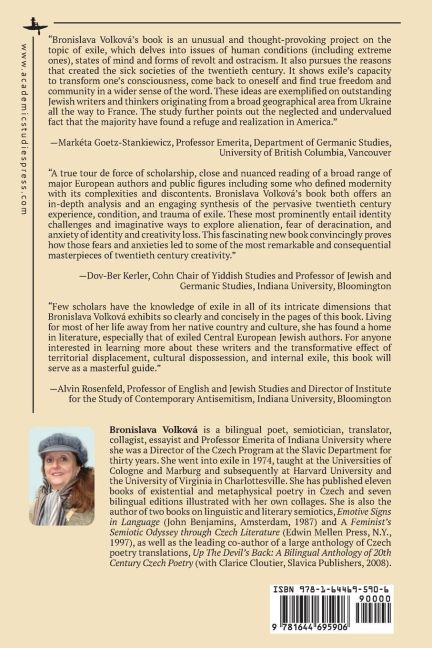
Forms of Exile in Jewish Literature and Thought deals with the concept of exile on many levels-from the literal to the metaphorical. It combines analyses of predominantly Jewish authors of Central Europe of the twentieth century who are not usually connected, including Kafka, Kraus, Levi, Lustig, Wiesel, and Frankl. It follows the typical routes that exiled writers took, from East to West and later often as far as America. The concept and forms of exile are analyzed from many different points of view and great importance is devoted especially to the forms of inner exile. In Forms of Exile in Jewish Literature and Thought, Bronislava Volkováaacute;, an exile herself and thus intimately familiar with the topic through her own experience, develops a unique typology of exile that will enrich the field of intellectual and literary history of twentieth-century Europe and America.
Bronislava Volková is a bilingual poet, semiotician, translator, collagist, essayist and Professor Emerita of Indiana University, Bloomington, USA, where she was a Director of the Czech Program at the Slavic Department for thirty years. She is a member of the Czech and American PEN Club. She went into exile in 1974, taught at the Universities of Cologne and Marburg and subsequently at Harvard University and the University of Virginia in Charlottesville. She has published eleven books of existential and metaphysical poetry in Czech and seven bilingual editions illustrated with her own collages. She is also the author of two books on linguistic and literary semiotics, Emotive Signs in Language (John Benjamins, Amsterdam, 1987) and A Feminist's Semiotic Odyssey through Czech Literature (Edwin Mellen Press, N.Y., 1997), as well as the leading co-author of a large anthology of Czech poetry translations, Up The Devil's Back: A Bilingual Anthology of 20th Century Czech Poetry (with Clarice Cloutier, Slavica Publishers, 2008). Her scholarly publications include topics of Czech poetry, Czech popular culture, issues of exile, gender, implied author values and emotive signs. Her poetry has been translated into twelve languages and her selected poems appeared in book form in six of them. She has also received a number of literary and cultural awards.
Table of Contents Acknowledgements Introduction: A General History of Concepts of Exile 1. Exile as Expulsion and Wandering: Joseph Roth, Sholem Aleichem, Stefan Zweig 2. Exile as Aesthetic Revolt and an Inward Turn: Hugo von Hofmannsthal, Robert Musil, Hermann Broch) 3. Exile as Social Renewal: Theodor Herzl, Max Nordau 4. Exile as Resistance and a Moral Stance: Karl Kraus, Arthur Schnitzler 5. Exile as Gender Marginalization and the Independence of the Femme Fatale: Alma Mahler 6. Exile as an Escape from Patriarchal Oppression: Franz Werfel 7. Exile as Anxiety and Involuntary Memory: Franz Kafka, Sigmund Freud, Marcel Proust, Bruno Schulz 8. Exile as Doom and Revenge: Hermann Ungar 9. Exile as a Loss of Identity: Saul Friedländer 10. Exile as Abandonment: Peter Weiss 11. Exile as Bearing Witness: Elie Wiesel 12. Exile as Dehumanization: Primo Levi 13. Exile as an Awakening of Consciousness: Ji-í Weil, Ladislav Fuks, Arnošt Lustig 14. Exile as a Feeling of Meaninglessness: Egon Hostovský 15. Exile as Transformation and a Will to Meaning: Viktor Frankl, Simon Wiesenthal Conclusion Bibliography