Und dann auf "Zum Home-Bildschirm [+]".

Stöbern
genialokal zum Startbildschirm hinzufügen
Installieren Sie die genialokal App auf Ihrem Startbildschirm für einen schnellen Zugriff und eine komfortable Nutzung.
Installieren Sie die genialokal App auf Ihrem Startbildschirm für einen schnellen Zugriff und eine komfortable Nutzung.

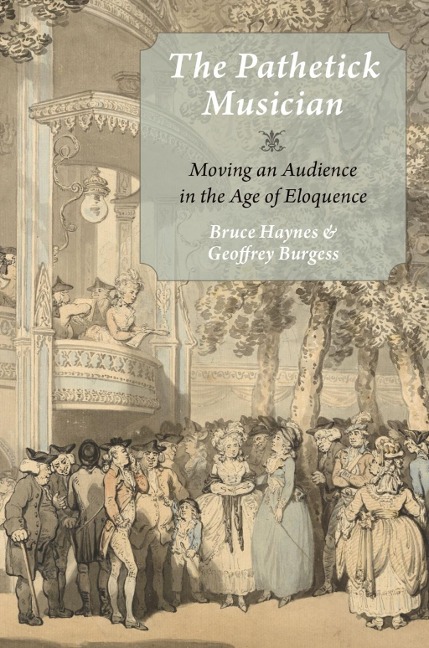
What is rhetorical music? In The Pathetick Musician, Bruce Haynes and Geoffrey Burgess illustrate the vital place of rhetoric and eloquent expression in the creation and performance of Baroque music. Through engaging explorations of the cantatas of J.S. Bach, the authors explode the conventional notion of historical authenticity in music, proposing adventurous new directions to reinvigorate the performance of early music in the modern setting. Along the way, Haynes and Burgess investigate intersections between music and oratory, dance, gesture, poetry, painting and sculpture, and offer insights into figural elaboration, articulation, nuance and temporality. Aimed primarily at performers of Baroque music, the book situates the study of performance practice in a broader cultural context, and as much as an invaluable resource for advanced study, it contains a wealth of information that pertains directly to anyone working in the field of early music.
Based on a draft sketched by celebrated Baroque oboist and early music scholar Bruce Haynes before his death in 2011, The Pathetick Musician is the fruit of the combined wisdom of two musicians renowned equally for their contributions as performers and scholars. Drawing on an impressive array of Classical treatises on oratory, musical autographs and performance accounts, it is an essential companion to Haynes' controversial The End of Early Music. Geoffrey Burgess has taken up the broader claims of Haynes' philosophy to create a practical, accessible text that will be stimulating for all musicians interested in the rediscovery of early music. With copious musical examples, contemporaneous works of art, and a companion website with supplementary audio recordings, The Pathetick Musician is an invaluable resource for all interested in exploring new expressive possibilities in the performance and study of Baroque music.
Baroque oboists Bruce Haynes and Geoffrey Burgess established reputations as authorities on the history of their instrument with their co-authored book The Oboe, voted an outstanding achievement by the American Music Instrument Society. Haynes' writings, notably The End of Early Music, are known for pioneering new approaches in historical performance practice and inspiring healthy debate among scholars and performers of early music. Burgess, an instructor at the Eastman School of Music, recently published Well-Tempered Woodwinds: Friedrich von Huene and the Making of Early Music in a New World, which combines the biography of a leading manufacturer of historic instruments with a history of the emerging early music scene in America. Bruce Haynes passed away in May, 2011.
Foreward: Aus der Tiefe (Geoffrey Burgess) AcknowledgementsList of Musical Examples and FiguresList of Audio Examples
Preface: Pipe Dreams (Bruce Haynes)
Part IIntroduction: The Eloquent Musician (BH) The Truth in Eloquence Rhetorical MusicThe Pathetick Musician'Ut pictura poesis'The Officers of RhetoricStyle CoachesFurther Reading
Chapter 1: In the Realm fo the Passions (GB) Humanism and the Rhetorical EthosSeconda pratica Of Æsthetics and Beauty Autonomous Music and 'Art for Art's sake' Personally expressing passions or Passionately expressing persons?Further Reading
Chapter 2: The Principles of Eloquence: The Artist's Toolbox (GB) The Offices of RhetoricStructuring RhetoricThe Sense of MusicOn the possibility of a FigurenlehreFurther Reading
Chapter 3: Bach's Expressive Universe (GB) Imitation: Portraying and Evoking the World'Clear running water': Schweitzer's Legacy Figuring Bach's World Bach the Poet, Bach the PainterOnomatopoeiaLandscapes and 'Paintings of Life'Further Reading
Chapter 4: Bach's Passionate Inner world (GB) General and Particular ExpressionReading Bach's PassionsFear and TremoloAntithesis: At Odds with oneselfPolyphonies of Passions: Passions in PolyphonyThe Proximity of OppositesFurther Reading
Part IIChapter 5: Enhancing Eloquence in Performance (Elocutio) (GB) The 'Intentional Fallacy' Fallacy: Whose Intention? Elocutio: the Essence of Performance Practice'Humouring' the scoreTempo and AffektLight and shadow Further Reading Chapter 6: Figures: Spinning straw into gold (GB) Public Speaking, Public MusickingDeclamation as Figurative SpeechFigures as Glosses and Ornamentation Essential GracesGraces as GlossesThe Salt of Music: the Spice of DissonanceGraces as Passionate ExpressionStructuring Ornaments: Passaggi and Paraphrase Ornaments in HistoryFurther Reading
Chapter 7: The expressive Gesture (GB) Audible architecture Articulating the Musical GestureThe Breath of LifeAgogics The Agogic Accent, The Agogic Pickup, The Agogic Placement, The HesitationFinding the Poetry in the NotesPause to ReflectGesture and CharacterGesturing towards the PhraseFurther Reading
Chapter 8: Kairos: Expressive Timing (GB) Chronos and Kairos: Two kinds of time The metronome and the modern tendency toward Chronos The beat, or pulse in Baroque Music 'The true motion of the Bass' Tempo FluctuationBorrowed time Kairos: Isolating Musical EventsTiming in Dance MusicFurther Reading
Chapter 9: To Kindle the Heart: Engagement in Performance (GB) The sovereign Audience Authentic EarsMusic in the BodyThe Meaning of Vortrag'The Unutterable Ravishing Soul's Delight'Dance: Une poësie muetteSincerity in PerformanceMental MultitaskingFurther Reading
Chapter 10: Analysing Expression in Recordings of Bach's cantatas (BH)
Appendix: Bibliography of the Writings of Bruce Haynes
General Bibliography
Index