Und dann auf "Zum Home-Bildschirm [+]".

Stöbern
genialokal zum Startbildschirm hinzufügen
Installieren Sie die genialokal App auf Ihrem Startbildschirm für einen schnellen Zugriff und eine komfortable Nutzung.
Installieren Sie die genialokal App auf Ihrem Startbildschirm für einen schnellen Zugriff und eine komfortable Nutzung.
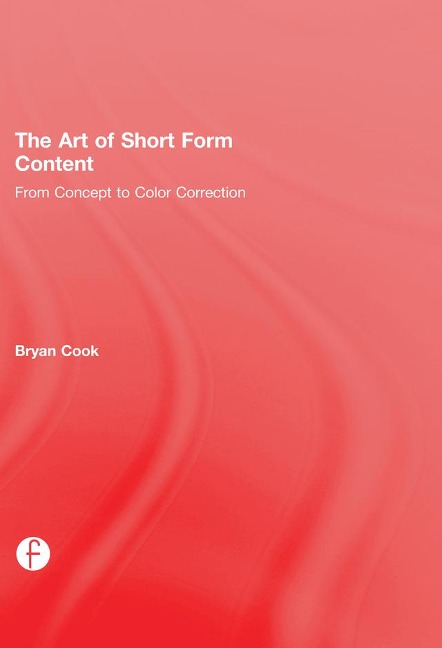
The Art of Short Form Content: From Concept to Color Correction is an in-depth examination of the craft of creating short form filmic content - a category which includes television commercials, music videos, television promos, movie trailers, digital billboards, corporate videos, and pretty much anything else with a running time under five minutes. Though short form is an important part of the film industry, it is typically overlooked in books on the art of filmmaking. The Art of Short Form Content fills this industry void by answering the type of questions that working short form content creators deal with every day. As Cook explains, though short form content is limited in duration, it is not limited in quality and message. In this step-by-step, full-color guide you will find: . Interviews with leading short form content creators . Details on how to create everything from a corporate piece to a Super Bowl spot . Strategies for how to quickly attract viewer attention to your content . Extensive information on how to best utilize the craft of film-making in an advertising context . A comprehensive companion website that can be found at www.focalpress.com/cw/cook
Bryan Cook is currently the Executive Content Producer and Director of Multimedia at Team One Advertising in Los Angeles. Over the course of Bryan's fifteen year career as an Editor and Post Producer, he has partnered with many of the best ad agencies, networks and production shops in the world, and projects he has worked on have been honored by Ad Age, Adweek, Cannes, The Effie Awards, The Facebook Awards, FWA, The Golden Trailer Awards, and the Tribeca Film Festival.
Introduction: - The essence of short form content. Chapter One - Signal Through Noise: The Concept - How is short form filmic content distinct from long form filmic content? - Short form content's connection to advertising. - The importance of evoking emotions in short form. - How to shape perception and motivate action with short form content. Interview with Frank Hahn, Group Creative Director at 72andSunny. Chapter Two - Tom Cruise and a Bazooka: The Image - Images and narrative information ("The Five Ws"). - The importance of motion for short form. - Using imagery to attract attention. - Using imagery to evoke an emotional response. Interview with Gentleman Scholar, AICE award winning directing duo. Chapter Three - Into the Windowless Rooms: On Editing - The importance of structure in short form editorial. - The beginning, middle and end and how each section works in short form. - The importance of explicitly separating new ideas and concepts in short form editorial. - What makes an individual edit work? Interview with Josh Bodnar, Emmy Award Winning Editor from Whitehouse Post. Chapter Four - Because Tramps Like Us, Baby We Were Born to Run: On Music - Music and the emotional state of the characters on screen. - Selecting music that doesn't distract from the narrative. - Using music to generate structure and signal transitions. Interviewees include Zach Hemsey, Composer for Trailers and Feature Films; Gabe McDonough, Executive Producer at MAS - Music and Strategy. Chapter Five - Rise Into Hit: Sound Design - Diegetic sound effects and the creation of reality in short form. - Non-diegetic sound effects and establishing mood. - Using sound effects to motivate transitions. Interview with Bryan Jerden, sound designer for Trailers and Feature Films. Chapter Six - Sculpting the Image: Effects and Finishing - Using visual effects to hide an edit point or transmit factual information. - How effects can be used to offer the viewer insights into the psychological state of the characters on screen. - Using effects to create a stylistic vocabulary. Interview with Neil Gust, AICE winning editor and sound designer. Chapter Seven - The Mysterious Art: Color Correction - The basics of color correction and balancing an image. - Using color correction to quickly guide the viewer's eye around the frame. - Using color correction to evoke an emotional response in the viewer. Interview with Jean-Clément Soret, Global Creative Director of Color Grading at MPC. Conclusion - Summary.
Dieses eBook wird im PDF-Format geliefert und ist mit einem Adobe Kopierschutz (DRM) versehen. Sie können dieses eBook mit allen Geräten lesen, die das PDF-Format und den Adobe Kopierschutz (DRM) unterstützen.
Zum Beispiel mit den folgenden Geräten:
• tolino Reader
Laden Sie das eBook direkt über den Reader-Shop auf dem tolino herunter oder übertragen Sie das eBook auf Ihren tolino mit einer kostenlosen Software wie beispielsweise Adobe Digital Editions.
• Sony Reader & andere eBook Reader
Laden Sie das eBook direkt über den Reader-Shop herunter oder übertragen Sie das eBook mit der kostenlosen Software Sony READER FOR PC/Mac oder Adobe Digital Editions auf ein Standard-Lesegeräte mit epub- und Adobe DRM-Unterstützung.
• Tablets & Smartphones
Möchten Sie dieses eBook auf Ihrem Smartphone oder Tablet lesen, finden Sie hier unsere kostenlose Lese-App für iPhone/iPad und Android Smartphone/Tablets.
• PC & Mac
Lesen Sie das eBook direkt nach dem Herunterladen mit einer kostenlosen Lesesoftware, beispielsweise Adobe Digital Editions, Sony READER FOR PC/Mac oder direkt über Ihre eBook-Bibliothek in Ihrem Konto unter „Meine eBooks“ - „online lesen“.
Schalten Sie das eBook mit Ihrer persönlichen Adobe ID auf bis zu sechs Geräten gleichzeitig frei.
Bitte beachten Sie, dass die Kindle-Geräte das Format nicht unterstützen und dieses eBook somit nicht auf Kindle-Geräten lesbar ist.